Rose Moss
The term "rose moss" can refer to two distinct types of plants, which often leads to confusion.
What is Rose moss?
The term “rose moss” can refer to two distinct types of plants, which often leads to confusion.
- Rhodobryum roseum: This is a true moss belonging to the subclass Bryidae. It is found globally in sheltered, grassy, or wooded areas. It is characterized by a rosette of dark green leaves atop a vertical stem and typically reproduces through stolons rather than spores.1
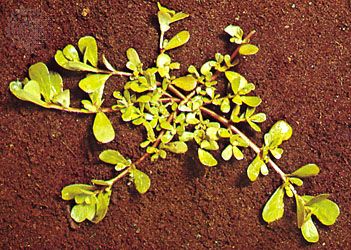
- Portulaca grandiflora: This plant, also commonly called rose moss, is a flowering succulent rather than a true moss.2
It is important to distinguish between these two, as one is a bryophyte and the other is a vascular flowering plant.
How does Portulaca grandiflora differ from true mosses?
Portulaca grandiflora, often called “rose moss” or “moss rose,” is fundamentally different from true mosses. While the name suggests a relationship, Portulaca grandiflora is a vascular flowering plant (an angiosperm), whereas true mosses are nonvascular plants classified in the division Bryophyta. nonvascular plants classified in the division Bryophyta.14
The primary differences include:
- Biological Classification: True mosses are bryophytes, which lack the complex vascular systems found in flowering plants. Portulaca grandiflora is a succulent that possesses specialized tissues for transporting water and nutrients.154
- Reproductive Systems: True mosses reproduce via spores produced in a capsule atop a sporophyte. In contrast, Portulaca grandiflora is a flowering plant that reproduces through seeds following pollination and fertilization.16
- Structure: The “leafy” shoots of a true moss are part of the gametophyte generation, which is the dominant phase of its life cycle. Portulaca grandiflora follows the life cycle of typical angiosperms, where the sporophyte is the dominant, independent plant.16
The term “moss” is frequently applied erroneously to various plants that share superficial similarities but lack the defining characteristics of the division Bryophyta.1
What are the main differences between succulents and mosses?
Succulents and mosses represent fundamentally different plant groups with distinct biological structures and survival strategies.
Key Differences
Feature
Succulents
Mosses
Classification
Vascular plants (angiosperms)
Nonvascular plants (bryophytes)
Vascular Tissue
Possess xylem and phloem for transport
Lack specialized vascular tissue
Water Storage
Adapted with thick, fleshy tissues
Lack storage tissues; rely on immediate moisture
Dominant Phase
Sporophyte (the leafy plant)
Gametophyte (the leafy shoot)
Reproduction
Seeds
Spores
Structural and Physiological Adaptations
- Vascularity: Succulents are vascular plants, meaning they have specialized tissues (xylem and phloem) that allow them to transport water and nutrients efficiently. Mosses lack these tissues, which limits their size and necessitates their presence in moist environments.48
- Water Management: Succulents are xerophytes adapted to arid conditions. They store water in fleshy stems or leaves and often utilize crassulacean acid metabolism, a specialized photosynthetic pathway that minimizes water loss by opening stomata only at night. In contrast, mosses lack a well-developed cuticle to prevent dehydration and depend on their immediate surroundings for moisture.7108
- Life Cycle: In mosses, the independent, photosynthetic “leafy” shoot is the gametophyte generation. For succulents, the dominant, conspicuous phase is the sporophyte.1194
We could dive deeper into the specific evolutionary history of these plants or explore how different species have adapted to extreme environments.
How do plants like the resurrection plant survive without water?
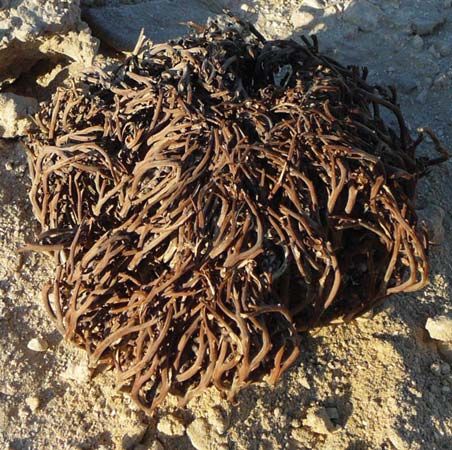
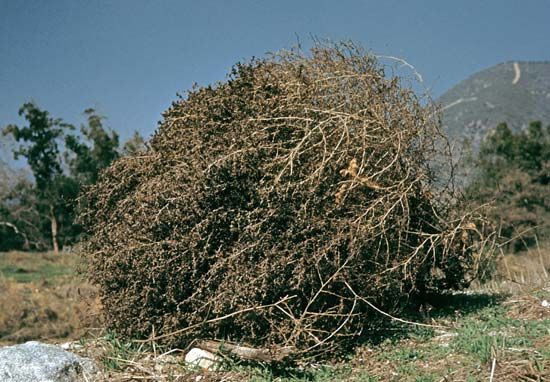
Plants known as resurrection plants, such as the true rose of Jericho (Anastatica hierochuntica) and the false rose of Jericho or resurrection fern (Selaginella lepidophylla), survive extreme drought through a process of desiccation and dormancy.13
When environmental moisture is unavailable, these plants undergo structural changes to protect themselves:
- Dormancy: As the dry season begins, the plants enter a period of dormancy, effectively pausing their metabolic activity.13
- Physical Contraction: The branches and stems of these plants curl inward, forming a tight, protective ball. This shape helps minimize surface area and moisture loss.13
- Revival: Upon exposure to moisture, the plants unfurl. The resurrection fern (S. lepidophylla) is particularly notable for its ability to revive and turn green even if its roots have been disrupted, whereas the true rose of Jericho typically requires its root system to be intact to spread and flower.13
While they may be blown by the wind like tumbleweeds during their dormant state, they remain biologically capable of rehydrating and resuming growth when conditions improve.13
Sources
- rose moss — Merriam-Webster
- rose moss — Encyclopædia Britannica
- resurrection plant — Merriam-Webster
- Plant - Division Bryophyta — Encyclopædia Britannica
- Plant reproductive system - Physiology of plant reproduction — Encyclopædia Britannica
- moss rose — Merriam-Webster
- Succulent — Encyclopædia Britannica
- Plant - Definition of the category — Encyclopædia Britannica
- Plant reproductive system - Mosses — Encyclopædia Britannica
- moss — Encyclopædia Britannica
- Plant - Definition of the category — Encyclopædia Britannica
- Xerophyte — Encyclopædia Britannica
- rose of Jericho — Encyclopædia Britannica
Published on · 3 min read