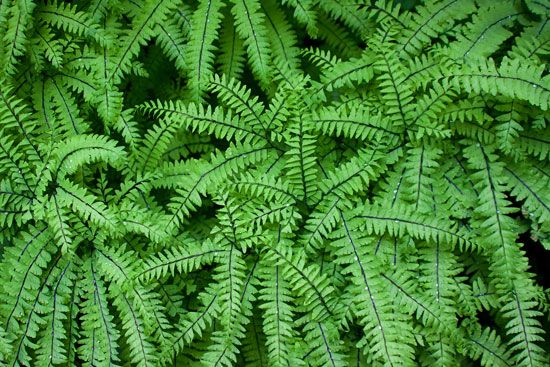
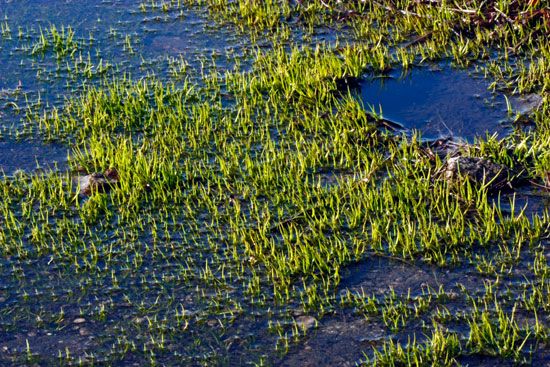
Spike Moss
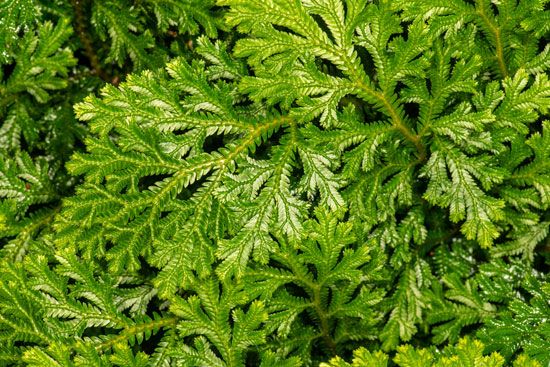
Spike mosses (family Selaginellaceae) are widely distributed across the globe, with a particularly high concentration of species found in tropical regions.
Where are spike mosses typically found in nature?
Spike mosses (family Selaginellaceae) are widely distributed across the globe, with a particularly high concentration of species found in tropical regions.1
While many spike mosses are forest-dwelling plants, their habitats vary significantly:
- Forests and Bogs: Many species thrive in woodland environments or along the edges of bogs.1
- Trees: Some species are epiphytic, meaning they grow on trees.1
- Dry Environments: Certain spike mosses are adapted to thrive in dry or seasonally dry areas.1
- Rocky and Sandy Terrain: Some species, such as the rock selaginella, are found growing directly on rocks or in sandy soil.1
Because they are highly adaptable, these plants occupy a diverse range of ecological niches, from humid tropical forests to arid landscapes where they may remain dormant until the arrival of the wet season.1
How do spike mosses reproduce and spread?
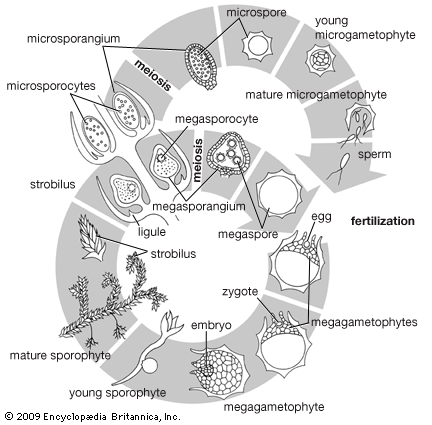
Spike mosses (Selaginella) reproduce through a process involving an alternation of generations between a spore-producing sporophyte and a sex-cell-producing gametophyte. Unlike many other spore-bearing plants, spike mosses are heterosporous, meaning they produce two distinct types of spores within specialized structures called strobili:415
- Megaspores: These larger spores develop into female gametophytes. A megasporangium typically produces only four megaspores, which are nutrient-rich.5
- Microspores: These smaller spores develop into male gametophytes, which produce biflagellate sperm.45
Reproduction begins as these spores start developing into microscopic, non-photosynthetic gametophytes while still inside the sporangia. Once shed onto a moist substrate, the gametophytes mature. Fertilization occurs when sperm swim to the archegonia on the female gametophyte. The resulting embryo remains attached to the megaspore for nourishment, sometimes even beginning development while still within the strobilus.54
Beyond sexual reproduction, some species, such as Selaginella kraussiana, spread vegetatively by rooting readily along their trailing stems.1
What is spike moss and how is it different from true mosses?
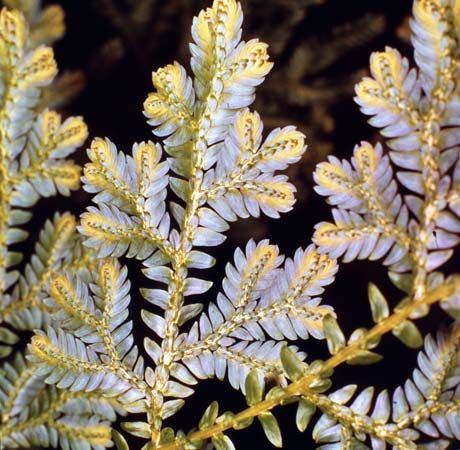
Spike moss (family Selaginellaceae) is a group of more than 700 species of seedless vascular plants belonging to the single genus Selaginella. While they share the name “moss,” they are fundamentally different from true mosses in their biological structure and life cycle.17
Key Differences
The primary distinction lies in their classification and internal complexity:
- Vascular System: Unlike true mosses, which are nonvascular plants, spike mosses are vascular plants. This means they possess specialized tissues for transporting water and nutrients throughout the plant, allowing them to grow more complex structures.1
- Dominant Life Phase: In true mosses, the gametophyte (the green, leafy phase) is the dominant, independent generation. In spike mosses, the sporophyte (the spore-producing phase) is the dominant, conspicuous generation, while the gametophyte is microscopic and short-lived.75
- Reproductive Strategy: Spike mosses are heterosporous, producing two distinct types of spores: large megaspores and small microspores. True mosses are generally homosporous, producing only one type of spore.15
- Anatomy: Spike mosses feature true leaves with a midvein and a unique structure called a ligule at the leaf base, which helps keep young tissues moist. True mosses lack these complex vascularized leaves.187
What is the scientific classification of spike mosses?
Spike mosses are classified within the class Lycopodiopsida, which encompasses all lycophytes. Within this class, their specific scientific classification is as follows:
This classification is based on the Pteridophyte Phylogeny Group I (PPG I) system, which recognizes the order Selaginellales as one of the three primary living groups of lycophytes, alongside the club mosses (Lycopodiales) and the quillworts (Isoetales). The family Selaginellaceae consists of a single extant genus, Selaginella, which includes more than 700 species distributed globally.1910
Sources
- Spike moss — Encyclopædia Britannica
- moss — Encyclopædia Britannica
- bryophyte - Ecology and habitats — Encyclopædia Britannica
- Plant reproductive system - Mosses — Encyclopædia Britannica
- lycophyte - Life cycle — Encyclopædia Britannica
- Plant reproductive system - Lycopsids — Encyclopædia Britannica
- lycophyte - Form and function — Encyclopædia Britannica
- Plant reproductive system - The plant basis — Encyclopædia Britannica
- Selaginellaceae — Merriam-Webster
- lycophyte — Encyclopædia Britannica
- lycophyte - Annotated classification — Encyclopædia Britannica
Published on · 3 min read