Greasewood
Greasewood, specifically the species Sarcobatus vermiculatus, is a North American shrub belonging to the Sarcobataceae family. It is a characteristic plant…
What is greasewood?
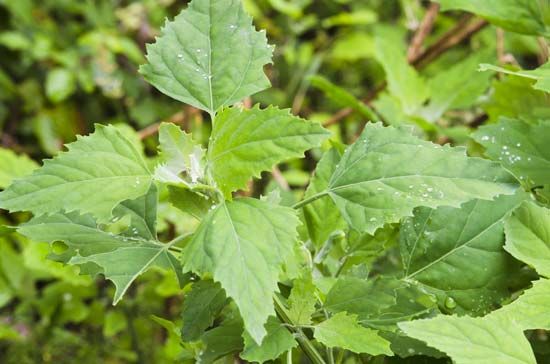
Greasewood, specifically the species Sarcobatus vermiculatus, is a North American shrub belonging to the Sarcobataceae family. It is a characteristic plant found in the strongly alkaline and saline soils of desert plains in western North America.1
Physically, the greasewood is a much-branched, somewhat spiny shrub that can reach heights of up to 3 metres (10 feet). It is distinguished by small, fleshy, toothless leaves that lack stalks. It is important to note that the name “greasewood” is also applied to unrelated shrubs from different families, such as Adenostoma fasciculatum (Rosaceae) and Salvia apiana (Lamiaceae).1
What makes a soil environment alkaline or saline?
A soil environment becomes saline or alkaline due to specific chemical and environmental processes, often linked to water movement and climate conditions.
Saline Soils
Salinity refers to the accumulation of soluble salts in the soil, such as chlorides, carbonates, and sulfates of sodium, potassium, magnesium, and calcium. This occurs primarily through:3
- Water Transport: Salts are carried into the soil by saline groundwater, irrigation, or floodwaters.3
- Evaporation and Transpiration: As water evaporates from the soil surface or is transpired by plants, the salts are left behind.3
- Arid Climates: In dry regions, there is often insufficient rainfall to leach (wash) these salts downward through the soil profile, leading to their accumulation.34
- Poor Drainage: When water cannot move down through the soil, salts build up, eventually inhibiting plant growth by making it difficult for roots to absorb water.34
Alkaline (Sodic) Soils
Alkalinity is measured by pH, where a value greater than 7 indicates a basic or alkaline solution. Soils become alkaline or “sodic” when sodium ions replace calcium on clay particles through a process called cation exchange.53
- Impact: High levels of adsorbed sodium render soil sticky when wet and hard when dry, often making it nearly impervious to water and roots.3
- Formation: This often occurs when soil is treated with salt solutions high in sodium but low in calcium.3
How do plants adapt to survive in harsh desert conditions?
Plants have evolved a variety of remarkable adaptations to survive in harsh, arid desert environments, primarily focused on managing water scarcity and maximizing the use of infrequent rainfall.8
Water Storage and Conservation
Many desert plants, known as xerophytes, employ strategies to prevent water loss or store it for later use.9
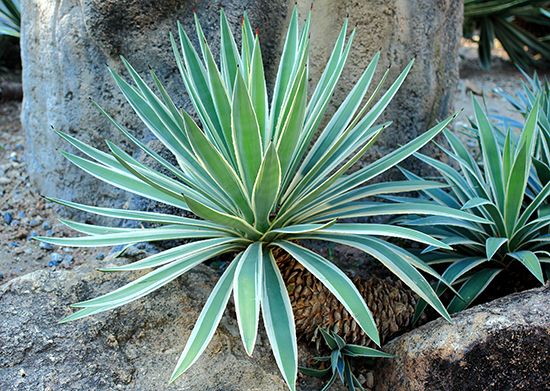
- Succulence: Succulents store water in thick, fleshy stems (like cacti) or leaves (like agaves).910
- Leaf Modifications: To reduce transpiration, some plants have waxy coatings, dense hairy coverings, or reduced leaf sizes. Others may drop their leaves during dry periods or reposition them to minimize sunlight absorption. Spines serve a dual purpose: protecting the plant from herbivores and radiating heat.9811
- Metabolic Efficiency: Many succulents utilize crassulacean acid metabolism (CAM), a specialized form of photosynthesis. By keeping their stomata closed during the hot day and opening them at night to collect carbon dioxide, these plants significantly reduce water loss.1012
Survival Strategies
- Dormancy and Resurrection: Some perennial plants become physiologically inactive during droughts, desiccating until moisture returns. Resurrection plants can rapidly rehydrate and resume activity after rain.8
- Underground Storage: Plants may rely on bulbs, tubers, or deep root systems to remain protected underground or reach moisture deep in the soil.118
- Ephemeral Life Cycles: Ephemeral plants survive dry spells as dormant seeds. They germinate, grow, flower, and reproduce rapidly during brief wet periods before the soil dries out again.8
What are some other examples of plants that thrive in salty soil?
Plants that thrive in saline environments are known as halophytes. These plants have evolved specialized mechanisms to manage high salt concentrations, such as isolating and storing excess salt in cellular structures called vacuoles or accumulating it in their leaves and stems.1314
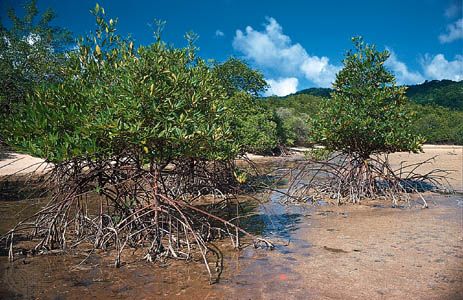
Beyond the commonly known mangroves, which utilize specialized root systems like pneumatophores to survive in oxygen-poor, salty coastal soils, other examples include:
- Samphire (Salicornia, Crithmum, Tecticornia): These succulent, shrublike plants are iconic halophytes found in coastal marshes and mudflats. Marsh samphire (S. europaea) is often called sea asparagus, while rock samphire (C. maritimum) grows on coastal cliffs.14
- Saltbush (Atriplex): A member of the Amaranthaceae family, saltbush species are extremely tolerant of high salt concentrations and are frequently found in coastal areas.15
- Goosefoot (Chenopodium): This genus includes succulent herbs that commonly develop as weeds along seacoasts and salt marshes.15
- Golden Samphire (Limbarda crithmoides): Native to western Europe and the Mediterranean, this plant is another example of a salt-tolerant species whose leaves and shoots are sometimes pickled.14
Sources
- greasewood — Encyclopædia Britannica
- poison - Plant poisons (phytotoxins) — Encyclopædia Britannica
- land reclamation - Reclamation of salt-affected soils — Encyclopædia Britannica
- pH — Encyclopædia Britannica
- Sahara - Soils — Encyclopædia Britannica
- salinity — Encyclopædia Britannica
- desertification - Irrigated croplands — Encyclopædia Britannica
- Xerophyte — Encyclopædia Britannica
- Succulent — Encyclopædia Britannica
- Angiosperm - Leaf modifications — Encyclopædia Britannica
- Photosynthesis - Carbon fixation via crassulacean acid metabolism (CAM) — Encyclopædia Britannica
- Desert - Population and community development and structure — Encyclopædia Britannica
- Salt marsh — Encyclopædia Britannica
- Samphire — Encyclopædia Britannica
- mangrove: Top Questions — Encyclopædia Britannica
- Amazing Mangroves — Encyclopædia Britannica
- Caryophyllales - Amaranthaceae — Encyclopædia Britannica
- Wetland - Salt marshes — Encyclopædia Britannica
Published on · 3 min read