Salmon River
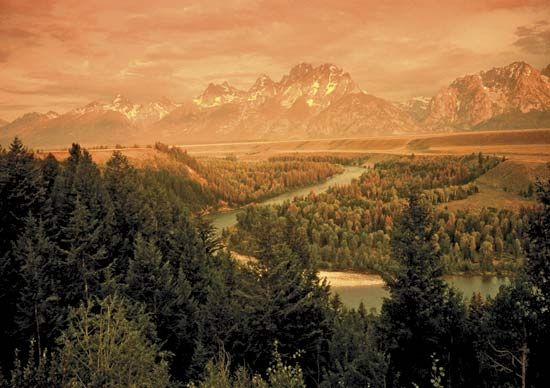
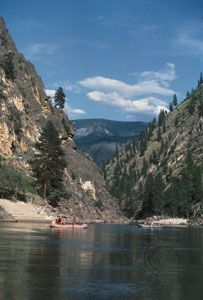
The Salmon River is located entirely within the state of Idaho in the United States. It rises in the Sawtooth and Salmon River mountains of central Idaho and…
Where is the Salmon River located, and through which states does it flow?
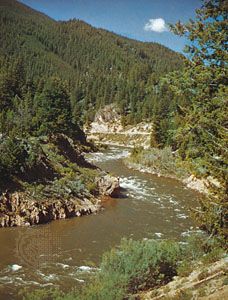
The Salmon River is located entirely within the state of Idaho in the United States. It rises in the Sawtooth and Salmon River mountains of central Idaho and flows for approximately 420 miles, primarily in a northeasterly and then northwesterly direction, before joining the Snake River.1
Unlike the Snake River, which traverses multiple states, the Salmon River does not flow through any other states; its entire course is contained within Idaho. It is well known for the section of its course midway between the city of Salmon and its confluence with the Snake River, which is famously referred to as the “River of No Return” due to the historical difficulty of navigating it upstream.1
How does the Salmon River contribute to the ecosystem and wildlife in the region?
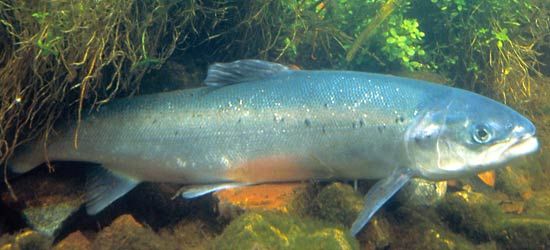
The Salmon River is a vital component of the regional ecosystem, primarily serving as a significant habitat for anadromous fish, such as salmon and steelhead trout, which migrate from the ocean to spawn in its freshwater reaches. These fish possess a remarkable homing instinct, allowing them to navigate back to their natal streams to reproduce, a process that sustains discrete populations and maintains hereditary traits.145
The river flows through an extensive area of national forests, providing a critical corridor for diverse wildlife. The surrounding landscape supports various mammals, including mule deer, black-tailed deer, and white-tailed deer, as well as predators like the puma, bobcat, and lynx. Additionally, the riverbanks and associated watercourses are characterized by vegetation such as willows and black cottonwoods, which provide essential cover and resources for numerous bird species, including eagles, ospreys, and hawks.164
Despite its ecological importance, the region faces ongoing challenges regarding the decline of salmon populations, necessitating careful management to protect these essential species and their habitats.4
What is the length of the Salmon River, and how does it compare to other major rivers in the United States?
The Salmon River has a course of approximately 420 miles (676 km). While it is a significant waterway and the largest tributary of the Snake River, it is relatively short when compared to the major continental river systems of North America.17
In contrast to the Salmon River, North America features massive drainage systems such as the Mississippi River, which is among the longest in the world, and the Missouri River, which serves as a major tributary within that vast network. Other prominent rivers originating in the Cordilleras, such as the Columbia, Colorado, and Yukon, also possess significantly greater lengths and drainage capacities than the Salmon River. While the Salmon River is a vital regional feature known for its rugged canyons and ecological importance, it does not approach the scale of these primary continental arteries.71
What are the major tributaries of the Salmon River, and how do they contribute to its flow?
The Salmon River, which rises in the Sawtooth and Salmon River mountains of central Idaho, is a major waterway known for its rugged course. While the river receives inflow from various mountain streams throughout its 420-mile journey, the Lemhi River is specifically noted as a tributary that joins the Salmon near the city of Salmon.
These tributaries are essential to the river’s flow, as they collect runoff from the surrounding mountainous terrain and contribute to the overall volume of the Salmon River before it eventually empties into the Snake River. The interaction between these tributaries and the main stem helps maintain the river’s character as it flows through the deep canyons and wilderness areas of Idaho.
Please note that while the provided information identifies the Lemhi River as a key tributary, the Britannica knowledge base does not contain a comprehensive list of every minor tributary or specific quantitative data on how each individual stream contributes to the river’s total discharge volume.
Sources
- Salmon River — Encyclopædia Britannica
- Idaho - Relief and drainage — Encyclopædia Britannica
- Snake River — Encyclopædia Britannica
- Pacific mountain system - Animal life — Encyclopædia Britannica
- Columbia River - Plant and animal life — Encyclopædia Britannica
- protacanthopterygian - Behaviour and locomotion — Encyclopædia Britannica
- North America - Drainage — Encyclopædia Britannica
- Columbia River - History — Encyclopædia Britannica
- glacier - Glacier hydrology — Encyclopædia Britannica
Published on · 3 min read