Salviniales
The order Salviniales consists of small, floating aquatic ferns that have evolved specialized structures to thrive in water. These plants adapt to their…
How do Salviniales plants adapt to their aquatic or semi-aquatic environments?
The order Salviniales consists of small, floating aquatic ferns that have evolved specialized structures to thrive in water. These plants adapt to their environments through unique morphological features and biological partnerships:
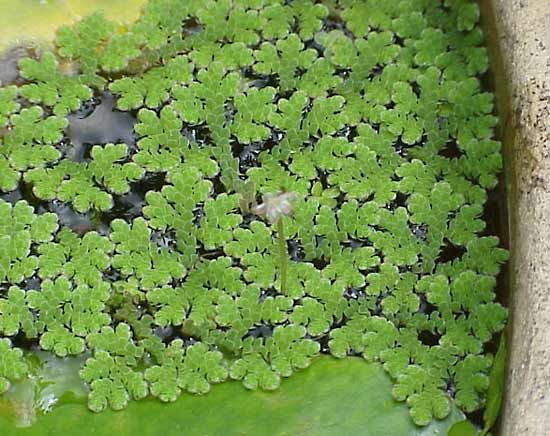
- Leaf Specialization: Salvinia (water spangle) features a whorl of three leaves. Two are round and remain emergent on the surface, while the third is submerged and finely divided to function as a root, as the plant lacks true roots. Azolla (mosquito fern) utilizes two rows of bilobed leaves and possesses actual roots to anchor or stabilize itself in the water.1
- Symbiotic Nitrogen Fixation: Azolla maintains a vital symbiotic relationship with the blue-green alga Anabaena azollae. The alga provides necessary nitrogen to the fern, while the fern offers a protected habitat for the alga. This adaptation is so effective that it has made Azolla economically significant for nitrogen-fixing in rice cultivation.1
These adaptations allow these ferns to colonize various waterways, though some species can become aggressive weeds when introduced to non-native environments.1
What ecological roles do Salviniales plants play in their habitats?
Plants in the order Salviniales play significant ecological and agricultural roles in their aquatic habitats:
- Nitrogen Fixation: Through a symbiotic relationship with the cyanobacterium Anabaena azollae, Azolla (mosquito fern) acts as a natural fertilizer. The bacteria convert atmospheric nitrogen into nitrate, which is released into the water when the ferns die, enriching the environment for other plants.14
- Agricultural Utility: This nitrogen-fixing capability makes Azolla highly valuable in agriculture, particularly for increasing rice yields in paddies. It is also utilized as feed for livestock and poultry.4
- Surface Coverage: By forming dense mats on the surface of still, fresh waters, mosquito ferns can physically prevent mosquitoes and other insects from accessing the water to lay eggs.4
- Invasive Impact: While they provide ecological benefits, some species—notably Salvinia molesta—can become aggressive, noxious weeds when they escape into non-native waterways, where they may disrupt local ecosystems.1
What is the evolutionary history of the Salviniales order?
The provided search results do not contain information regarding the evolutionary history of the Salviniales order. While the sources detail the morphological characteristics, symbiotic relationships, and ecological roles of the families Salviniaceae and Azollaceae, they do not provide data on the lineage, fossil record, or phylogenetic development of these plants.
Which plant families are included in the Salviniales order?
The order Salviniales consists of two distinct families of small, aquatic ferns:
- Salviniaceae: This family consists of the genus Salvinia, which includes approximately 10 species. These plants are characterized by a lack of true roots and a unique leaf structure consisting of a whorl of three leaves—two floating and one submerged and finely divided to function as a root.1
- Azollaceae: This family consists of the genus Azolla, which includes six species. Unlike Salvinia, these plants possess roots and feature two rows of bilobed leaves. They are notable for their symbiotic relationship with the nitrogen-fixing alga Anabaena azollae.1
While some botanical classifications have historically grouped these families differently—such as including them within the Filicales or associating them with the Marsileaceae—they are currently recognized as the two constituent families of the Salviniales order.12
Sources
- Salviniales — Encyclopædia Britannica
- Salviniaceae — Merriam-Webster
- Salvinia — Merriam-Webster
- Mosquito fern — Encyclopædia Britannica
Published on · 2 min read