Sargasso Sea
The Sargasso Sea ecosystem is defined by its floating mats of brown seaweed of the genus Sargassum. These mats create a unique, nutrient-rich habitat in the…
What types of marine life are found in the Sargasso Sea ecosystem?
The Sargasso Sea ecosystem is defined by its floating mats of brown seaweed of the genus Sargassum. These mats create a unique, nutrient-rich habitat in the open ocean that supports a diverse array of marine life.12
Key organisms found in this ecosystem include:
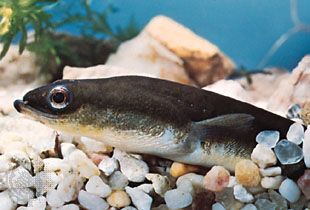
- Fish: The mats serve as nurseries for numerous fish species, including commercially important ones. The sargassum fish is particularly notable for having evolved specific coloration to camouflage within the seaweed. Additionally, the Sargasso Sea serves as the critical spawning ground for North American and European eels.23
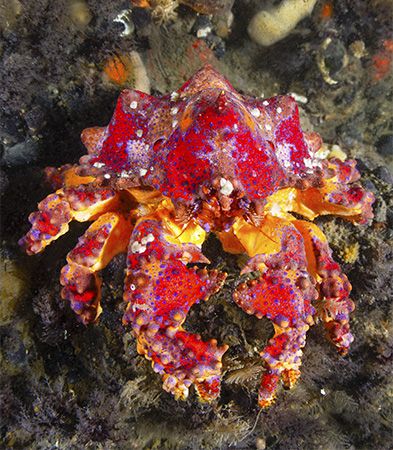
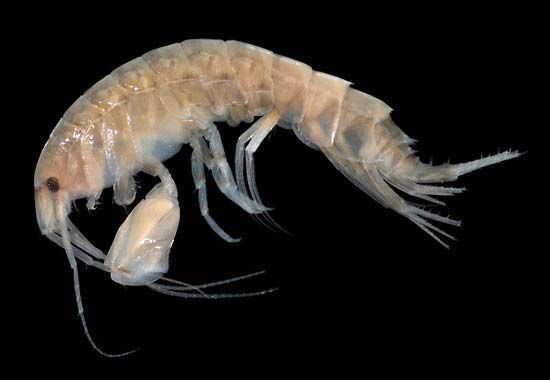
- Invertebrates: The seaweed provides shelter and food for various crabs, shrimp, and amphipods.2
- Reptiles: Juvenile sea turtles utilize the floating mats as a vital habitat.2
- Foragers: Dolphins and various seabirds frequently forage within or around these algal communities.2
What is the Sargasso Sea and where is it located in the North Atlantic Ocean?
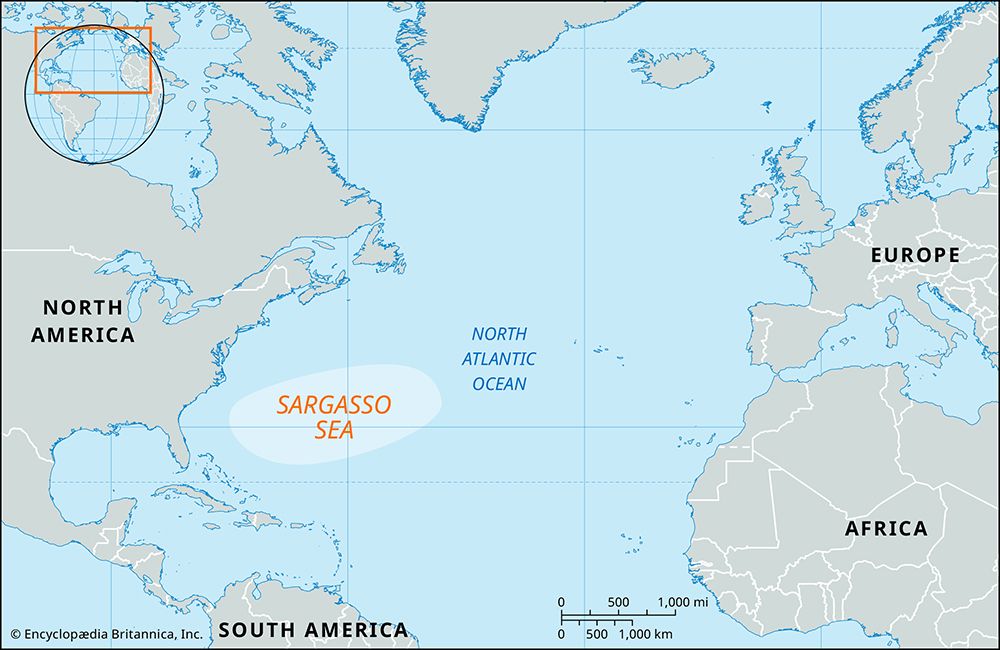
The Sargasso Sea is a distinct, elliptical region of the North Atlantic Ocean characterized by its relatively still, warm, and saline waters. It is famously known for being strewn with free-floating mats of brown seaweed belonging to the genus Sargassum.14
Location and Geography
The sea is situated within a clockwise-setting ocean-current system, often referred to as a subtropical gyre. Its boundaries are generally defined as follows:15
- Latitude: Between 20° N and 35° N (some sources specify 25° N to 35° N).16
- Longitude: Between 30° W and 70° W (some sources specify 40° W to 70° W).16
The western rim of this region is formed by the Gulf Stream, which separates the warm, saline waters of the Sargasso Sea from the colder, fresher waters along the North American continental slope. The area encompasses the Bermuda islands and reaches depths ranging from 5,000 to 23,000 feet (1,500 to 7,000 meters).14
What role does the Sargasso Sea play in the life cycle of the European eel?
The Sargasso Sea serves as a critical spawning ground for the European eel (Anguilla anguilla). These catadromous fish spend the majority of their lives in freshwater habitats before migrating to the warm, saline waters of the Sargasso Sea to breed and eventually die.73
The life cycle process within this ecosystem includes:
- Spawning: Adult eels migrate to the Sargasso Sea, where they spawn at depths of approximately 400 to 700 meters.3
- Larval Development: The eggs hatch into transparent, leaflike larvae known as leptocephali.73
- Dispersal: These larvae are carried by ocean currents, such as the Gulf Stream, toward the continental shelves of Europe.73
- Metamorphosis: After roughly two and a half years of drifting, the leptocephali undergo a metamorphosis into elvers (or glass eels), which then migrate upstream into freshwater environments to mature.73
While early research by Johannes Schmidt identified the Sargasso Sea as the primary spawning area, contemporary studies suggest that adult eels may utilize a combination of chemical, geomagnetic, and geographic cues to reach specific spawning grounds located near the Mid-Atlantic Ridge just east of the Sargasso Sea.7
How does the Sargasso Sea get its name, and what is the significance of Sargassum seaweed?
The Sargasso Sea is named after the Sargassum seaweed that blankets its surface. The term is derived from the Portuguese word sargaço, which historically referred to a type of rockrose plant; the name was applied to the seaweed due to a perceived resemblance between the algae’s air bladders and the plant’s fruit.1842
The significance of Sargassum lies in its role as a vital, floating ecosystem in the open ocean. These mats create a unique habitat that supports high biodiversity, providing food, shelter, and breeding grounds for various marine organisms, including crabs, shrimp, juvenile sea turtles, and commercially important fish species. Some animals, such as the sargassum fish, have evolved specific camouflage to thrive within these mats. Additionally, the seaweed serves as a critical spawning ground for European and American eels.8910
Beyond its ecological value, Sargassum is used in traditional medicine, agriculture, and the biotechnology industry, though massive inundation events can pose significant environmental and economic challenges to coastal communities.8
Sources
- Sargasso Sea — Encyclopædia Britannica
- Sargassum — Encyclopædia Britannica
- Migration - Catadromous fish — Encyclopædia Britannica
- Sargasso Sea — Merriam-Webster
- Climate - The Gulf Stream — Encyclopædia Britannica
- subtropical gyre — Encyclopædia Britannica
- eel - Natural history — Encyclopædia Britannica
- sargassum — Merriam-Webster
- sargasso — Merriam-Webster
- sargassum fish — Merriam-Webster
- Atlantic Ocean - Biological resources — Encyclopædia Britannica
Published on · 3 min read