Sea of Okhotsk
The Sea of Okhotsk is a unique, biologically productive body of water characterized by several distinct geographical and environmental features:
What are the unique geographical features of the Sea of Okhotsk?
The Sea of Okhotsk is a unique, biologically productive body of water characterized by several distinct geographical and environmental features:
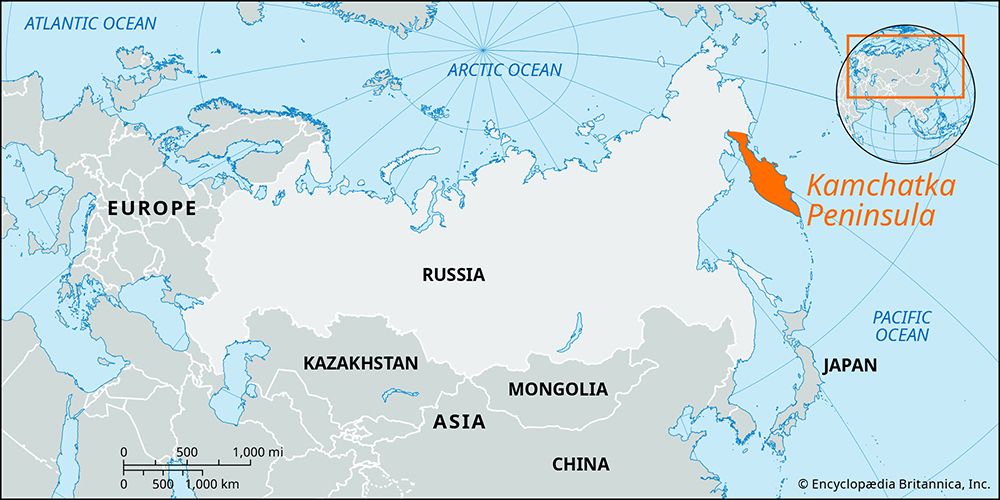
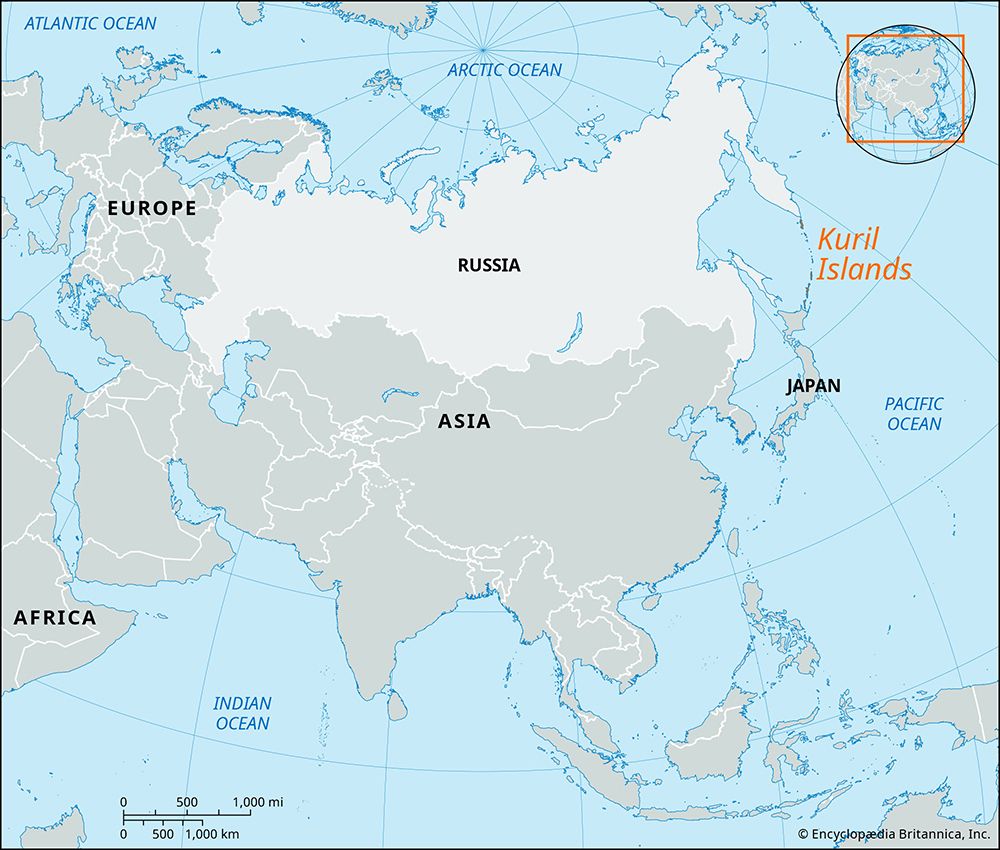
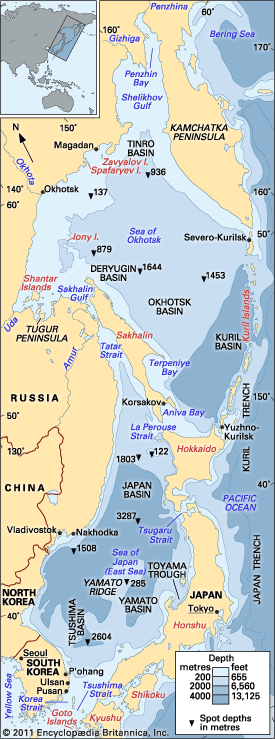
- Physiography: The sea is largely enclosed by the Kamchatka Peninsula, the Kuril Islands, Sakhalin Island, and Hokkaido. Its seabed features a northern and western continental shelf and a deep continental slope covering about 70 percent of the area, with the deepest point located in the Kuril Basin.1
- Climate: It is the coldest sea in East Asia. The northern and western regions experience a severe continental climate, while the southern and southeastern areas are influenced by the Pacific Ocean, resulting in a milder marine climate in a milder marine climate.1
- Hydrology: The sea experiences a counterclockwise water movement. It is notable for extreme tidal variations, with Penzhin Bay recording some of the strongest tides in the world, and for extensive ice cover that persists from October through June.1
- Biological Productivity: Due to river drainage and nutrient-rich upwelling, the sea is highly productive, supporting diverse marine life and significant commercial fishing industries.1
What role does the Sea of Okhotsk play in the global climate system?
The Sea of Okhotsk plays a significant role in the regional and global climate system primarily through its extreme thermal regime and the formation of sea ice. As the coldest sea in East Asia, its northern and western regions experience severe winter conditions comparable to those of the Arctic, with extensive ice cover persisting from October through June.1
This ice cover influences the climate through several key mechanisms:
- Thermal Insulation and Heat Exchange: Sea ice acts as an insulator, restricting heat loss from the relatively warm ocean to the colder atmosphere. However, during winter, openings in the ice (leads and polynyas) allow for significant turbulent heat and mass transfer, which affects atmospheric processes far downstream.3
- Albedo Effect: The presence of snow and ice increases the surface albedo, reflecting solar radiation back into the atmosphere and keeping surface temperatures cool. Conversely, the melting of this ice in summer reduces albedo, leading to greater absorption of solar radiation and further accelerating the melting process—a feedback loop critical to climate regulation.3
- Ocean Circulation: The growth of sea ice involves the rejection of brine, which increases the salt concentration of the surrounding water. This process drives deep ocean mixing and contributes to global ocean circulation and ventilation patterns.3
How do ocean currents affect the Sea of Okhotsk?
Ocean currents play a fundamental role in shaping the physical and environmental characteristics of the Sea of Okhotsk. The general movement of water within the sea follows a counterclockwise pattern, which is heavily influenced by both internal dynamics and external inflows.1
Key influences of these currents include:
- Thermal Regulation: The sea receives warmer water from the Sea of Japan via the Sōya Current, which enters through the La Perouse Strait. This inflow contributes to the relative warmth of the southwestern part of the sea. Additionally, warm water is carried into the region by Pacific Ocean currents, making the eastern half of the sea generally warmer than the western half.167
- Circulation Patterns: Currents flow clockwise around the Kuril Islands. In the northern half of the straits, these currents flow into the sea, while in the southern half, they return to the Pacific.1
- Navigation and Hazards: While these currents are essential for water exchange, they also present challenges. Strong currents, combined with submerged rocks and seasonal ice, are significant hazards for navigation in the region.1
What is the historical significance of the Sea of Okhotsk in terms of exploration and trade?
The Sea of Okhotsk holds significant historical importance as a focal point for Russian eastward expansion and maritime exploration. It was the first Pacific body of water ventured into by Russian explorers, serving as a gateway for the Russian Empire’s reach into the Far East.1
Exploration and Expansion
The drive for exploration was primarily fueled by the search for furs, which were extracted as tribute from Indigenous peoples. By the mid-17th century, Cossack detachments had descended the Okhota River to reach the Pacific, marking a major milestone in the region’s integration into the Russian sphere. This expansion was part of a broader movement that saw the mapping of the Siberian coast and the eventual discovery of the Bering Strait11.10
In the late 18th and early 19th centuries, the sea became a subject of scientific interest. Notable navigators, including the French explorer Jean-François de Galaup, Count de La Pérouse, and the Russian explorer Adam Johann Krusenstern, conducted voyages through the region, contributing to the geographic understanding of the Kamchatka Peninsula and surrounding waters.1
Trade and Economic Development
Historically, the region’s riverine and overland routes were vital for trade, though they were often subject to strict government control to prevent foreign interlopers. Today, the sea remains essential to the economic development of eastern Russia, serving as a hub for commercial fishing and, more recently, the exploitation of oil and natural gas deposits on its northern shelf.101
Sources
- Sea of Okhotsk — Encyclopædia Britannica
- Kuril Islands — Encyclopædia Britannica
- Sea of Japan / East Sea: Top Questions — Encyclopædia Britannica
- sea ice - Interactions with the oceans , atmosphere , and climate — Encyclopædia Britannica
- Sea of Japan / East Sea - Hydrology — Encyclopædia Britannica
- Bering Sea and Strait - Hydrology — Encyclopædia Britannica
- East Korea Warm Current — Encyclopædia Britannica
- Tsushima Current — Encyclopædia Britannica
- ocean current - Distribution of ocean currents — Encyclopædia Britannica
- Ob River - Study and exploration — Encyclopædia Britannica
- Arctic - Early Russian exploration — Encyclopædia Britannica
Published on · 4 min read