Strelitziaceae
The Strelitziaceae family of flowering plants is distributed across tropical to subtropical regions, with specific native ranges for its three genera:
What is the geographical distribution of Strelitziaceae plants?
The Strelitziaceae family of flowering plants is distributed across tropical to subtropical regions, with specific native ranges for its three genera:
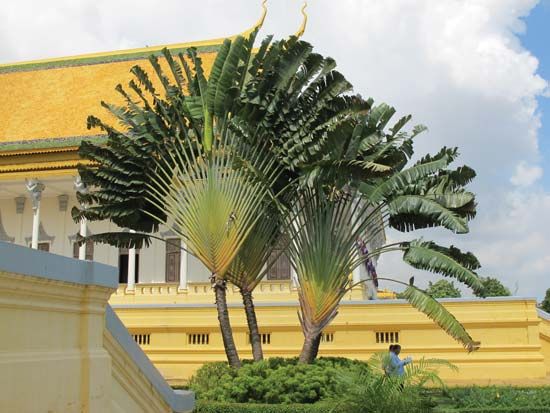
- Ravenala: The genus is represented by the traveler’s tree, which is native to Madagascar.1
- Phenakospermum: This genus is native to Suriname, French Guiana, and portions of the eastern Amazon River basin.1
- Strelitzia: This genus is native to southern Africa and includes species such as the bird-of-paradise flower, the white bird-of-paradise, and the giant white bird-of-paradise.1
While these plants are native to these specific tropical and subtropical areas, several species are also widely cultivated as ornamentals in warm climates globally.1
Which genera are included in the Strelitziaceae family?
The Strelitziaceae family consists of three distinct genera, comprising a total of seven species:1
- Ravenala: This genus is represented by a single species, the traveler’s tree (Ravenala madagascariensis), which is native to Madagascar and known for its fan-shaped leaves.1
- Phenakospermum: This genus also contains only one species, Phenakospermum guyannense, which is native to Suriname, French Guiana, and parts of the eastern Amazon River basin.1
- Strelitzia: This southern African genus includes five species, such as the bird-of-paradise flower (S. reginae), the white bird-of-paradise, and the giant white bird-of-paradise.1
Note: While some older classifications may have placed Ravenala within the Musaceae family, it is currently recognized as a member of the Strelitziaceae family within the order Zingiberales.21
What are the main characteristics of plants in the Strelitziaceae family?
The Strelitziaceae family, part of the Zingiberales order, consists of perennial herbs and trees that thrive in tropical and subtropical climates. Their primary characteristics include:
- Growth Habit: These plants range from herbaceous perennials to tree-like forms, with some species resembling palms or banana plants.1
- Foliage: Most species feature large, simple, paddle-shaped leaves borne on long petioles. A defining structural trait is that both the leaves and the bracts are arranged in two vertical rows.1
- Flowers: The family is noted for its large, distinctive flowers, which are enclosed within leaflike structures called bracts.1
- Adaptations: Some members exhibit specialized traits, such as the ability to store water in leaf bases to survive dry conditions or, in the case of the rush-leaved strelitzia, the development of needlelike leaves that offer some frost resistance.1
Several species are widely valued and cultivated as ornamentals due to their striking foliage and unusual floral displays.1
What are some of the most well-known species in the Strelitziaceae family?
The Strelitziaceae family includes several iconic ornamental plants known for their striking foliage and unique floral structures. Some of the most well-known species include:
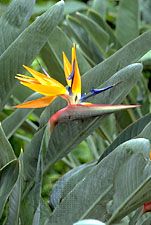
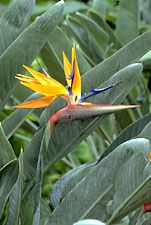
- Bird-of-paradise flower (Strelitzia reginae): Perhaps the most famous member of the family, this South African native is widely cultivated as a houseplant and in warm-climate gardens for its vibrant orange and blue flowers that resemble the head of a tropical bird.134
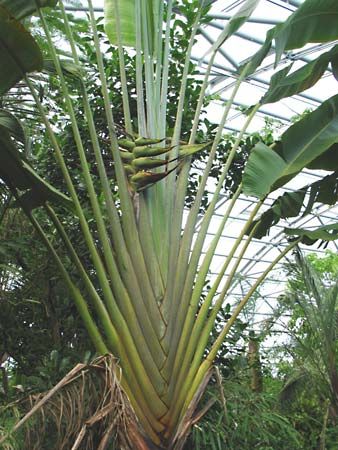
- Traveler’s tree (Ravenala madagascariensis): Native to Madagascar, this plant is easily recognized by its massive, fan-shaped arrangement of leaves. It is the largest member of the Zingiberales order and is named for the water stored in its leaf bases, which has historically served as an emergency water source for travelers.154
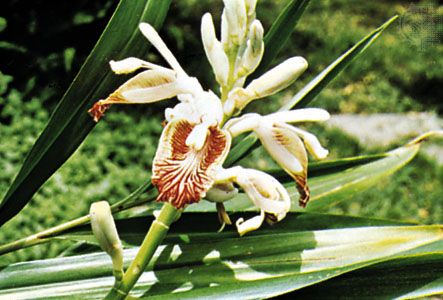
- White bird-of-paradise (S. alba) and Giant white bird-of-paradise (S. nicolai): These species are larger than S. reginae and are noted for their distinctive white- to cream-coloured flowers.13
- Rush-leaved strelitzia (S. juncea): A unique species characterized by its long, needlelike leaves, which provide it with a degree of frost resistance compared to its relatives.1
We could dive deeper into the specific cultivation requirements for these ornamental species if you are interested.
Sources
- Strelitziaceae — Encyclopædia Britannica
- ravenala — Merriam-Webster
- traveler’s tree — Encyclopædia Britannica
- bird-of-paradise flower — Encyclopædia Britannica
- Zingiberales - Families — Encyclopædia Britannica
Published on · 3 min read