Bird-of-paradise Flower
The bird-of-paradise flower (Strelitzia reginae) is an ornamental plant belonging to the Strelitziaceae family, native to South Africa. It is widely…
What is bird-of-paradise flower?
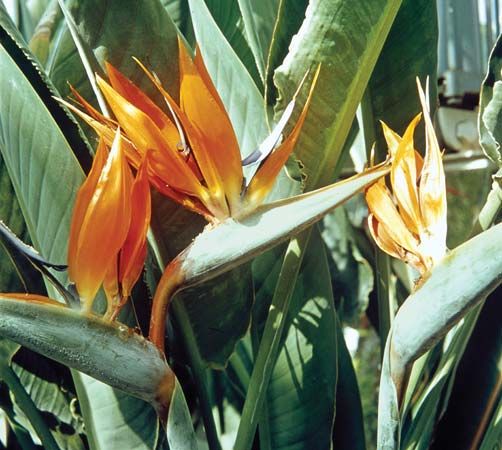
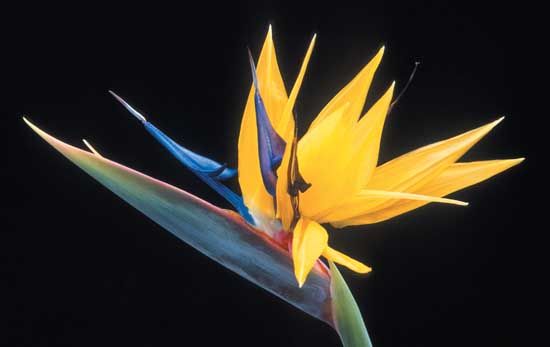
The bird-of-paradise flower (Strelitzia reginae) is an ornamental plant belonging to the Strelitziaceae family, native to South Africa. It is widely cultivated in warm climates and as a houseplant for its striking foliage and unique, showy flowers, which resemble the plumage of birds-of-paradise.1
Physically, the plant grows from rhizomes to heights of 1 to 1.5 metres. It features stiff, bluish-green, oblong leaves and distinctive orange and blue flowers that emerge from a boat-shaped green bract.12
While S. reginae is the most common, other members of the genus Strelitzia are also referred to as bird-of-paradise flowers, including the white bird-of-paradise and the giant bird-of-paradise. It is important to distinguish these from unrelated species like the desert bird-of-paradise, which belongs to the pea family (Fabaceae).13
How do you care for a bird-of-paradise as a houseplant?
The provided search results do not contain specific instructions on the care requirements for a bird-of-paradise as a houseplant, such as light, water, or soil preferences.
Sorry, the Britannica knowledge base does not contain this information.
What are the differences between the white and giant bird-of-paradise species?
The white bird-of-paradise (Strelitzia alba) and the giant bird-of-paradise (S. nicolai) are both members of the Strelitziaceae family and are closely related to the more common bird-of-paradise flower (S. reginae).13
While both species are cultivated for their attractive foliage and unusual flowers, they share the following characteristics:
- Flower Color: Unlike the orange and blue flowers of S. reginae, both the white and giant bird-of-paradise feature white- to cream-coloured flowers.1
- General Appearance: Both are members of the genus Strelitzia and are grown as ornamentals in warm climates for their striking, large, paddle-shaped leaves that are borne on long petioles.13
The provided information does not detail specific morphological differences between S. alba and S. nicolai beyond their shared classification and floral coloration. Both are distinct from the mountain strelitzia (S. caudata), which can grow over 5 metres tall, and the rush-leaved strelitzia (S. juncea), which is noted for its needlelike leaves.3
What are the actual birds-of-paradise that the flower is named after?
The bird-of-paradise flower (Strelitzia reginae) is named for its striking resemblance to the showy forest birds known as birds-of-paradise, which belong to the family Paradisaeidae.14
These birds, comprising approximately 45 species, are primarily found in the New Guinea highlands and nearby islands, with some species also inhabiting Australia. They are renowned for the bizarre shapes and vibrant colors of the males’ plumage, which they display during elaborate courtship rituals.4
Notable examples include:
- Plumebirds (Paradisaea): Seven species known for their elongated, wire-like tail feathers and filmy flank plumes.4
- Flagbirds: Including the six-plumed birds-of-paradise and the King of Saxony’s bird-of-paradise, which feature unique head-streamers or flag-tipped wires.4
- Riflebirds (Ptiloris): Named for the resemblance of their plumage to historical British rifleman uniforms or for their distinct, bullet-like hissing calls.4
Sources
- bird-of-paradise flower — Encyclopædia Britannica
- bird-of-paradise — Merriam-Webster
- Strelitziaceae — Encyclopædia Britannica
- Bird-of-paradise — Encyclopædia Britannica
- Paradisaeidae — Merriam-Webster
Published on · 2 min read