Tree Poppy
The term "tree poppy" most commonly refers to Dendromecon rigida, a shrub or small tree belonging to the poppy family (Papaveraceae). Native to the chaparral…
What is tree poppy?
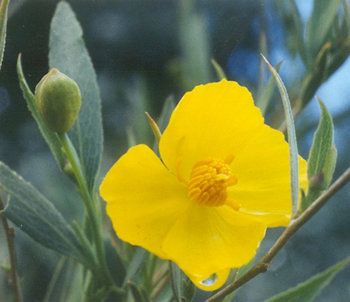
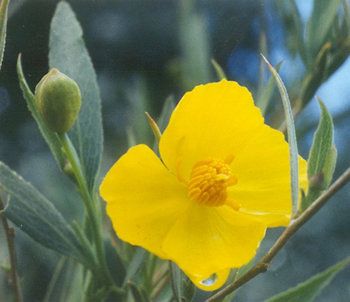
The term “tree poppy” most commonly refers to Dendromecon rigida, a shrub or small tree belonging to the poppy family (Papaveraceae). Native to the chaparral regions of southern California and northwestern Mexico, this plant typically reaches heights between 0.5 and 3 metres. It is characterized by narrow, gray-green waxy evergreen leaves, shreddy yellow-gray bark, and deep butter-yellow blooms with four or six petalsyellow blooms with four or six petals.1
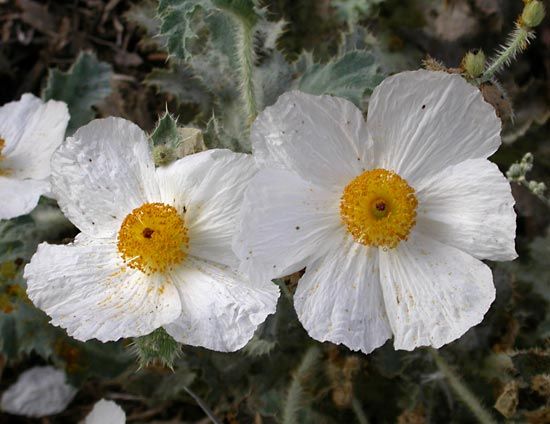
A related species, the island tree poppy (Dendromecon harfordii), is endemic to the Channel Islands and can grow up to 6 metres tall. Because these plants are only hardy in regions with mild winters, they are primarily cultivated as ornamentals in such climates. In some contexts, the name may also be used to describe other shrubby California plants within the Papaveraceae family, such as the Matilija poppy.12
What is the difference between the tree poppy and the California poppy?
While both the tree poppy and the California poppy belong to the Papaveraceae family, they differ significantly in their growth habits, life cycles, and physical characteristics.
Key Differences
Feature
Tree Poppy (
Dendromecon rigida
)
California Poppy (
Eschscholzia californica
)
Growth Habit
Shrub
or small tree (0.5–3 metres tall)
Annual
herbaceous plant
Annual
herbaceous plant
Foliage
Narrow, gray-green, waxy evergreen leaves
Feathery, gray-green foliage
Flowers
Deep butter-yellow, 4–6 petals
Usually pale yellow, orange, or cream, 4 petals
Bark
Shreddy, yellow-gray bark
N/A (herbaceous stem)
The tree poppy is a woody, perennial shrub native to chaparral regions, whereas the California poppy is an annual that grows from seeds and is known for its ability to emerge en masse during “super bloom” events. Additionally, the California poppy is the official state flower of California California poppy is the official state flower of California.124
How does the chaparral ecosystem support plants like the tree poppy?
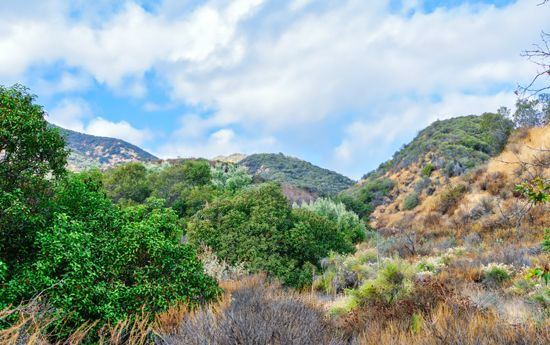
The chaparral ecosystem supports plants like the tree poppy through a climate characterized by hot, dry summers and mild, wet winters, which dictates the survival strategies of its vegetation.1
To thrive in this environment, the tree poppy utilizes sclerophyll adaptations—specifically its narrow, waxy, evergreen leaves—which help the plant minimize water loss during the arid summer months. The chaparral biome is highly biodiverse, and its community composition is shaped by factors such as elevation, soil type, and rainfall.51
Furthermore, wildfires are a natural and necessary component of the chaparral ecosystem. These fires help maintain the shrubby growth form of the landscape by clearing dense ground cover and preventing the encroachment of larger trees. Many plants in this ecosystem have evolved to rely on these fire cycles for seed germination and regeneration, ensuring the community returns to its pre-fire density over time.1
What are some other unique plants found in the Channel Islands?
The Channel Islands off the coast of southern California are renowned for their unique biodiversity, hosting several hundred varieties of plants, including many indigenous species.
Among the most notable flora found on the islands is the giant coreopsis, also known as the sunflower tree. This striking plant is a hallmark of the islands’ distinct botanical landscape. In addition to such unique specimens, the islands feature a variety of characteristic vegetation, including:
- Chamise chaparral: A common shrubland community adapted to the region’s climate.
- Coastal sage: Low-growing, aromatic shrubs typical of the coastal environment.
- Wildflowers and grasses: These contribute to the islands’ diverse plant life.
- Pine trees: Found specifically on Santa Cruz and Santa Catalina, which are the only islands in the chain that are forested.7
The islands’ rugged, mountainous terrain and isolation have allowed these species to thrive, creating a unique ecological environment distinct from the mainland.7
Sources
- tree poppy — Encyclopædia Britannica
- tree poppy — Merriam-Webster
- poppy — Encyclopædia Britannica
- California poppy — Encyclopædia Britannica
- Chaparral — Encyclopædia Britannica
- Savanna: Top Questions — Encyclopædia Britannica
- Channel Islands — Encyclopædia Britannica
Published on · 3 min read