What Is a Super Bloom?
A super bloom is a rare botanical phenomenon occurring in desert and semiarid ecosystems, where an unusually large number of annual wildflowers germinate and…
What is a super bloom?
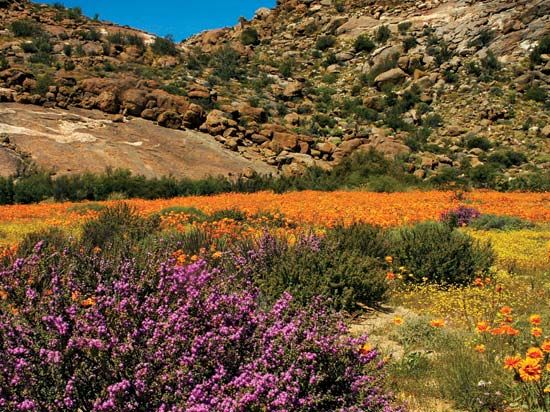
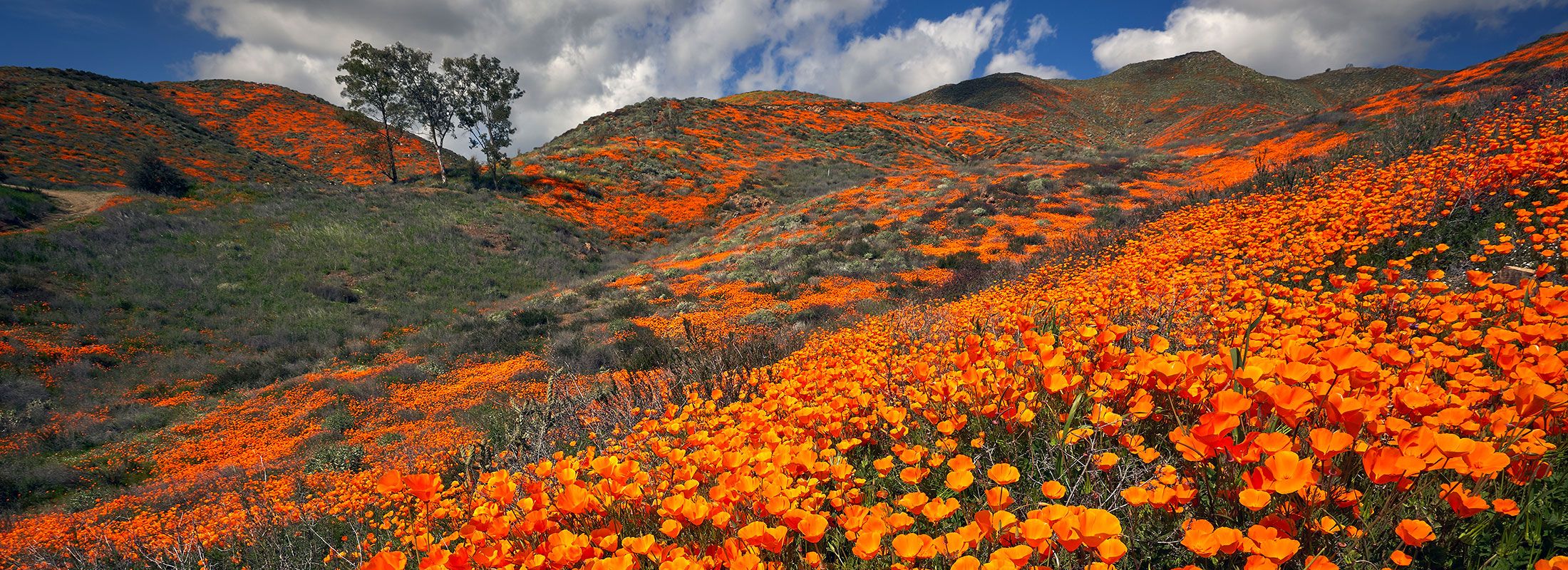
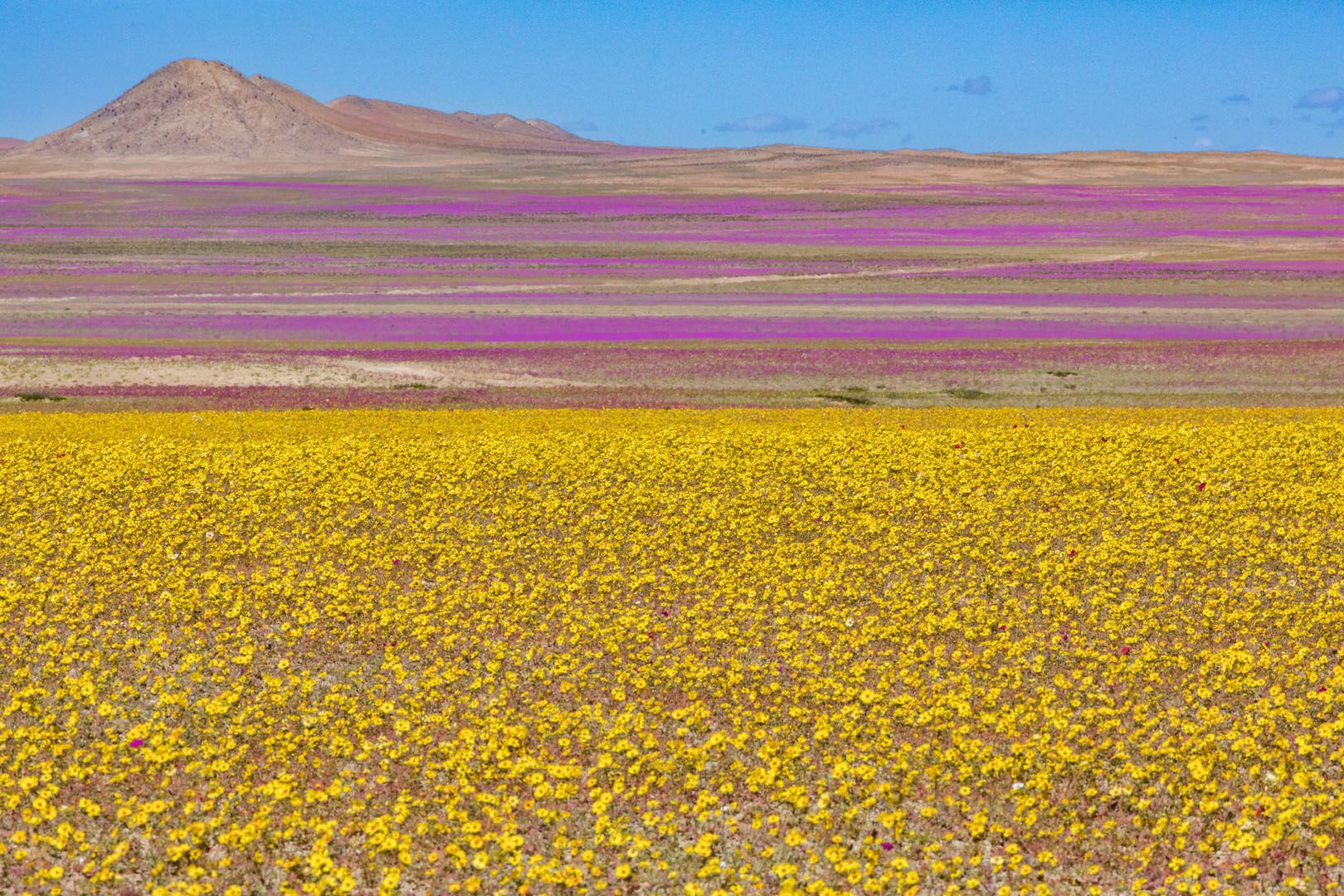
A super bloom is a rare botanical phenomenon occurring in desert and semiarid ecosystems, where an unusually large number of annual wildflowers germinate and bloom simultaneously. This event transforms typically sparse landscapes into vibrant, sweeping carpets of color.1
These displays are triggered by specific environmental conditions, most notably a period of drought followed by unusually abundant, well-timed winter rainfall. This moisture allows seeds that have remained dormant in the soil seed bank for years—or even decades—to sprout at once. Mild spring temperatures are essential to sustain the plants through their rapid life cycle, while extreme heat, wind, or frost can disrupt the process.1
Because these wildflowers are delicate, it is vital to practice ethical stewardship by staying on marked trails. Stepping off-path can crush plants before they set seed, which depletes the seed bank and threatens the possibility of future blooms.1
What is a soil seed bank and how does it function?
A soil seed bank is the natural reservoir of seeds stored within the leaf litter, on the soil surface, or buried in the ground of an ecosystem. It serves as a vital survival mechanism, allowing plant populations to persist through environmental stresses like drought, wildfire, or other disturbances.3
How It Functions
The function of a seed bank is governed by seed dormancy, which dictates how long a seed remains viable before germination.
- Transient Seed Banks: These contain seeds with little to no dormancy. They are typically depleted and reestablished annually, common in many long-lived perennials like trees and shrubs.3
- Persistent Seed Banks: These contain seeds that remain viable for more than a year, acting as a long-term reserve. This is crucial for annual plants in harsh environments, where they may lie dormant for decades until ideal conditions—such as specific rainfall or fire-related chemical signals—trigger mass germination.31
By maintaining this reserve, plants ensure that even if a single growing season fails, the population can recover when conditions improve.31
How do desert wildflowers adapt to survive extreme heat and drought?
Desert wildflowers have evolved diverse strategies to survive extreme heat and drought, primarily by avoiding these conditions through their life cycles or by employing specialized physical adaptations.
Life Cycle Strategies
Many desert wildflowers are ephemeral plants, which survive unfavorable periods as dormant seeds within the soil seed bank. These plants complete their entire life cycle—germinating, flowering, and producing seeds—in a matter of weeks following rare, heavy rainfall. By remaining dormant during harsh conditions, they avoid the stress of drought entirely.3415
Morphological and Physiological Adaptations
Plants that remain active in arid environments, known as xerophytes, utilize several mechanisms to manage water:
- Water Storage: Succulents store water in thick, fleshy stems or leaves.64
- Reduced Water Loss: Adaptations include waxy leaf coatings, reduced leaf surface area, and dense, hairy or reflective leaf coverings that minimize transpiration4.74
- Dormancy: Some perennials become physiologically inactive during dry periods, while others rely on underground structures like bulbs, tubers, or rhizomes to store energy until moisture returns.4
- Root Systems: Deep root systems allow some plants to access moisture stored far beneath the soil surface.4
What role do biological soil crusts play in desert ecosystems?
Biological soil crusts are thin, living layers formed by communities of specialized organisms—including cyanobacteria, lichens, mosses, and microfungi—that occupy the uppermost millimeters of soil in arid and cold regions.11
These crusts perform several critical ecological roles:
- Soil Stabilization: Filamentous cyanobacteria secrete sticky mucilage that binds soil particles together, protecting the ground from erosion.11
- Water Management: The roughened surfaces of the crusts slow rainwater runoff, while the organisms and their mucilage absorb and slowly release water, significantly increasing soil infiltration.11
- Soil Fertility: Crusts are vital sources of fixed carbon. Furthermore, cyanobacteria and cyanolichens convert atmospheric nitrogen into organic compounds, providing essential nutrients in desert environments where nitrogen levels are typically low.11
Because these organisms are brittle when dry, they are highly susceptible to mechanical damage from trampling or vehicles. Recovery is exceptionally slow, often taking centuries in the driest regions.11
Sources
- What is a super bloom? — Encyclopædia Britannica
- Sargassum — Encyclopædia Britannica
- Soil seed bank — Encyclopædia Britannica
- Xerophyte — Encyclopædia Britannica
- Ephemeral — Encyclopædia Britannica
- Seed - Afterripening, stratification, and temperature effects — Encyclopædia Britannica
- Plant development - Dormancy of the embryo — Encyclopædia Britannica
- Sahara: Top Questions — Encyclopædia Britannica
- Biosphere - Humidity — Encyclopædia Britannica
- Desert - Population and community development and structure — Encyclopædia Britannica
- Biological soil crust — Encyclopædia Britannica
- soil - Organisms — Encyclopædia Britannica
- duricrust - Factors involved in duricrust formation — Encyclopædia Britannica
Published on · 3 min read