Urial
Sorry, the Britannica knowledge base does not contain information regarding the specific lifespan of a urial in the wild or in captivity.
What is the typical lifespan of a urial in the wild versus in captivity?
Sorry, the Britannica knowledge base does not contain information regarding the specific lifespan of a urial in the wild or in captivity.
What is the scientific classification of the urial, and how does it relate to other sheep species?
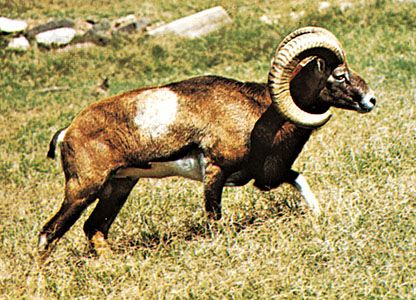
The scientific classification of the urial is complex, and taxonomists often disagree on its designation. While commonly referred to as Ovis orientalis, some zoologists classify it as O. vignei or O. gmelini. Due to significant genetic variation within and between populations, the exact number of subspecies—typically estimated between six and nine—remains a subject of debate.12
Regarding its relationship to other species, the urial is considered a more primitive relative of the argali, the largest living wild sheep. The classification of urials is further complicated by their relationship to mouflons; some experts group them together, while others categorize them as separate species. A key biological distinction exists between these groups: western urials (mouflons) possess 54 diploid chromosomes, whereas eastern urials have 56. These wild sheep are distinct from other Caprinae, such as the argali, which are better adapted to extreme high-altitude environments and exhibit different social behaviors.31
In which geographical regions can urials be found, and what types of habitats do they prefer?
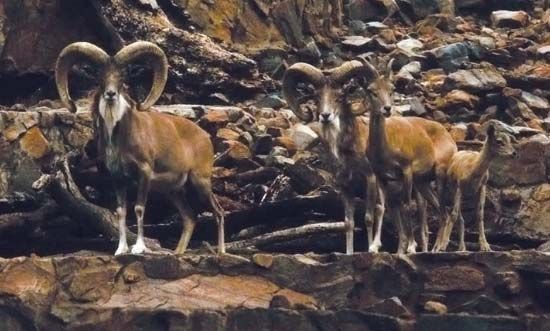
Urials (Ovis orientalis) are distributed across a vast geographical range, spanning from northwest India and Ladakh through Pakistan, Afghanistan, and Iran, extending as far as southwest Russia.1
Regarding their habitat, urials typically favor arid, open landscapes with few or no trees. While they are generally found at relatively low altitudes, they are highly adaptable and can inhabit elevations exceeding 4,000 metres (13,000 feet) in regions like Ladakh. There is evidence suggesting that their current preference for open terrain may be a recent adaptation, as they may have originally been woodland animals. During the birthing season, ewes seek out the protection of eroded gullies and the upper reaches of ravines to provide a shady retreat for their young.1
Because they occupy arid, low-productivity environments, these wild sheep naturally occur at low population densities. Their habitat often places them in close proximity to human settlements, where they face significant competition for resources from domestic livestock and increased risks from poaching.1
What are the main threats facing urial populations in the wild?
Urial populations face several critical threats that have rendered the species vulnerable to extinction, with many subspecies currently classified as endangered. The primary challenges include:
- Habitat Competition: Urials inhabit low-altitude, open terrain that is frequently utilized by humans for livestock, including cattle, sheep, and goats. These domestic animals act as ecological competitors for limited resources and can transmit diseases to wild urial populations.1
- Human Encroachment and Poaching: Because their habitats are often near human settlements, urials are highly susceptible to excessive hunting and poaching. The illegal taking of wildlife remains a major existential threat to many species, contributing significantly to biodiversity loss.14
- Trophy Hunting: Male urials are highly valued by trophy hunters. This targeted pressure often leads to the overhunting of mature rams, which causes severe damage to the viability of local populations.1
- Low Population Density: Naturally occurring at low densities—often fewer than one individual per 100 hectares—urials are inherently more sensitive to environmental disturbances and human-induced mortality.1
Urgent conservation measures and sustainable management are considered essential to ensure the long-term survival of these wild sheep.1
Sources
Published on · 3 min read