What Is the Difference Between Archaeology and Paleontology?
While both archaeology and paleontology involve field research, excavation, and the analysis of remains to understand the past, they focus on fundamentally…
What is the difference between archaeology and paleontology?
While both archaeology and paleontology involve field research, excavation, and the analysis of remains to understand the past, they focus on fundamentally different subjects.1
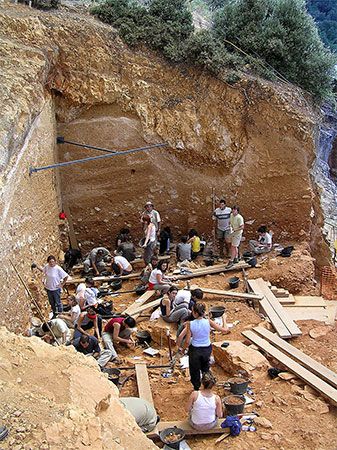
- Archaeology is the study of past human life and activities through the examination of material remains. Archaeologists analyze artifacts—such as tools, jewelry, buildings, and burial sites—to reconstruct the history, culture, and social structures of human societies. They often work within departments of anthropology, history, or classics.123
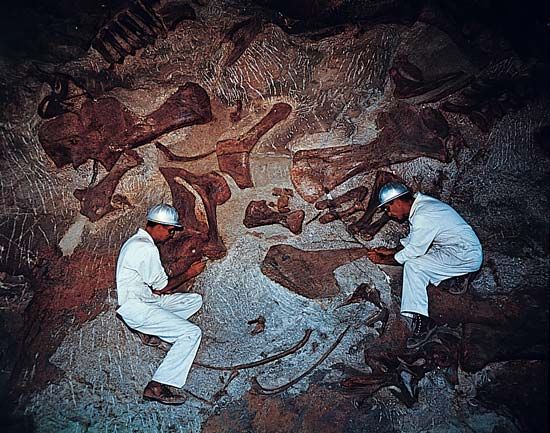
- Paleontology is the scientific study of life from the geologic past, including animals, plants, fungi, and bacteria. Paleontologists study fossils to understand evolutionary patterns, the biology of ancient organisms, and how Earth has changed over vast timescales. They are typically based in geology or biology departments.14
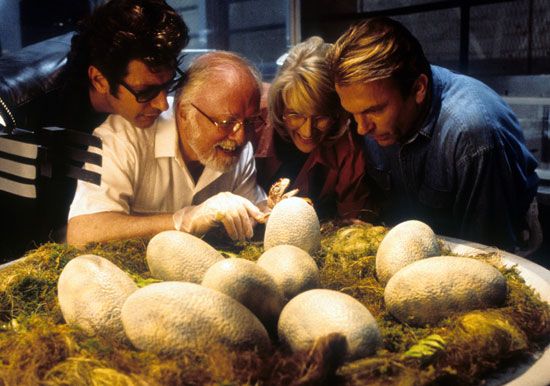
A simple way to distinguish them is by their popular cultural associations: archaeology is often likened to the work of Indiana Jones, while paleontology is associated with the study of dinosaurs as seen in Jurassic Park.1
What are some common dating methods used by both archaeologists and paleontologists?
Archaeologists and paleontologists utilize a variety of dating methods to establish chronologies, broadly categorized into relative and absolute techniques.567
Relative Dating
Relative dating determines the sequence of events without providing a specific numerical age.6
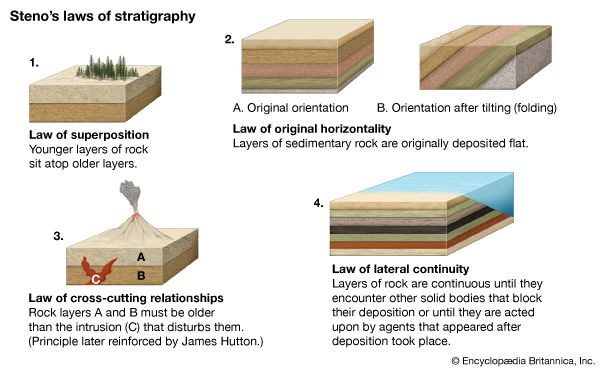
- Stratigraphy: This method relies on the law of superposition, which posits that in undisturbed sedimentary layers, the oldest deposits are at the bottom and the youngest are at the top.6
- Cross Dating: Archaeologists often use this to date undated sites by identifying artifacts of known age from other cultures found within the same context.5
- Chemical Analysis: Techniques such as measuring the fluorine content in bones can help determine the relative age of remains, often used to detect intrusive burials or faked specimens.58
Absolute Dating
Absolute dating provides numerical ages, often through the analysis of radioactive isotopes.6
- Radiocarbon Dating: Developed by Willard F. Libby, this method measures the decay of carbon-14 in organic materials like bone, wood, or ash. It is effective for specimens up to approximately 50,000 years old.59
- Potassium-Argon Dating: This technique measures the decay of radioactive potassium into argon. It is highly versatile and can date volcanic rocks and minerals ranging from tens of thousands to billions of years old.10115
- Dendrochronology: This discipline dates events by analyzing the annual growth rings of trees, providing precise chronologies for the last several thousand years.1213
- Varve Analysis: By counting the annual layers of sediment (varves) left by melting glaciers, researchers can establish an absolute chronology for specific regions.58
We could dive deeper into how these methods are calibrated against one another or explore the specific challenges of dating older fossil records.
How do archaeologists use artifacts to learn about daily life in ancient civilizations?
Archaeologists reconstruct the daily lives of ancient civilizations by systematically recovering and analyzing material culture—the objects made, used, and discarded by past human societies. By examining these artifacts, researchers can infer how people interacted with their environment, organized their labor, and structured their social lives.3
Methods of Analysis
- Classification and Taxonomy: Archaeologists categorize objects by their material, form, and production process. This helps identify specialized tools, such as pottery or stone axes, which reveal insights into trade routes and the organization of work.1718
- Environmental Context: By analyzing microscopic remains like phytoliths, starch grains, and pollen found on tools or in sediments, archaeologists can determine what plants were consumed or cultivated, providing a window into ancient diets and agricultural practices.19
- Scientific Collaboration: Experts in fields like metallurgy and petrology help identify the origins of materials, revealing how far ancient peoples traveled or traded to acquire resources.17
- Bioarchaeology: By studying human skeletal remains, bioarchaeologists test hypotheses regarding health, social status, and population movements, offering a direct look at the physical realities of ancient life.2021
What are the different types of fossils that paleontologists study?
Paleontologists study a wide range of remains and traces that provide evidence of past life. These are generally categorized based on how they were preserved and what they reveal about an organism.26
Types of Fossil Preservation
- Hard Parts: The most common fossils are the preserved hard parts of organisms, such as shells, bones, and teeth. These may remain unaltered or undergo processes like permineralization, where minerals fill the pores of the bone or shell, or mineralization (replacement), where the original material is entirely replaced by new minerals.26
- Impressions and Molds: When an organism is dissolved by acidic solutions, it may leave a cavity in the rock. If this cavity is later filled by new mineral deposits, it creates an impression or cast of the original structure.26
- Soft Tissue Preservation: While rare, soft parts can be preserved under exceptional conditions. Examples include insects trapped in amber (resin fossilization) or carcasses preserved in ice.26
- Carbonization: Plants and other organic matter can be flattened between rock layers, leaving behind a thin carbon film that preserves the shape and details of the organism.26
- Microfossils: These are fossils too small to be seen without magnification, often studied to understand subsurface stratigraphy.26
- Trace Fossils: These do not contain the organism itself but provide evidence of its behavior, such as tracks, trails, burrows, and waste products.26
Additionally, paleontologists may encounter subfossils, which are remains that are only partially fossilized or are of a more recent geologic age.27
Sources
- What is the difference between archaeology and paleontology? — Encyclopædia Britannica
- paleontology — Encyclopædia Britannica
- Anthropology - Archaeology — Encyclopædia Britannica
- Archaeology — Encyclopædia Britannica
- potassium-argon dating — Encyclopædia Britannica
- dating - Potassium–argon methods — Encyclopædia Britannica
- Archaeology - Dating — Encyclopædia Britannica
- dating: Top Questions — Encyclopædia Britannica
- dendrochronology — Encyclopædia Britannica
- Did you know? — Merriam-Webster
- carbon-14 dating — Encyclopædia Britannica
- dendroclimatology — Merriam-Webster
- dating — Encyclopædia Britannica
- radiocarbon dating — Merriam-Webster
- geochronology - Accumulational processes — Encyclopædia Britannica
- dating - Major methods of isotopic dating — Encyclopædia Britannica
- Anthropology - Bioarchaeology — Encyclopædia Britannica
- Origins of agriculture - Research techniques — Encyclopædia Britannica
- Archaeology - Classification and analysis — Encyclopædia Britannica
- Archaeology - Historical judgments — Encyclopædia Britannica
- Homo habilis - Behavioral inferences — Encyclopædia Britannica
- bioarchaeology — Merriam-Webster
- history of the organization of work - Pottery — Encyclopædia Britannica
- artifacts — Merriam-Webster
- Did you know? — Merriam-Webster
- fossil — Encyclopædia Britannica
- taxonomy - Making a classification — Encyclopædia Britannica
- subfossil — Merriam-Webster
- subfossorial — Merriam-Webster
- Pseudoschwagerina — Encyclopædia Britannica
Published on · 4 min read