Why Are Plants Green?
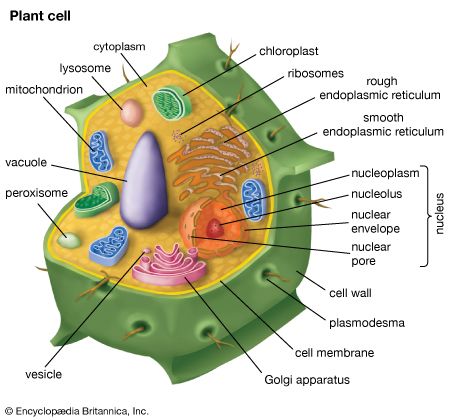
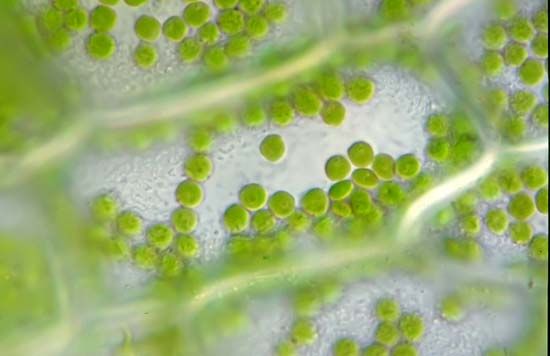
Plants appear green primarily due to a pigment called chlorophyll, which is located within the chloroplasts of plant cells.
Why are plants green?
Plants appear green primarily due to a pigment called chlorophyll, which is located within the chloroplasts of plant cells.1
Chlorophyll is essential for photosynthesis, the process by which plants convert light into chemical energy. This pigment absorbs light most efficiently in the blue and red portions of the electromagnetic spectrum. Because chlorophyll does not absorb green light effectively, it reflects that wavelength, which is why plants appear green to the human eye.12
While plants also contain other pigments like carotenoids—which can produce yellow, orange, or red hues—chlorophyll is typically present in such high concentrations that it masks these other colors during the growing season. As chlorophyll breaks down in deciduous leaves during autumn, these underlying pigments are revealed.1
How does photosynthesis convert light into chemical energy?
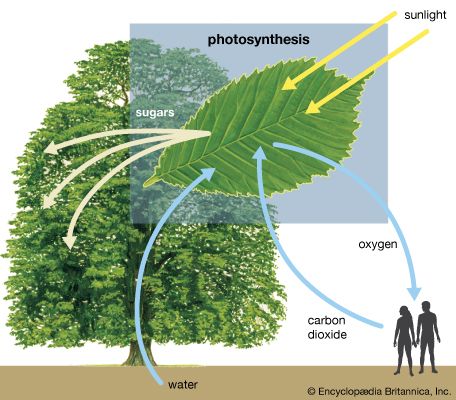
Photosynthesis converts light energy into chemical energy through two interdependent stages occurring within the chloroplasts of plant cells: the light-harvesting reactions and the carbon-assimilating (dark) reactions.5
The Light Reactions
The process begins when pigments—primarily chlorophyll and carotenoids—arranged in thylakoid membranes act as antennae to absorb sunlight. This energy is transferred to specialized chlorophyll molecules in the reaction centers, triggering the release of [electrons].56
As these electrons move through a series of carriers, they create a charge difference across the membrane, similar to a battery. This flow of electrons and the resulting movement of hydrogen ions lead to the production of ATP and [NADPH], which serve as the chemical energy carriers for the next stage. Additionally, water molecules are split, releasing oxygen as a byproduct.652
The Dark Reactions
In the stroma, the Calvin-Benson cycle uses the ATP and NADPH generated in the light reactions to convert carbon dioxide into glucose. This cycle fixes carbon into organic compounds, providing the energy-rich sugars that sustain the plant.576
Why do leaves change color in the autumn?
Leaves change color in the autumn as part of a controlled process triggered by shortening days and cooling temperatures, which signal trees to prepare for dormancy.910
During the growing season, leaves appear green due to high concentrations of chlorophyll, the pigment essential for photosynthesis. As autumn approaches, chlorophyll production ceases and the existing pigment begins to degrade. This breakdown reveals other pigments that were previously masked:119
- Carotenoids: These pigments produce yellow and orange hues and are present in the leaf throughout the season.1110
- Anthocyanins: These pigments, which create red and purple shades, often accumulate in the leaves as chlorophyll fades.1110
This color change is a precursor to leaf abscission, where the plant creates an abscission layer to safely detach the leaf. Dropping leaves is a vital survival strategy, as it prevents the delicate tissues from freezing and protects the tree from wind damage and the weight of snow during winter.910
What are the roles of carotenoids and other pigments in plants?
Plants utilize a variety of pigments to facilitate essential biological processes, primarily photosynthesis and reproduction. These pigments are categorized by their chemical structures and specific functional roles.
Photosynthetic Pigments
- Chlorophyll: The primary pigment in green plants, chlorophyll is essential for photosynthesis, as it captures solar energy to drive the conversion of light into chemical energy.12
- Carotenoids: These yellow, orange, or red pigments serve as accessory pigments. They trap solar energy and transfer it to chlorophyll, thereby expanding the range of light wavelengths a plant can utilize.12
- Bilichromes: Linear pigments such as phycocyanins and phycoerythrins act as accessory pigments in red algae. Additionally, phytochrome is a critical blue pigment that regulates developmental responses, including seed germination, flowering, and anthocyanin synthesis.13
Reproductive and Protective Pigments
- Anthocyanins: These water-soluble, red-to-blue flavonoid pigments are vital for attracting pollinators and seed dispersers through the coloration of flowers and fruits.3
- Advertising Coloration: Plants use specific colors to signal pollinators. For instance, many bird-pollinated flowers are red, while insect-pollinated flowers often feature yellow, orange, or ultraviolet patterns that guide pollinators to nectar.1415
Sources
- Why are plants green? — Encyclopædia Britannica
- Chlorophyll: Top Questions — Encyclopædia Britannica
- coloration - Bilins — Encyclopædia Britannica
- Photosynthesis - Step one: Light absorption and energy transfer — Encyclopædia Britannica
- Plant - Basic mechanisms — Encyclopædia Britannica
- photochemical reaction - Photochemical steps in photosynthesis — Encyclopædia Britannica
- Photosynthesis - Energy efficiency of photosynthesis — Encyclopædia Britannica
- What Does Photosynthesis Produce? — Encyclopædia Britannica
- Why Do Leaves Change Color in the Fall? — Encyclopædia Britannica
- Why Do Leaves Fall in Autumn? — Encyclopædia Britannica
- Why do leaves change colors in the fall? — Encyclopædia Britannica
- Carotenoid — Encyclopædia Britannica
- Anthocyanin — Encyclopædia Britannica
- coloration - Interspecific signals — Encyclopædia Britannica
- Tropical rainforest - Relationships between the flora and fauna — Encyclopædia Britannica
Published on · 3 min read