Why Do Apes Live in Groups?
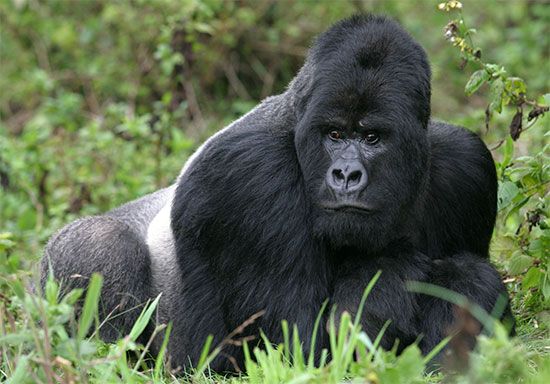
Most apes—with the notable exception of orangutans—live in groups to enhance their survival, protection, and ability to raise offspring.
Why do apes live in groups?
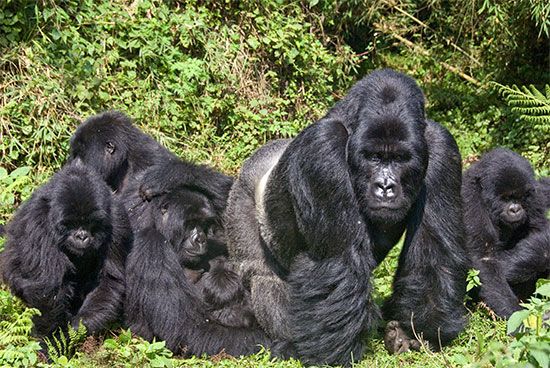
Most apes—with the notable exception of orangutans—live in groups to enhance their survival, protection, and ability to raise offspring.1
Living in a group provides several key advantages:
- Social Learning: Because apes have a long developmental period before reaching adulthood, extended time with peers and adults is essential for acquiring survival skills and navigating complex social systems.1
- Protection: Group living serves as a collective defense mechanism against predators and rivals. For example, chimpanzees conduct boundary patrols to defend their territory and group members.1
- Cooperation: Working together in hunting, foraging, and sharing resources increases the likelihood of survival for all members.1
This social structure is supported by the high degree of behavioral plasticity in primates, which is driven by their large, complex brains.2
Why do orangutans prefer to live solitary lives?
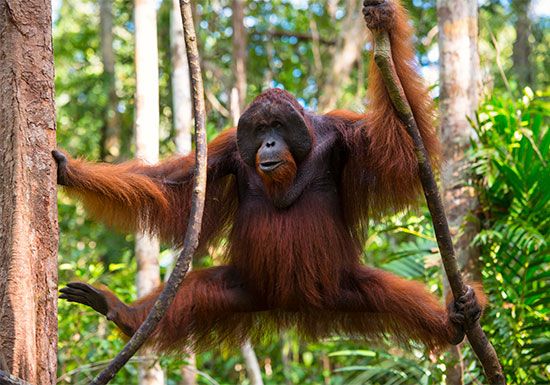
Orangutans possess a unique social organization described as semisolitary, which distinguishes them from all other apes that typically live in groups.134
Rather than maintaining constant group cohesion, orangutans operate at low population densities, typically averaging only two to three individuals per square kilometre. Their social structure is characterized by the following:3
- Individual Ranges: Adult males are the most solitary members of the species, maintaining large home ranges and actively avoiding other adult males.3
- Selective Association: While they generally live alone, they do associate for specific purposes. Adult males may associate with sexually receptive females for consortships lasting 3 to 10 days, and subadult males primarily associate with females.3
- Social Dynamics: Although adult females live with their dependent young, adolescent females are noted to be almost gregarious.3
This semisolitary lifestyle is an adaptation that contrasts sharply with the highly social, group-based survival strategies—such as collective defense and cooperative foraging—seen in other great apes like chimpanzees and gorillas.13
How do apes learn survival skills from their peers?
Apes learn essential survival skills primarily through social learning, a process where knowledge is transmitted from generation to generation by observing and imitating parents, elders, and peers. Because apes have a long period of juvenile and adolescent development, they remain under adult surveillance for an extended time, providing ample opportunity to acquire the expertise needed to function as adults within their complex social systems.1567
Key aspects of this learning process include:
- Observation and Imitation: Young apes watch their mothers and other group members to learn how to find food, care for their young, and navigate their environment. For example, younger chimpanzees acquire specific tool-using behaviors—such as using sticks to probe for termites—by observing the techniques of their elders.56
- Cultural Transmission: This social learning leads to the development of group-specific “cultures,” where different populations of the same species may possess unique repertoires of tool use, communication styles, and food preferences that are passed down through the generations.6
- Social Integration: Beyond physical survival, this extended period of interaction allows juveniles to learn the nuances of their social hierarchy, including how to reconcile disputes and cooperate in activities like hunting, foraging, and collective defense.157
What are the differences between great apes and other primates?
Great apes (family Hominidae) are distinguished from other primates—such as monkeys and lesser apes (gibbons)—by several key anatomical, cognitive, and evolutionary characteristics.
Anatomical Differences
- Absence of Tails: Unlike most monkeys, all apes lack an external tail; their remnant vertebrae are fused into a tailbone, or coccyx.4
- Skeletal Structure: Apes possess broad chests and scapulae positioned on the back, allowing for full rotation at the shoulder. Their wrists contain a cartilage pad that provides increased flexibility, and they have fewer lumbar vertebrae than Old World monkeys.4
- Internal Anatomy: Apes are characterized by the presence of an appendix.4
Cognitive and Behavioral Distinctions
- Intelligence: Great apes exhibit higher cognitive abilities than monkeys and gibbons. They are capable of abstract reasoning and can recognize themselves in mirrors, a trait indicating self-awareness that is rare in the animal kingdom.49
- Tool Use: While some monkeys show limited capabilities, great apes demonstrate advanced tool use, such as using sticks to forage for food in the wild.4
- Social Complexity: Great apes have more complex brains and, with the exception of the orangutan, typically live in social groups that facilitate social learning and collective defense.48
While humans are zoologically classified as great apes, they are often distinguished by their larger brain size, advanced linguistic capabilities, and striding two-legged gait.4
Sources
- Why do apes live in groups? — Encyclopædia Britannica
- primate - General structure — Encyclopædia Britannica
- orangutan — Encyclopædia Britannica
- ape — Encyclopædia Britannica
- How Other Species Learn — Encyclopædia Britannica
- chimpanzee - Intelligence — Encyclopædia Britannica
- primate - Reproduction and life cycle — Encyclopædia Britannica
- human evolution - Learning from the apes — Encyclopædia Britannica
- Hominidae — Encyclopædia Britannica
Published on · 3 min read