Why Do Flamingos Stand on One Leg?
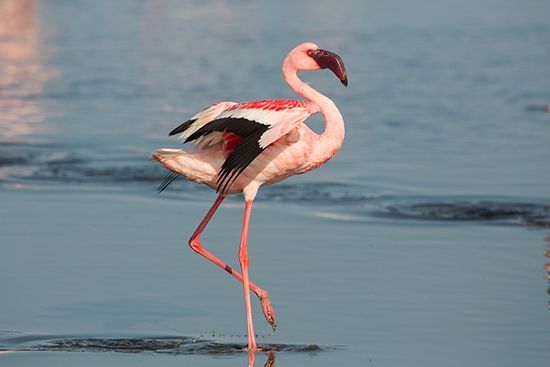
The behavior of flamingos standing on one leg has long intrigued researchers, though no single theory has been confirmed with certainty.
Why Do Flamingos Stand on One Leg?
The behavior of flamingos standing on one leg has long intrigued researchers, though no single theory has been confirmed with certainty.1
Several hypotheses have been proposed to explain this habit:
- Body Temperature Regulation: Because birds lose significant heat through their legs and feet, tucking one leg against the body may help conserve heat. Observations show that flamingos are more likely to stand on one leg in cooler temperatures, which is particularly relevant as they spend much of their time in water that can lower their body temperature.12
- Energy Conservation and Balance: Some suggest the stance is a natural reflex that aids in balance, potentially linked to the ability to rest while keeping the body stable.1
- Other Factors: Additional theories include the desire to dry out their legs or to reduce exposure to waterborne parasites and other environmental hazards.12
While one early theory suggested that standing on one leg reduced muscle fatigue to allow for a quicker escape from predators, studies have shown that flamingos are actually faster when starting from a two-legged position.1
Why are flamingos pink?
Flamingos are not born pink; they are actually born with dull gray feathers. Their iconic vibrant color is not a hereditary trait, but rather a result of their diet.3
The pink hue comes from carotenoids, specifically a red-orange pigment called beta-carotene. Flamingos consume large quantities of algae, brine fly larvae, and brine shrimp that are rich in these pigments. Once ingested, enzymes in the bird’s digestive system break down the carotenoids, which are then absorbed by fats in the liver and deposited into their skin and feathers. Because their diet consists almost exclusively of these carotenoid-filled foods, they are able to maintain their bright coloration.32
The intensity of a flamingo’s color can vary depending on their specific habitat and food sources, ranging from deep red or orange to pale pink or even white. In zoo settings, keepers sometimes supplement the birds’ food with colorants to prevent their plumage from fading.32
How do flamingos feed in the water?
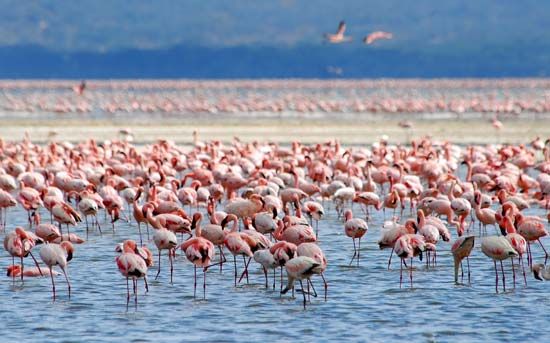
To feed, flamingos wade through shallow waters, using their webbed feet to stir up organic matter from the bottom. While keeping their heads submerged and swinging them from side to side, they utilize their specialized, thick, downturned bills to filter food from the water.
Inside the bill, small, comblike structures act as a sieve, straining out their diet of diatoms, algae, blue-green algae, and small invertebrates like mollusks and crustaceans. This unique feeding mechanism allows them to efficiently extract nutrients from the muddy water of their wetland environments.3
What other animals use thermoregulation to stay warm?
All animals engage in thermoregulation to maintain an optimal internal temperature range, though their methods vary significantly based on their classification as endotherms or ectotherms.56
Endotherms (Warm-blooded)
Endotherms, primarily birds and mammals, generate heat internally through high metabolic activity. When external temperatures drop, they use physiological responses like shivering or increasing their metabolism to produce heat. To conserve warmth, they may employ vasoconstriction or fluff their fur/feathers to enhance insulation.786
Ectotherms (Cold-blooded)
Ectotherms—including reptiles, amphibians, fishes, and invertebrates—rely on external sources like sunlight or heated surfaces to regulate their body temperature. Their strategies include:69
- Behavioral adjustments: Moving to warmer or cooler locations, such as seeking shelter in burrows or resting near the bottom of water bodies during winter.569
- Biochemical adaptations: In freezing environments, some species, such as the wood frog, produce cryoprotectants like glucose or glycoproteins to prevent ice crystals from damaging their cells.9
- Heat-shock proteins: During heat stress, these animals release proteins that stabilize their internal structures to prevent damage from high temperatures.9
Sources
- Why Do Flamingos Stand on One Leg? — Encyclopædia Britannica
- Flamingo — Encyclopædia Britannica
- Why Are Flamingos Pink? — Encyclopædia Britannica
- Why are some eggs brown and some white? — Encyclopædia Britannica
- Thermoregulation — Encyclopædia Britannica
- Endotherm — Encyclopædia Britannica
- Thermoreception - Behaviour and thermoregulation — Encyclopædia Britannica
- dinosaur - Ectothermy and endothermy — Encyclopædia Britannica
- Ectotherm — Encyclopædia Britannica
Published on · 3 min read