Why Are Flamingos Pink?
Flamingos are not born pink; they are actually hatched with dull gray feathers. Their iconic vibrant coloration is not a hereditary trait but is instead a…
Why Are Flamingos Pink?
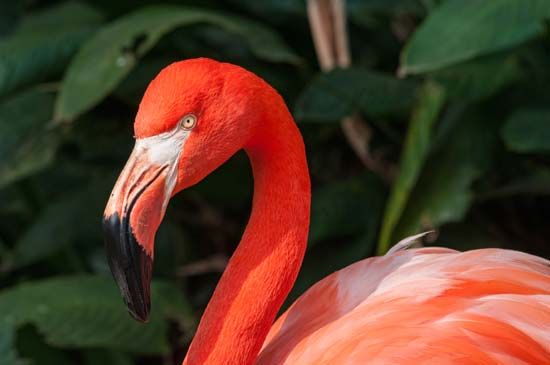
Flamingos are not born pink; they are actually hatched with dull gray feathers. Their iconic vibrant coloration is not a hereditary trait but is instead a direct result of their diet.
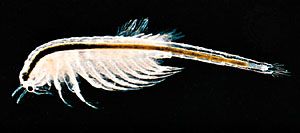
The pink, orange, or red hues in their feathers and skin come from carotenoids—specifically beta-carotene—which are pigments found in the algae, brine fly larvae, and brine shrimp that make up the birds’ diet. When a flamingo eats these organisms, its digestive enzymes break down the pigments, which are then absorbed by fats in the liver and deposited into the feathers and skin. Because their diet consists almost exclusively of these carotenoid-rich foods, the birds are able to maintain their bright appearance.
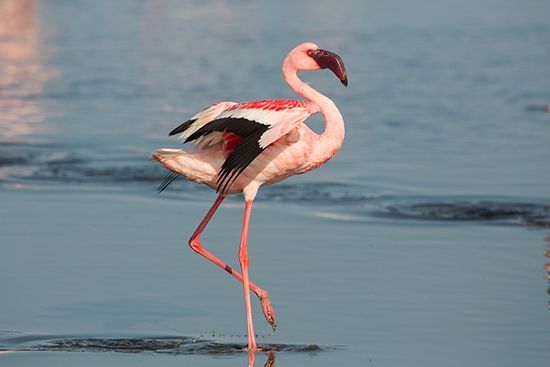
The intensity of a flamingo’s color can vary depending on its specific species, its habitat, and the seasonal availability of its food sources. Some individuals may appear as deep red or orange, while others might be pale pink or even white if their diet lacks sufficient pigment-producing nutrients.1
What other animals get their color from their diet?
Many animals rely on the ingestion of carotenoids—a group of yellow, orange, and red pigments—to develop their distinct coloration. Because animals cannot synthesize these pigments themselves, they must obtain them through their diet.
Beyond flamingos, several other animals exhibit coloration derived from these dietary pigments:
- Salmon: The characteristic pink-red flesh of salmon is a result of the carotenoids they consume in their diet, primarily from eating crustaceans.1
- Birds: In many avian species, carotenoids are responsible for vibrant displays, such as the red-colored feathers seen in various birds and the yellow pigmentation often found in their tarsal (lower leg) skin, beaks, or egg yolks.21
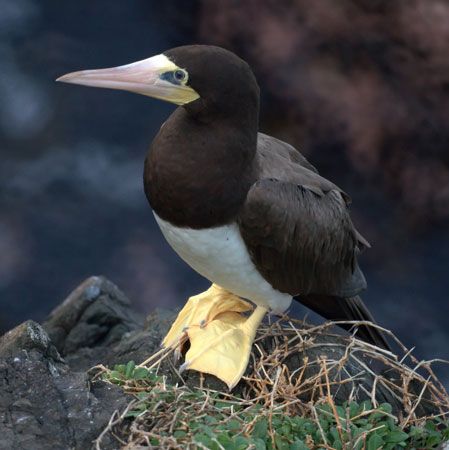
- Blue-footed Booby: The striking blue feet of the blue-footed booby are also attributed to the presence of carotenoids.1
- Invertebrates: Many crustaceans and insects incorporate these pigments into their shells, wings, or wing covers to achieve their specific color patterns.21
While some animals, like the horse or the domestic hen, show high selectivity in which specific carotenoids they absorb and store, others—including humans—assimilate a broader range of these pigments into their fat deposits and liver.2
How do flamingos find food in their wetland habitats?
Flamingos are specialized filter feeders that employ a unique method to procure food in their wetland habitats. To begin the process, they wade into shallow waters and use their webbed feet to tramp along the bottom, which stirs up organic matter and small organisms from the mud.67
While feeding, the flamingo holds its head upside down with its bill submerged. As it swings its head from side to side, it sucks water into its mouth and then expels it. The bird’s bill is equipped with small, comblike structures or fine hairlike plates that act as a filter, straining out food particles while the water is pushed out.67
These particles—which include diatoms, algae, blue-green algae, and invertebrates like minute mollusks and crustaceans—are then collected on the tongue and swallowed. This highly specialized feeding mechanism is considered to have its closest parallel in the feeding habits of certain whales.67
What are the six different species of flamingos?
There are six recognized species of flamingos, all belonging to the family Phoenicopteridae. They are categorized as follows:
- Greater Flamingo (Phoenicopterus roseus): This species is found across parts of Africa, southern Europe, and Asia, with a subspecies known as the Caribbean flamingo (P. ruber ruber) inhabiting tropical and subtropical America.6
- Chilean Flamingo (Phoenicopterus chilensis): Primarily an inland species found in South America.6
- Andean Flamingo (Phoenicoparrus andinus): A smaller species that lives at high altitudes in the Andes Mountains.6
- Puna (or James’s) Flamingo (Phoenicoparrus jamesi): Another smaller species native to the high Andes, which was once thought to be extinct until its rediscovery in 1956.6
- Lesser Flamingo (Phoeniconaias minor): The most abundant and smallest of the species, inhabiting regions of East Africa, South Africa, Madagascar, and India.6
Sources
- Why Are Flamingos Pink? — Encyclopædia Britannica
- coloration - Carotenoids — Encyclopædia Britannica
- coloration - Short-term changes — Encyclopædia Britannica
- Carotenoid — Encyclopædia Britannica
- coloration - Seasonal changes — Encyclopædia Britannica
- Flamingo — Encyclopædia Britannica
- Filter feeding — Encyclopædia Britannica
- Ciconiiform - Feeding habits — Encyclopædia Britannica
Published on · 3 min read