Why Do Vultures Circle?
Vultures circle primarily to locate food while conserving energy. By riding warm thermal updrafts, they can gain altitude and glide for hours, covering vast…
Why do vultures circle?
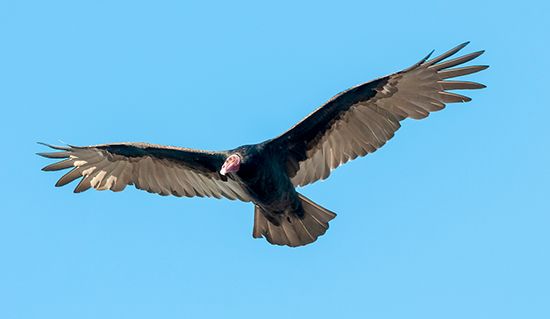
Vultures circle primarily to locate food while conserving energy. By riding warm thermal updrafts, they can gain altitude and glide for hours, covering vast distances with minimal effort. Their specialized wings, which feature a stable V-shape known as a dihedral and slotted primary feathers to reduce air resistance, allow them to remain aloft and maneuver efficiently at slow speeds.1
From these high vantage points, vultures use their exceptional eyesight to scan the ground for carrion. Some species, such as the turkey vulture, also utilize a highly developed sense of smell to detect food hidden beneath forest canopies.12
Circling also functions as a social signal. When one vulture identifies a food source and begins to circle, others in the vicinity observe this behavior and join in. This communal approach allows multiple birds to share a carcass, where they typically follow a strict social hierarchy based on body size and beak strength to feed.12
How do vultures use their sense of smell to find food?
While most birds of prey rely primarily on their vision to locate food, certain species—most notably the turkey vulture—possess a highly developed sense of smell that serves as a critical adaptation for scavenging.123
This olfactory ability is particularly advantageous for finding carrion that is hidden from view, such as food obscured beneath a dense forest canopy. By detecting the scent of decaying matter, these vultures can locate carcasses that might otherwise go unnoticed by species that rely solely on sight.12
In the case of the turkey vulture, this sense of smell is so effective that they are often the first to arrive at a food source. While other vultures may rely on observing the behavior of their peers—joining in once they see another bird circling or descending—the turkey vulture’s ability to “sniff out” a meal allows it to forage independently in environments where visual detection is limited.21
What is the difference between Old World and New World vultures?
Although Old World and New World vultures share a similar appearance and scavenging lifestyle, they are only distantly related and belong to different families: Accipitridae and Cathartidae, respectively.2
Key differences include:
- Nesting Habits: Old World vultures build large stick platform nests in trees or on cliffs, often in colonies. New World vultures do not build nests, instead laying their eggs in bare scrapes within natural cavities or on cliffs.2
- Anatomy and Physiology: New World vultures lack a syrinx, meaning they have no voice, and they possess a perforated nasal septum. Additionally, while Old World vultures have strong feet, New World vultures have weak, flat feet that are poorly adapted for grasping.2
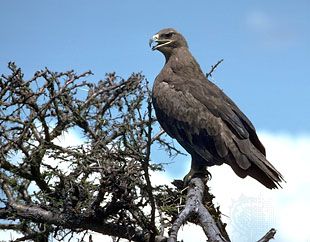
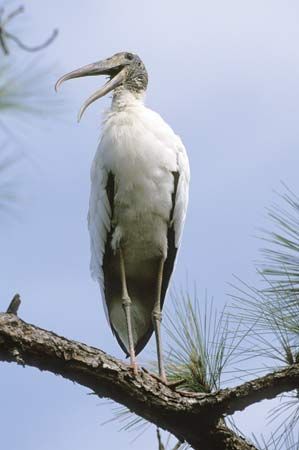
- Classification: Old World vultures are part of the hawk and eagle family, whereas New World vultures are generally classified with storks.2
Despite these differences, both groups exhibit convergent evolution, having developed similar traits—such as bare heads to prevent feather matting and large crops for storing food—to survive as scavengers.24
Why do vultures have bare heads?
Vultures have bare heads as an evolutionary adaptation to their scavenging lifestyle. Because these birds frequently reach inside carcasses to feed on carrion, having a featherless head prevents their feathers from becoming matted with blood and other decaying matter during the process.1
This trait is found in all New World vultures and several species of Old World vultures. While the two groups are only distantly related, this shared characteristic is a prime example of convergent evolution, where unrelated species develop similar physical traits to survive in similar ecological niches.12
Sources
- Why do vultures circle? — Encyclopædia Britannica
- Vulture — Encyclopædia Britannica
- Falconiform - Vision, hearing, and smell — Encyclopædia Britannica
- Falconiform - Evolution and paleontology — Encyclopædia Britannica
- Turkey vulture — Encyclopædia Britannica
Published on · 3 min read