Wild Rye
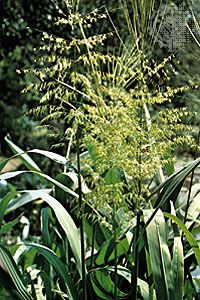
Wild rye refers to any of the 50–100 species of perennial grasses belonging to the genus Elymus within the Poaceae family. Native to temperate and cool…
What is Wild rye?
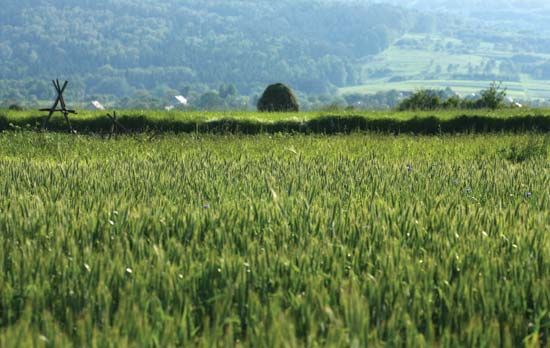
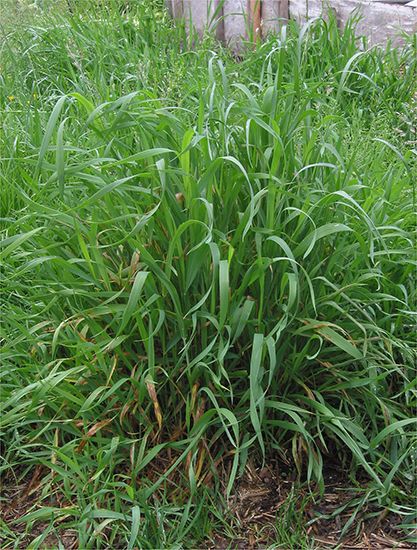
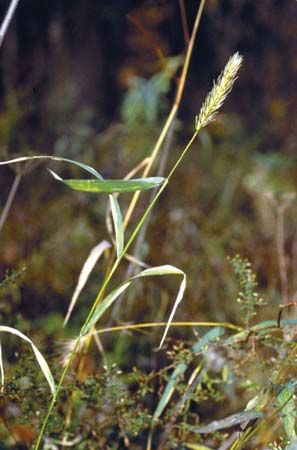
Wild rye refers to any of the 50–100 species of perennial grasses belonging to the genus Elymus within the Poaceae family. Native to temperate and cool regions of the Northern Hemisphere, these grasses are named for their physical resemblance to true rye, though they are distinct plants.12
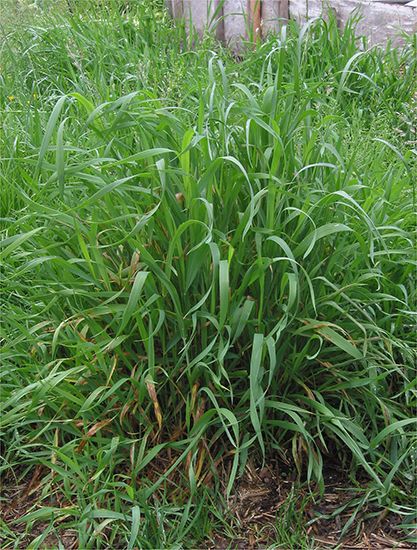
These grasses typically grow as erect, tufted plants with long, linear leaves and nodding or erect inflorescences. While many species are valued as forage, some serve other purposes: quackgrass is frequently utilized for erosion control, and bottlebrush grass is sometimes cultivated as an ornamental plant. Common North American species include Virginia wild rye and Canada wild rye.1
Unlike the cereal grain Secale cereale, which is an annual cultivated for food, wild rye is primarily recognized for its ecological roles and forage utility.12
How does wild rye help prevent soil erosion?
Wild rye, specifically species such as quackgrass, helps prevent soil erosion by acting as a protective vegetative cover.1
Plants serve as a critical defense against erosion by anchoring the soil with their root systems, which stabilize the ground and prevent the loss of topsoil caused by water and wind. In the case of wild rye, some species utilize spreading rhizomes—underground stems that help the plant colonize and bind the soil surface more effectively. By providing this cover, the grass reduces the ability of wind to dislodge soil particles and minimizes the impact of rainfall and surface runoff that would otherwise strip away the earth.31
While wild rye is effective, other grasses like ryegrass (genus Lolium) are also widely recognized for their extensive root systems, which are similarly utilized for erosion control.4
What are the main differences between perennial and annual grasses?
The primary difference between annual and perennial grasses lies in their life cycle and growth patterns:
- Annual Grasses: These plants complete their entire life cycle—from germination to seed production and death—within a single growing season or year. Because they do not survive beyond one year, they must be replanted if continued growth is desired.5
- Perennial Grasses: These plants live for more than two years and are capable of regrowing and reblooming year after year from established root systems or perennating parts.56
Key Functional Differences:
- Root Systems: Perennial grasses typically develop extensive, fibrous root systems, which help them stabilize soil and limit erosion. In contrast, annuals generally lack the long-term root development required for significant soil binding.6
- Energy Allocation: Annuals divert most of their energy into rapid seed production to ensure the next generation. Perennials must balance energy between seed development and maintaining their root systems for survival through subsequent seasons.6
- Maintenance: Perennial agriculture often requires less tilling, labor, and pesticide application compared to annual crops, as perennials can outcompete weeds and adapt to local environmental stressors over time.6
What is the role of rhizomes in plant growth?
A rhizome is a horizontal, typically subterranean plant stem that plays several vital roles in growth and survival:
- Vegetative Reproduction: Rhizomes allow plants to propagate asexually. By spreading horizontally and sending up new shoots from nodes, they enable the parent plant to expand its colony. Many plants, such as bamboo, sugarcane, and various grasses, rely on the fragmentation of these stems for propagation.910
- Storage: These modified stems function as storage organs for starches and proteins. This stored energy is essential for the plant to survive unfavorable conditions, such as drought or extended winters.910
- Perennation: By remaining underground, rhizomes allow plants to survive annual periods of dormancy, ensuring they can regrow when conditions become favorable again.9
Distinguished from roots by the presence of nodes, scale leaves, and internodes, rhizomes are fundamental to the life cycle of many perennial species.10
Sources
- wild rye — Encyclopædia Britannica
- Rye — Encyclopædia Britannica
- What causes soil erosion? — Encyclopædia Britannica
- ryegrass — Encyclopædia Britannica
- Is That Plant 'Perennial' or 'Annual'? — Merriam-Webster
- Perennial agriculture — Encyclopædia Britannica
- panicum — Encyclopædia Britannica
- Poaceae - Characteristic morphological features — Encyclopædia Britannica
- Rhizome — Encyclopædia Britannica
- Angiosperm - Shoot system modifications — Encyclopædia Britannica
Published on · 3 min read