Wood Owl
Wood owls (genus Strix) are distinguished from many other owl species by specific physical and behavioral traits:
How do wood owls differ from other owl species in terms of behavior and appearance?
Wood owls (genus Strix) are distinguished from many other owl species by specific physical and behavioral traits:
Appearance
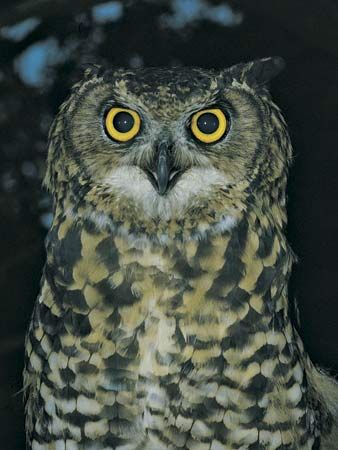
- Facial Features: They possess a conspicuous facial disk but are notably characterized by a lack of ear tufts.1
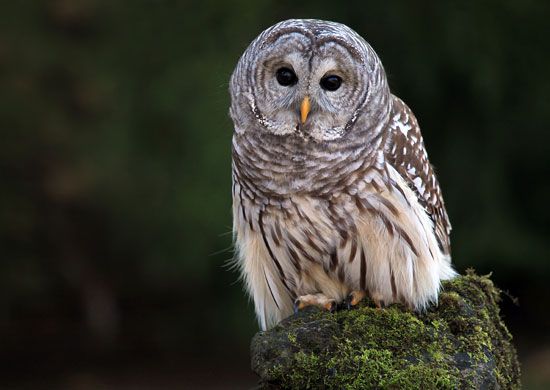
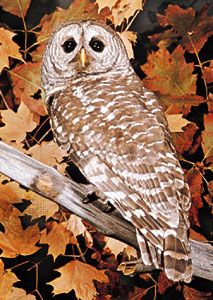
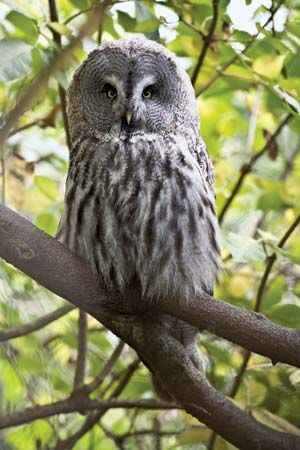
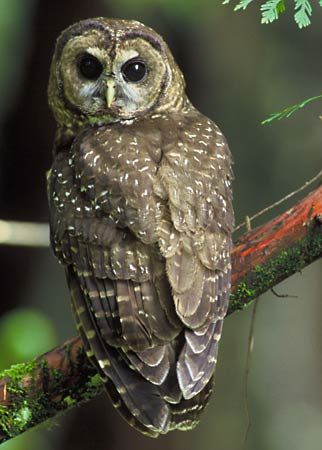
- Plumage: Their appearance varies by species, ranging from the barred brown-and-white pattern of the barred owl to the gray, streaked plumage of the great gray owl.1
Behavior
- Courtship Displays: Wood owls are known for engaging in distinct social behaviors, including bowing, bobbing, and dancing, particularly during courtship.2
- Communication: Like other owls, they utilize vocalizations for territorial defense and mating; however, their physical posturing—such as bowing—serves as a visual component of their communication.2
- Hunting: As woodland-dwelling predators, they typically secure prey by dropping onto it from perches located at the edges of forest openings. Their diet consists of insects, birds, and small mammals, such as rodents and hares.31
What are the distinctive physical characteristics of wood owls?
Wood owls, belonging to the genus Strix, are defined by several key physical characteristics that distinguish them from many other owl species:
- Facial Structure: They possess a conspicuous facial disk, which is a characteristic arrangement of feathers around the eyes that helps concentrate sound.16
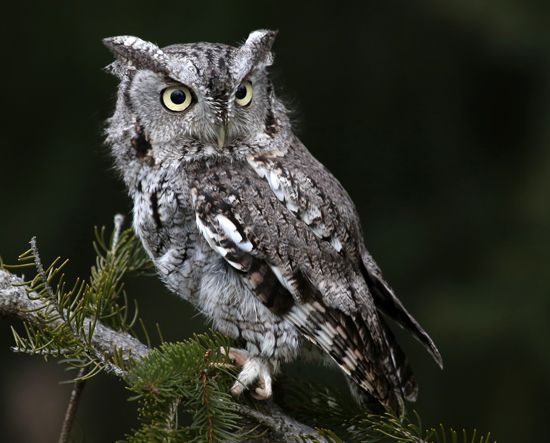
- Absence of Ear Tufts: Unlike many other owls that feature erectile feather tufts (often called “ears” or “horns”) above the eyes, wood owls lack these structures entirely.17
- Plumage Patterns: Their feathers are typically cryptically patterned with streaks, bars, or spots, which provide camouflage against tree bark. For example, the barred owl exhibits a brown-and-white barred pattern, while the great gray owl is heavily streaked and gray to brownish.18
- General Body Plan: Like other owls, they have a broad head, large forward-facing eyes, a small hooked beak, a short tail, and rounded wings.198
How do wood owls hunt, and what are their primary prey?
Wood owls (genus Strix) are nocturnal predators that primarily inhabit woodlands and forests. Their hunting strategy typically involves stationing themselves on perches at the edges of forest openings, from which they swoop down to capture prey with their talons.105
Their diet is diverse, consisting of:
- Small mammals: Primarily rodents and hares.5
- Other animals: They also consume birds, insects, and amphibians.15
Like many other owls, wood owls generally swallow their prey whole. Indigestible materials such as fur, feathers, and bones are later regurgitated in the form of a compact pellet. Their hunting routine is often concentrated around dusk and dawn, following a pattern of alternating between foraging and vocalizing.102
How do wood owls communicate with each other, and what sounds do they make?
Wood owls (genus Strix) communicate through a variety of vocalizations and physical displays, which are essential for marking territory, attracting mates, and maintaining pair bonds.112
Vocalizations
The sounds produced by wood owls vary in pitch, rhythm, and timbre, serving as unique identifiers for the species. While their calls are often described as “songs” in a biological sense, they range from deep hoots to whistles and chirps. A well-known example is the barred owl, whose rhythmic call is frequently transcribed as, “Who cooks for you? Who cooks for you all?”11212
Communication Functions
- Territorial Defense: Owls use vocalizations to establish and defend their home ranges, warning other owls to stay away, particularly during the breeding season.112
- Mating and Pair Bonding: Males use songs to attract females. In many species, these interactions involve complex sequences of calls that help strengthen the bond between a pair.112
- Social Coordination: Beyond mating, calls are used to communicate the location of food or to signal the presence of predators.11
Physical Communication
Communication is not limited to sound; wood owls also utilize visual signals. During courtship, they engage in bowing, bobbing, and dancing behaviors. When threatened, they may perform a defense display by spreading their wings, rocking their bodies, and snapping their bills to appear larger and more intimidating.2
Sources
- Wood owl — Encyclopædia Britannica
- Owl - Behaviour — Encyclopædia Britannica
- Owl - Reproduction and development — Encyclopædia Britannica
- Owl - Annotated classification — Encyclopædia Britannica
- Owl - Ecology — Encyclopædia Britannica
- facial disk — Merriam-Webster
- Strix — Merriam-Webster
- Owl - General features — Encyclopædia Britannica
- Owl - Form and function — Encyclopædia Britannica
- Spotted owl: Top Questions — Encyclopædia Britannica
- Why do owls hoot? — Encyclopædia Britannica
- 9 Superb Owl Words | Strix — Merriam-Webster
Published on · 3 min read