Yellowwood
The genus Podocarpus, commonly known as yellowwood, consists of approximately 100 species of coniferous evergreen trees and shrubs within the family…
What are the key characteristics of the Podocarpus genus, also known as yellowwood?
The genus Podocarpus, commonly known as yellowwood, consists of approximately 100 species of coniferous evergreen trees and shrubs within the family Podocarpaceae.12
Key characteristics include:
- Distribution: These plants are primarily found in the mountain forests of the Southern Hemisphere, with ranges extending north to Mexico, southern China, and southern Japan.12
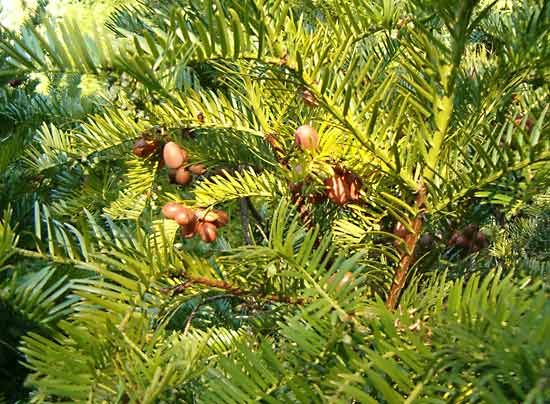
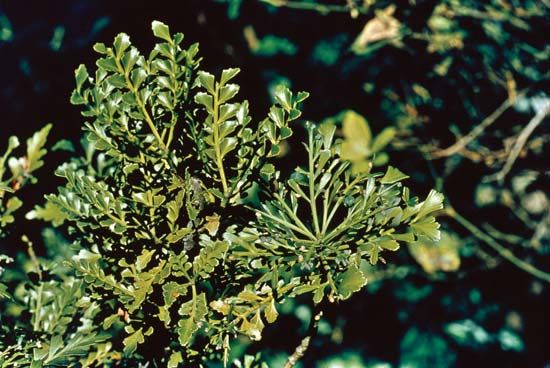
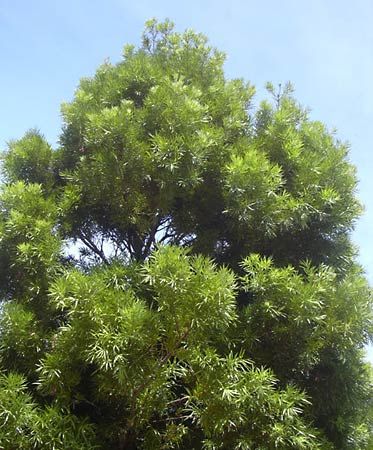
- Physical Features: They typically possess spirally arranged, flattened, or needlelike leaves. As members of the Podocarpaceae, they are generally dioecious, meaning male and female reproductive structures occur on separate plants.32
- Reproduction: The seeds are often surrounded by a fleshy, sometimes brightly colored aril or cone axis.23
- Wood: As the name suggests, most species feature yellowish wood, though some may be brownish or reddish. They are frequently referred to locally as brown or black pines.1
It is important to note that the name “yellowwood” is also used for the genus Cladrastis, a group of unrelated flowering trees in the legume family.1
Are there any threatened or endangered species within the Podocarpus genus?
Where are Podocarpus trees typically found in their natural habitat?
The yellowwood (Podocarpus) genus is the most widely distributed conifer group across the Southern Hemisphere. These trees and shrubs are primarily found in mountain forests throughout this region.42
Beyond their core southern range, their natural habitat extends into several northern areas, reaching as far as:
As members of the Podocarpaceae family, they are well-adapted to these diverse environments, thriving in regions where they can occupy various forest niches.42
What are some of the most common species of Podocarpus, and how do they differ?
The genus Podocarpus, commonly known as yellowwood, encompasses approximately 100 species of coniferous evergreen trees and shrubs. While they share the characteristic of having yellowish, brownish, or reddish wood, they are distinguished by their geographic origins and local common names.12
Key species include:
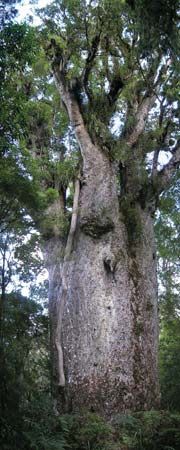
- Australasian Varieties: The brown pine (P. elatus) is native to southeastern Australia. New Zealand is home to several distinct species, including the black pine (P. spicatus), the white pine or kahikatea (P. dacrydioides), the miro (P. ferrugineus), and the totara (P. totara).1
- African Varieties: Southern Africa features the real yellowwood (P. latifolius), the South African yellowwood (P. elongatus), and the common yellowwood (P. falcatus).1
- Asian Varieties: The broad-leaved podocarpus or kusamaki (P. macrophyllus) is found in China and Japan.1
- South American Varieties: The Chilean Andes host the plum-fir (P. andinus) and the willowleaf podocarpus (P. salignus).1
- Caribbean Varieties: The yacca (P. coriaceus) is native to the West Indies.1
These species are generally defined by their spirally arranged, flattened, needlelike leaves and seeds encased in a fleshy aril.3
Sources
- yellowwood — Encyclopædia Britannica
- Podocarpaceae — Encyclopædia Britannica
- Podocarpus — Merriam-Webster
- conifer - Distribution and abundance — Encyclopædia Britannica
Published on · 2 min read