Are Dogs Smarter Than Cats?
The question of whether dogs are smarter than cats remains scientifically inconclusive, as the two species evolved with different habits and roles that make…
Are Dogs Smarter than Cats?
The question of whether dogs are smarter than cats remains scientifically inconclusive, as the two species evolved with different habits and roles that make direct comparisons difficult.1
Biological research has noted that dogs possess approximately 530 million neurons in the cerebral cortex, compared to about 250 million in cats. While this higher neuron count is often cited as a potential indicator of superior intelligence, a direct correlation between brain size or neuron count and overall intelligence has not been conclusively proven.1
Furthermore, while dogs are frequently studied for their social intelligence and cooperative communication, feline behavior has been studied far less extensively in laboratory settings. In instances where both species have been tested on similar tasks, such as locating hidden food, they have achieved comparable results. Ultimately, many scientists argue that comparing the two is illogical because each species has developed the specific cognitive abilities necessary to succeed in its own environment.1
How do scientists measure intelligence in different animal species?
Scientists measure animal intelligence through a variety of experimental methods that assess cognitive abilities, though researchers must be careful to avoid anthropomorphizing behavior, a principle known as Lloyd Morgan’s canon. Because different species have evolved unique survival strategies, measuring intelligence is complex and often depends on the specific criteria used.23
Common indicators of intelligence include:
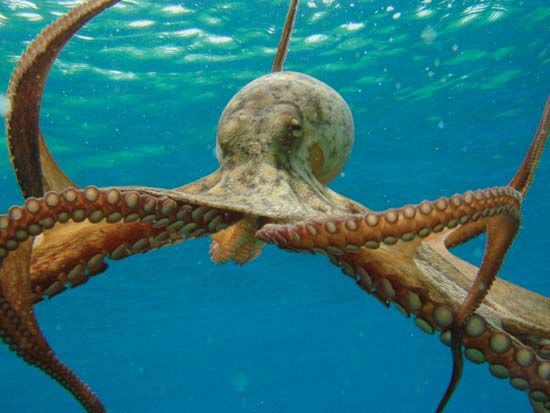
- Problem-Solving: Researchers observe how animals navigate puzzles, such as octopuses unscrewing lids or goats operating levers to access food.3
- Tool Use: The ability to use objects to achieve a goal, such as chimpanzees using sticks to extract larvae or crows using pebbles to raise water levels, is a key metric.3
- Learning Sets: This measures the ability to “learn to learn,” where an animal becomes more efficient at solving new, related problems after mastering previous ones.4
- Self-Awareness: Tests like the mirror-recognition task help determine if an animal can identify its own reflection, a trait observed in elephants and bottlenose dolphins.3
- Abstract Reasoning: Experiments like “matching-to-sample” test whether an animal can generalize rules and apply them to novel stimuli.4
What role does the cerebral cortex play in animal cognition?
The cerebral cortex is the outermost layer of the brain and serves as a critical center for integrating sensory information, directing motor activity, and controlling higher intellectual functions in animals.51
Working in tandem with specialized subcortical structures, the cerebral cortex supports complex cognitive processes, including:
- Information Processing: It is essential for learning, memory formation, and decision-making.1
- Sensory and Motor Control: The cortex is organized into functional lobes—such as the frontal, parietal, temporal, and occipital lobes—that process specific inputs like touch, vision, and sound, while also managing motor responses.51
- Higher Mental Activities: In advanced vertebrates, large portions of the cortex, known as the association cortex, are dedicated to complex cognitive tasks rather than specific sensory or motor functions.1
While the degree of cortical development and convolution varies across species, the cerebral cortex is fundamental to how animals perceive their environment and guide their behavior. In some species, such as dogs, the cortex is often studied for its role in social intelligence and problem-solving, though researchers emphasize that cognitive abilities are shaped by the unique evolutionary needs of each species.516
Why is it difficult to compare the intelligence of different species?
Comparing the intelligence of different species is inherently difficult because animals have evolved unique cognitive adaptations tailored to their specific ecological niches and survival requirements. Several factors contribute to this complexity:12
- Diverse Evolutionary Needs: Each species possesses a unique Umwelt—a sensory world shaped by its environment. Because animals face different behavioral challenges, their “intelligence” is often specialized rather than general. Comparing them using a single scale is often considered illogical, as a trait that is highly adaptive for one species may be irrelevant to another.218
- Lack of Universal Criteria: There is no single, objective metric for intelligence. Indicators such as tool use, problem-solving, and self-awareness are often used, but these tests may favor species whose natural behaviors align with the experimental design.9
- Anthropocentric Bias: Historically, researchers have struggled to avoid anthropomorphism—the tendency to attribute human motivations and cognitive processes to animals. Scientists must adhere to Lloyd Morgan’s canon, which dictates that animal behavior should be explained by the simplest possible theory rather than assuming human-like intellect.4
- Data Deficits: Many species remain understudied in behavioral labs, leading to a lack of comparative data.8
Sources
- Are Dogs Smarter than Cats? — Encyclopædia Britannica
- Which Animal Is the Smartest? — Encyclopædia Britannica
- Animal learning - Generalized rule learning — Encyclopædia Britannica
- Comparative psychology — Encyclopædia Britannica
- cerebral cortex — Encyclopædia Britannica
- Brain — Encyclopædia Britannica
- spatial memory — Encyclopædia Britannica
- Animal behaviour - Instinctive learning — Encyclopædia Britannica
- Animal behaviour - Sensory-motor mechanisms — Encyclopædia Britannica
Published on · 3 min read