Baḥr al-Zarāf
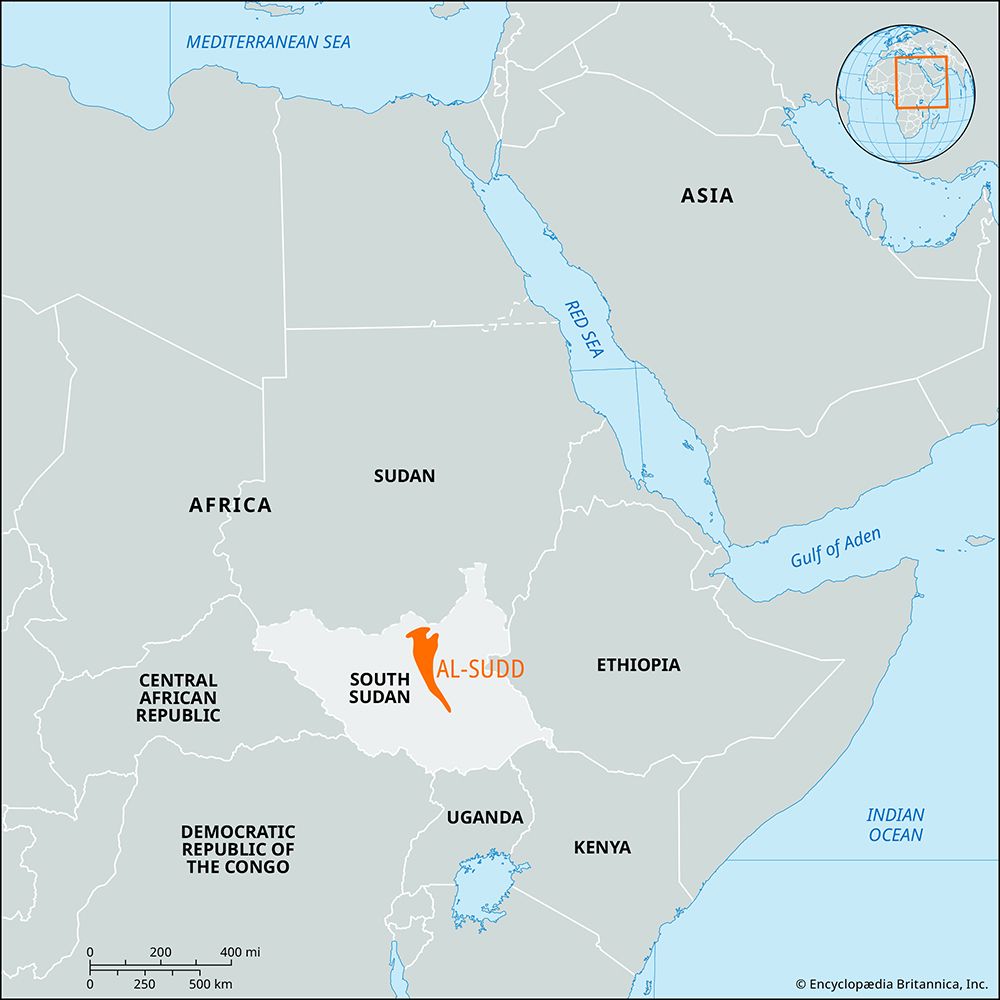
Baḥr al-Zarāf is a river that serves as an arm of the Nile River within the Al-Sudd region of South Sudan.
What is Baḥr al-Zarāf?
Baḥr al-Zarāf is a river that serves as an arm of the Nile River within the Al-Sudd region of South Sudan.1
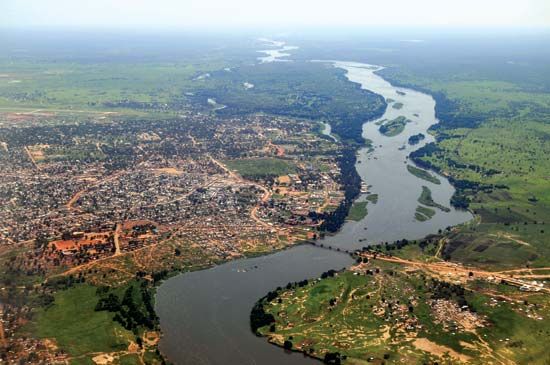
Formed in the swamps north of Shambe, the river diverts water from the Baḥr al-Jabal and flows northward for approximately 150 miles (240 km). It passes the town of Fangak before rejoining the Baḥr al-Jabal about 35 miles (56 km) west of Malakal. Although the river is not navigable, it maintains a permanent connection to the Baḥr al-Jabal through two dredged cuts located where the two streams flow in close proximity.1
What is the significance of the Al-Sudd swamp region?
The Al-Sudd region is a vast, swampy lowland in central South Sudan that plays a critical role in the hydrology of the White Nile. Its significance is defined by several key factors:
- Hydrological Impact: The region acts as a massive natural basin where the Al-Jabal River overflows into a flat, saucerlike clay plain. This process creates a complex network of swamps, lagoons, and side channels, causing the river to lose more than half of its water volume through evaporation.2
- Ecological Barrier: The dense growth of tall papyrus, aquatic grasses, and water hyacinth creates an almost impenetrable barrier to river navigation. This unique environment has historically isolated the region, which remains only sparsely inhabited by the pastoral Nuer people.2
- Developmental History: The region has been the focus of major infrastructure efforts, most notably the Jonglei Canal. This project was designed to bypass the swamps to increase water flow and reclaim land for agriculture, though it was suspended in 1983 due to civil conflict.2
How does the White Nile system function?
The White Nile system functions as a vital, perennial source of water for the Nile, providing a steady flow that is particularly crucial during the dry season. Its operation is defined by the following characteristics:34
- Sources and Formation: The system originates in the East African Lake Plateau, with headstreams flowing into Lake Victoria. The water travels north through Lake Kyoga and Lake Albert before entering South Sudan as the Al-Jabal River.34
- The Al-Sudd Regulator: As the Al-Jabal flows through the Al-Sudd region, the river spreads across a vast, flat clay plain. This creates a massive network of swamps and lagoons that acts as a natural regulator, slowing the water’s progress and causing significant loss through evaporation.324
- Confluence and Flow: The White Nile proper begins at Malakal, where the Al-Jabal joins the Sobat River. The Sobat provides a seasonal surge that compensates for the water lost in the Sudd marshes.354
- Seasonal Dynamics: During the summer flood season, the powerful Blue Nile holds back the White Nile at Khartoum, causing it to pool. However, during the low-water months (April–May), the White Nile provides over 80 percent of the total volume of the main Nile.54
What kind of wildlife lives in the South Sudanese wetlands?
The wetlands of South Sudan, particularly the Al-Sudd region, support a diverse array of wildlife, though populations have been significantly impacted by decades of civil conflict.6
Mammals
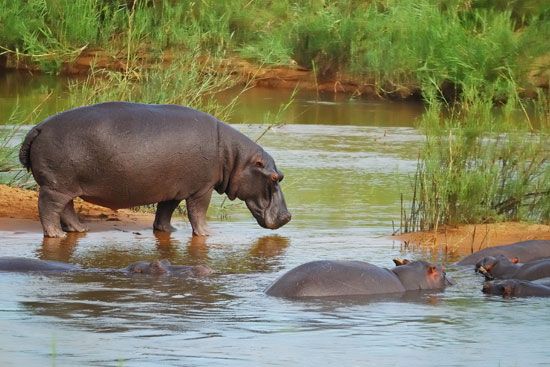
The region is a critical habitat for the hippopotamus, which is now primarily restricted to the Sudd and areas further south within the Nile system. Other large mammals found in the broader South Sudanese landscape include:78
- Herbivores: Elephants, giraffes, zebras, buffalo, warthogs, and various antelope species, such as gazelles, elands, and hartebeests.6
- Primates: Chimpanzees, baboons, and monkeys inhabit the forested areas near these wetlands.6
- Carnivores: Lions, leopards, and cheetahs are present in the surrounding savanna regions.6
Reptiles and Aquatic Life
The riverbanks and swamps are home to a variety of reptiles and fish:
- Reptiles: The Nile crocodile is common throughout the river system. Other reptiles include various lizards, monitor lizards, and soft-shelled turtles.78
- Fish: The Nile system supports numerous species, including lungfish, catfish, and tigerfish.78
Birds and Insects
The wetlands are rich in birdlife, featuring ostriches, cranes, storks, pelicans, plovers, weavers, and shrikes. Insect life is also abundant; mosquitoes are prevalent in the swamps, and the tsetse fly is typically found in areas with streamside vegetation.6
Sources
- Baḥr al-Zarāf — Encyclopædia Britannica
- Al-Sudd — Encyclopædia Britannica
- Nile River - Physiography of Nile River — Encyclopædia Britannica
- White Nile River — Encyclopædia Britannica
- Nile River - Climate and hydrology — Encyclopædia Britannica
- South Sudan - Plant and animal life — Encyclopædia Britannica
- Nile River - Plant and animal life — Encyclopædia Britannica
- Mali - Plant and animal life — Encyclopædia Britannica
- 11 Fascinating Nile River Plants and Animals — Encyclopædia Britannica
Published on · 3 min read