Bananaquit
The bananaquit (Coereba flaveola) is a small tropical bird, measuring about 11 cm (4.5 inches) in length, native to regions ranging from southern Mexico and…
What is Bananaquit?
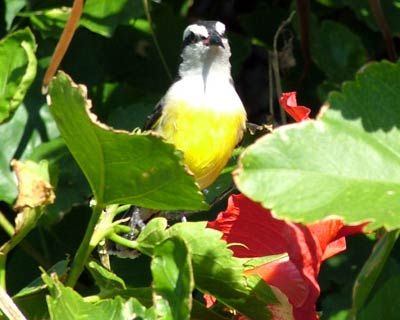
The bananaquit (Coereba flaveola) is a small tropical bird, measuring about 11 cm (4.5 inches) in length, native to regions ranging from southern Mexico and the West Indies to Argentina.12
Characterized by a blackish or gray back, a black head, white eye stripes, and bright yellow underparts, the bird is well-known for its sharp, down-curved bill. It uses this specialized bill to probe flowers for nectar, though its diet also includes insects and fruit. The bananaquit is also known for constructing a domed nest using banana-leaf fiber.12
Taxonomically, the bird’s classification has been a subject of debate. While historically placed in the family Coerebidae, it is sometimes associated with honeycreepers in the family Emberizidae or the tanager family, Thraupidae. Due to these disagreements, some authorities classify it as incertae sedis, or of uncertain position.12
What are honeycreepers?
It is important to clarify that the term “honeycreeper” refers to two distinct groups of birds that are not closely related.
American Honeycreepers
These are four species of tropical birds belonging to the family Thraupidae. They are small, often brilliantly colored, and possess thin, downcurved bills and brushy, sometimes double-tubed tongues adapted for feeding on nectar. They typically build open, cup-shaped nests in trees.3
Hawaiian Honeycreepers
Found exclusively in the Hawaiian Islands, these birds belong to the family Drepanididae. Unlike their American counterparts, they are closely related to cardueline finches. They underwent a significant evolutionary radiation, resulting in diverse bill shapes and diets ranging from nectar to seeds and insects. Unfortunately, habitat loss and invasive species have caused the extinction of at least 8 of the original 23 species, and most survivors are now endangered.4
How do birds help pollinate flowers?
Birds play a vital role as pollinators, particularly in tropical and southern temperate regions, where they are often as significant as insects. Approximately 2,000 bird species—including hummingbirds, sunbirds, and honeycreepers—regularly visit flowers to feed on nectar, pollen, or flower-inhabiting insects.56
Adaptations for Pollination
Birds and flowers have evolved together through coevolution, resulting in specific traits that facilitate pollination:
- Bird Adaptations: Many pollinating birds possess slender, curved beaks and specialized tongues—often brush-tipped or tubular—to reach nectar deep within floral chambers. Because birds have a poor sense of smell but excellent color vision (with high sensitivity to red), they rely on sight to locate food.567
- Floral Adaptations: Bird-pollinated flowers (ornithophilous flowers) are typically odorless, brightly colored (often pure red), and sturdily constructed to withstand a bird’s probing bill. They often feature wide floral tubes and produce copious amounts of nectar to meet the high metabolic demands of their visitors. The stamens are frequently positioned so that they brush against the bird’s head or breast, transferring pollen that often clumps together to ensure efficient fertilization.56
What are some other birds found in the West Indies?
The West Indies host a diverse array of bird species, many of which are unique to the region. Notable examples include:
- Todies: These small, colorful birds are endemic to the West Indies and are related to kingfishers and motmots.10
- West Indian Whistling-Duck: Also known as the West Indian tree duck, this large, secretive, and endangered species is endemic to the Caribbean and is the only duck that breeds in the Cayman Islands.11
- Parrots: Certain islands feature unique parrot species, such as the imperial parrot (Amazona imperialis) and the red-necked parrot (Amazona arausiaca), both of which are found only on the island of Dominica.12
- Hummingbirds: The region is home to many hummingbirds, including the blue-headed hummingbird (Cyanophaia bicolor), which is native exclusively to Dominica and neighboring Martinique.12
Sources
- Bananaquit — Encyclopædia Britannica
- bananaquit — Merriam-Webster
- Honeycreeper — Encyclopædia Britannica
- Hawaiian honeycreeper — Encyclopædia Britannica
- pollination - Birds — Encyclopædia Britannica
- major types of pollinators - Birds — Encyclopædia Britannica
- orchid - Bird pollination — Encyclopædia Britannica
- nectar — Encyclopædia Britannica
- Asparagales - Pollination — Encyclopædia Britannica
- Dominica - Plant and animal life — Encyclopædia Britannica
- Cabo Verde - Plant and animal life — Encyclopædia Britannica
- West Indian whistling-duck — Merriam-Webster
- Coraciiform - Evolution and paleontology — Encyclopædia Britannica
- South America - Fish and bird life — Encyclopædia Britannica
Published on · 3 min read