Bélep Islands
The Bélep Islands are a group of coral islands located in the southwestern Pacific Ocean as part of the French overseas territory of New Caledonia.
What is Bélep Islands?
The Bélep Islands are a group of coral islands located in the southwestern Pacific Ocean as part of the French overseas territory of New Caledonia.1
The archipelago consists of Pott Island, Art Island, and several smaller islets, all situated within the northern extension of the barrier reef that encircles New Caledonia’s main island. Art Island is the largest of the group, measuring approximately 10 miles long and 3 miles wide, with the primary settlement located at Wala. The total land area of the island group is 27 square miles (70 square km), and as of 2004, it had a population of 930.1
What is a barrier reef?
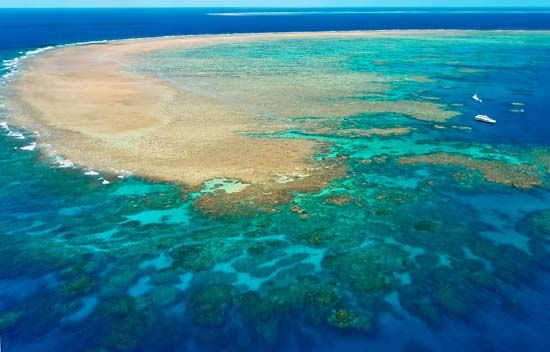
A barrier reef is a type of coral reef that runs roughly parallel to a shoreline but is separated from it by a lagoon or a deep channel.23
Key characteristics of barrier reefs include:
- Structure: They are often pierced by various channels that provide access to the lagoon and the landmass beyond. While some are circular and surround an island, larger examples—such as Australia’s Great Barrier Reef—are complex, linear features made up of chains of reef patches.23
- Formation: According to the theory proposed by Charles Darwin, barrier reefs often begin as reefs fringing a landmass. As the land subsides or sea levels rise, the reef grows upward and outward, creating a lagoon between the reef and the shore.4
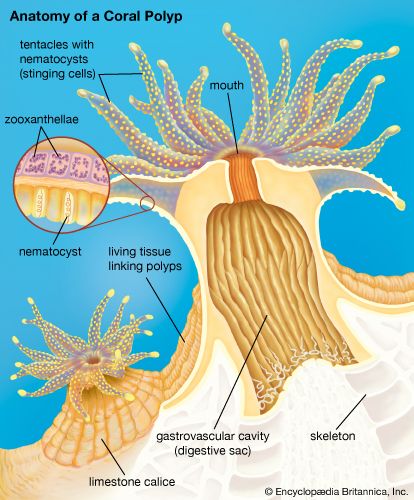
- Composition: Like other coral reefs, they are built over millions of years by the calcium carbonate skeletons of coral polyps, which are bound together by coralline algae and other marine organisms.56
What is the history of New Caledonia?
The history of New Caledonia is defined by its indigenous roots, European colonization, and ongoing political evolution.
Early History and European Arrival
Melanesian peoples settled the islands around 3000 BCE, remaining largely isolated until the late 18th century. In 1774, British explorer James Cook arrived and named the territory New Caledonia. French interest followed, with the territory being annexed by France in 1853.910
Colonial Era and Conflict
From 1864 to 1897, the territory served as a penal colony, while the French administration imported thousands of indentured laborers from across Asia and the Pacific to support mining and agriculture. This period was marked by frequent Melanesian uprisings against land confiscation and restrictive colonial laws, such as the indigénat (native regulations), which remained in force until 1946.910
Modern Political Status
Following World War II, New Caledonia became a French overseas territory. Political tensions between pro-independence groups—notably the Kanak Socialist National Liberation Front (FLNKS)—and those favoring ties with France led to the 1998 Nouméa Accord. This agreement established a path toward potential independence through three referendums, the last of which in 2021 was boycotted by pro-independence groups and resulted in a rejection of independence. Recent years have seen continued unrest, including violent protests in 2024 over proposed electoral changes.910
How do coral islands form?
Coral islands are tropical landmasses formed from the skeletal remains of corals and associated marine organisms. They typically rise only a few meters above sea level and are generally categorized by two distinct methods of formation:
- Uplift: In this process, crustal movements raise a portion of a coral reef system above the water. These islands are often rocky, featuring cliffs and surfaces sculpted by erosion and weathering. While they may have once been atolls, their central lagoons are often shallow or completely dry.6
- Accretion: This occurs when storm waves break off pieces of reef rock, which then mix with finer detritus to form shoals. Over time, currents and wind deposit additional material, and the accumulation of calcium carbonate cements the loose debris together. Once stable, these areas are colonized by plants and animals, which further contribute to soil development.6
The underlying reef structures themselves often develop through the subsidence of volcanic islands, a theory famously proposed by Charles Darwin, where reefs grow upward as the land sinks, eventually leaving behind a ring-shaped reef or atoll.1314
Sources
- Bélep Islands — Encyclopædia Britannica
- barrier reef — Encyclopædia Britannica
- Great Barrier Reef — Encyclopædia Britannica
- coral reef - Types of coral reefs — Encyclopædia Britannica
- Coral Bleaching: A Threat to Our Reefs — Encyclopædia Britannica
- coral reef - Origin and development of reefs — Encyclopædia Britannica
- Coral bleaching — Encyclopædia Britannica
- How and Where Coral Bleaching Is Affecting the Great Barrier Reef — Encyclopædia Britannica
- New Caledonia — Encyclopædia Britannica
- New Caledonia - History of New Caledonia — Encyclopædia Britannica
- New Caledonia - People of New Caledonia — Encyclopædia Britannica
- New Caledonia - Government and society — Encyclopædia Britannica
- coral island — Encyclopædia Britannica
- atoll — Encyclopædia Britannica
Published on · 3 min read