Cape Catoche
Cape Catoche is a cape located on the Caribbean Sea along the northeastern tip of the Yucatán Peninsula in the Mexican state of Quintana Roo.
What is Cape Catoche?
Cape Catoche is a cape located on the Caribbean Sea along the northeastern tip of the Yucatán Peninsula in the Mexican state of Quintana Roo.1
Historically, it is recognized as the first location in Mexico visited by Spanish explorers in 1517. Geographically, the cape sits approximately 150 miles (240 km) west of the westernmost point of Cuba, separated by the Yucatán Channel.12
Who led the first Spanish expedition to the Yucatan Peninsula in 1517?
The first Spanish expedition to the Yucatán Peninsula in 1517 was led by Francisco Hernández de Córdoba, a Spanish adventurer based in Cuba.34
Commissioned by the governor of Cuba, Diego Velázquez de Cuéllar, this voyage was initially intended as a slave-hunting expedition. During this journey, Hernández de Córdoba discovered the east coast of the Yucatán in February 1517, marking the beginning of the modern history of the region’s contact with Europeans.34
What is the significance of the Yucatan Channel for maritime navigation?
The Yucatán Channel is a vital maritime passage that serves as the primary link between the Caribbean Sea and the Gulf of Mexico. Extending 135 miles (217 km) between Cape Catoche, Mexico, and Cape San Antonio, Cuba, it acts as a critical gateway for regional shipping and navigation.67
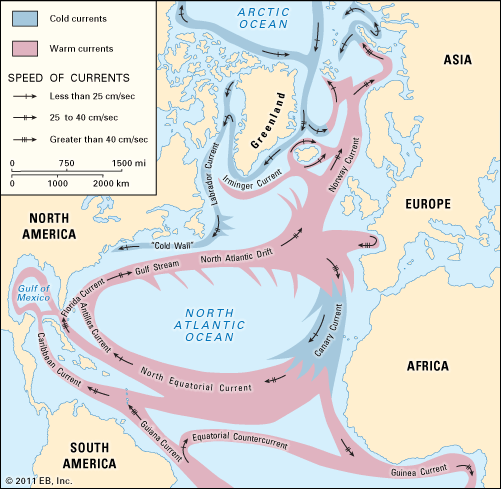
Beyond its role as a transit route, the channel is oceanographically significant. The north and south equatorial currents flow through this strait from the southeast, providing the essential water mass that forms the beginning of the Gulf Stream within the Gulf of Mexico.6
What kind of ecosystems are found along the coast of Quintana Roo?
The coast of Quintana Roo, located in southeastern Mexico, features a diverse range of tropical and marine ecosystems. The region is characterized by:
- Tropical Forests: The state is covered by heavily forested lowlands, which include the protected areas within the Sian Ka’an Biosphere Reserve.
- Marine Reefs: The Caribbean coast is home to extensive marine reefs, which are vital components of the local biodiversity and are also protected within the Sian Ka’an reserve.8
- Coastal Wetlands: The region features muddy shorelines and tidal areas where mangroves—specialized trees and shrubs adapted to salty, oxygen-poor soils—form dense thickets and forests.9
- Subterranean Features: The landscape is dotted with cenotes (water-filled sinkholes) and limestone caves, which are unique geological and hydrological features of the Yucatán Peninsula.8
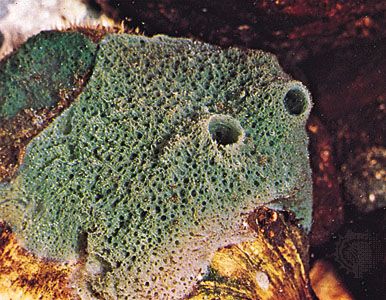
These ecosystems support a variety of life, including turtles and sponges, which are harvested along the coast.8
Sources
- Cape Catoche — Encyclopædia Britannica
- Cape San Antonio — Encyclopædia Britannica
- Yucatán Peninsula — Encyclopædia Britannica
- The Spanish Conquest of the Aztecs, 1519–21: Top Questions — Encyclopædia Britannica
- Mexico - Conquest of Mexico — Encyclopædia Britannica
- Yucatán Channel — Encyclopædia Britannica
- Yucatán Channel — Merriam-Webster
- Quintana Roo — Encyclopædia Britannica
- Mexico - Cultural regions — Encyclopædia Britannica
- mangrove: Top Questions — Encyclopædia Britannica
Published on · 2 min read