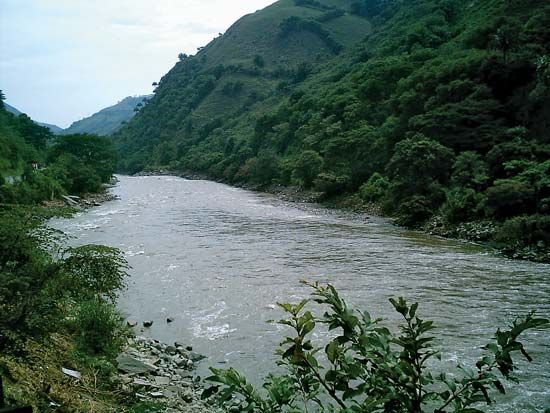
Cauca River
The Cauca River is a major waterway in western and northwestern Colombia. Rising in the Andes near Popayán, it flows northward for 838 miles (1,349 km)…
What is Cauca River?
The Cauca River is a major waterway in western and northwestern Colombia. Rising in the Andes near Popayán, it flows northward for 838 miles (1,349 km) between the Cordilleras Occidental and Oriental before joining the Río Magdalena north of Mompós.12
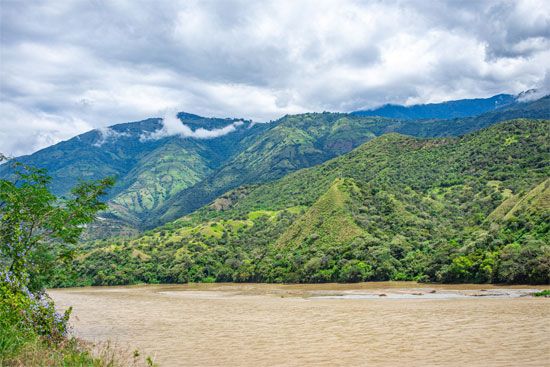
In its middle reaches, the river traverses the Valle del Cauca, a fertile intermontane depression that supports significant agricultural production, including sugarcane, coffee, and various food crops. While the Magdalena River has historically served as a vital transport artery, the Cauca has been less significant for shipping due to the presence of rapids. The river system, which includes the Cauca as a primary tributary, is central to the nation’s socioeconomic activity, supporting a large portion of Colombia’s population.13
What is the importance of the Magdalena River system in Colombia?
The Magdalena River system is the most significant waterway in Colombia, serving as the nation’s primary artery for socioeconomic activity. Its drainage basin, which includes the Cauca River, covers approximately 100,000 square miles—nearly one-fourth of the country—and supports more than three-fourths of the Colombian population.4
The system is vital for several reasons:
- Economy and Trade: It remains a pillar of the economy, facilitating the transport of agricultural products, minerals, and manufactured goods between the interior and the coast. Its fertile alluvial soils support major agricultural production, including coffee, corn, and cacao.24
- Energy and Resources: The river provides drinking water to millions and is a critical driver for the country’s hydroelectric and thermoelectric power generation. It also hosts the nation’s largest concentration of freshwater fishing.2
- Biodiversity: The basin is a hotspot for rich, often endemic, biodiversity, though it faces severe threats from deforestation, pollution, and invasive species.2
How do the Andes Mountains influence the flow of rivers in Colombia?
The Andes Mountains are the primary influence on the flow of rivers in Colombia, acting as a massive topographic barrier that dictates drainage patterns across the country.51
- Structural Control: The Andes divide into three distinct ranges—the Cordillera Occidental, Cordillera Central, and Cordillera Oriental—which create deep structural depressions. These valleys serve as natural avenues for major rivers like the Magdalena and the Cauca, which flow northward between the ranges toward the Caribbean lowlands.52
- Source of Water: The Pasto Massif serves as a critical physiographic complex and the source for many of the nation’s rivers. High-altitude regions, including snowcapped peaks and volcanic zones, provide the water that feeds these extensive river systems.152
- Watershed Division: The mountains act as a continental divide. Rivers to the east of the Andes flow into the Orinoco and Amazon systems, while those to the west of the Cordillera Occidental descend rapidly to the Pacific Ocean.2
- Geologic Impact: Past volcanic activity has historically blocked river paths, such as the middle course of the Cauca, creating lakes that eventually drained to form the fertile valleys seen today.5
What crops are commonly grown in the fertile Valle del Cauca?
The fertile Valle del Cauca is one of Colombia’s most productive agricultural regions, benefiting from irrigation and mechanization facilitated by the Cauca Valley Corporation.
Commonly grown crops in this region include:
- Sugarcane: This is a major commercial crop, with large plantations and processing plants concentrated on the alluvial lands of the valley near Cali.789
- Coffee: The department is a leading producer of coffee, which remains a backbone of the Colombian economy.79
- Food Staples: The valley produces significant quantities of rice, corn (maize), and cacao.75
- Other Crops: Cotton and soybeans are also grown commercially in the region.9
In addition to these crops, the area supports important livestock activities, including beef, dairy, and poultry farming.95
Sources
- Cauca River — Encyclopædia Britannica
- Colombia - Rivers and soils — Encyclopædia Britannica
- Cauca — Merriam-Webster
- Magdalena River — Encyclopædia Britannica
- Colombia - Relief — Encyclopædia Britannica
- Andes Mountains - Physiography of the Northern Andes — Encyclopædia Britannica
- Valle del Cauca — Encyclopædia Britannica
- Colombia - Agriculture, forestry, and fishing — Encyclopædia Britannica
- Cali — Encyclopædia Britannica
Published on · 3 min read