Chagos Archipelago
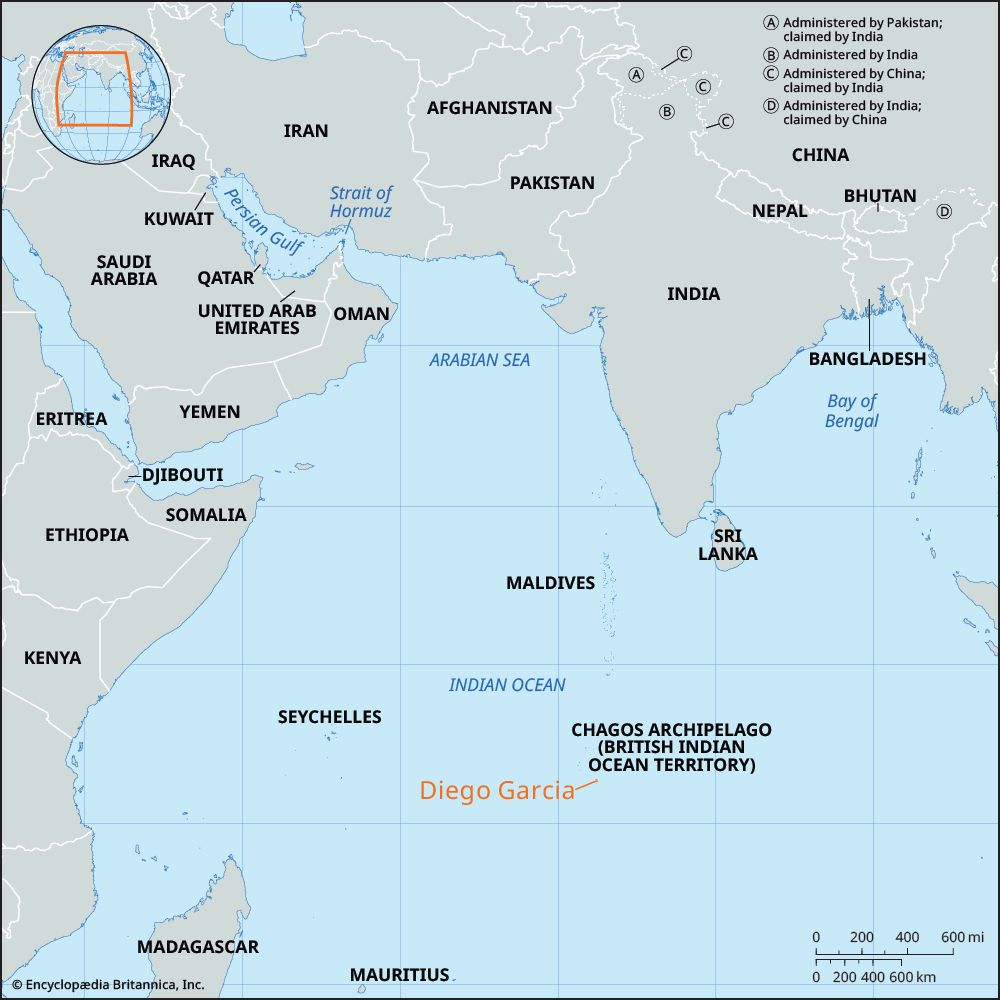
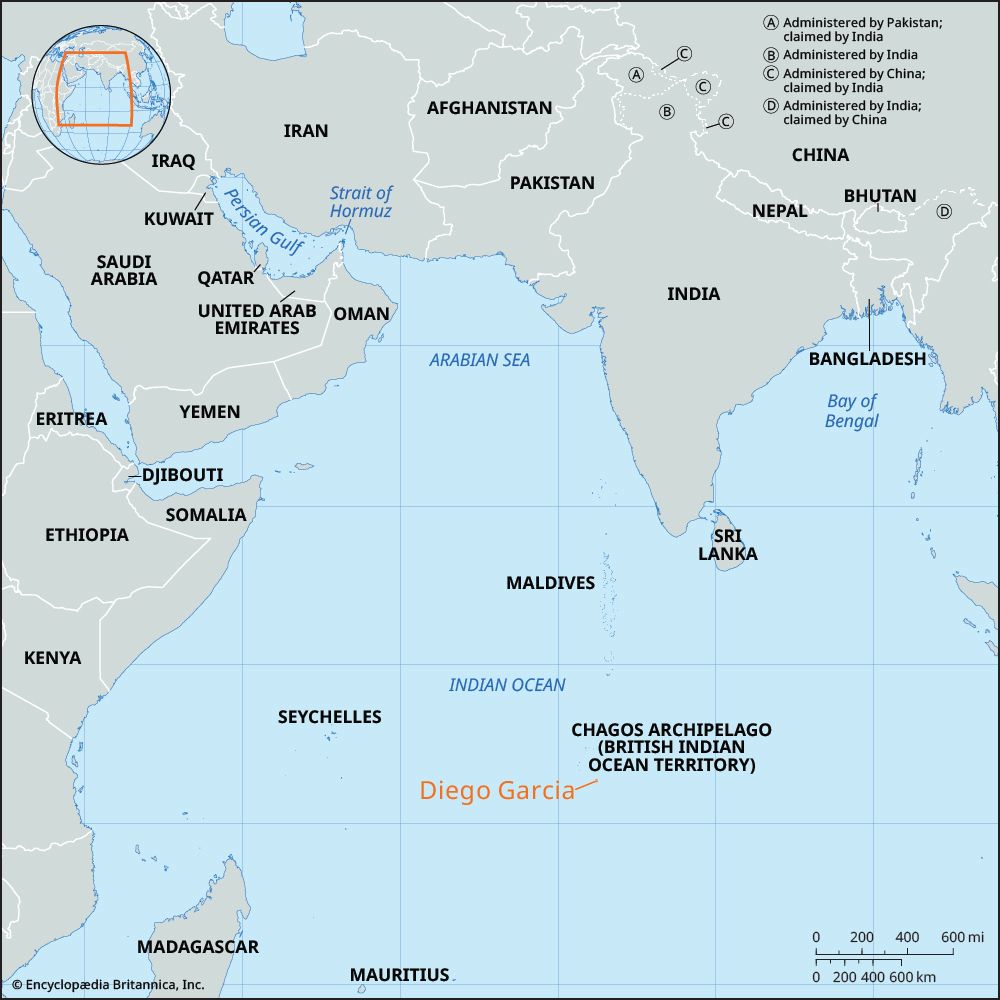
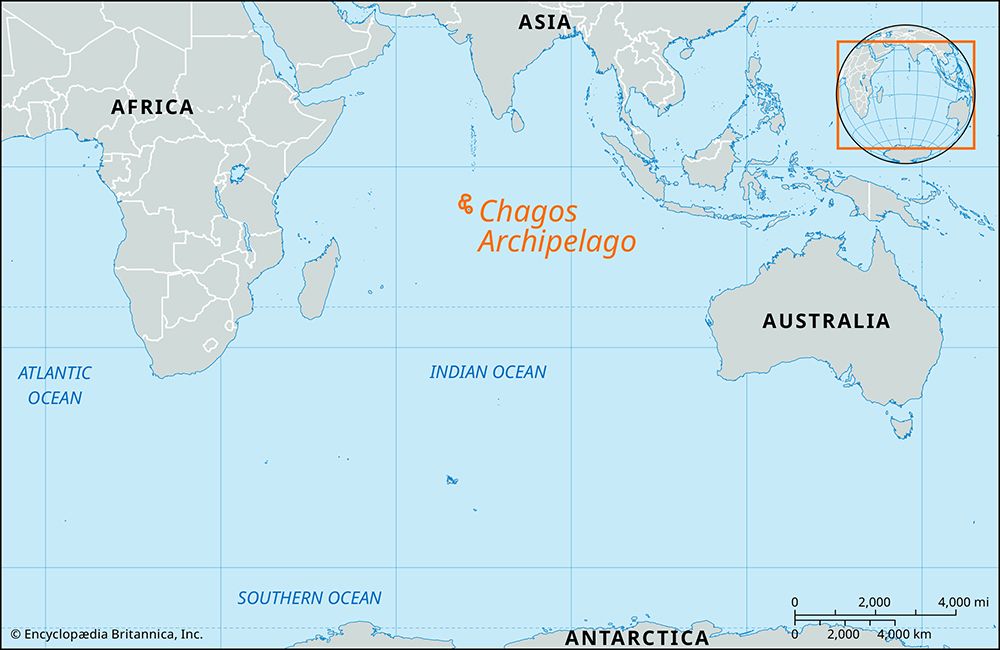
The Chagos Archipelago is an island group located in the central Indian Ocean, approximately 1,000 miles south of the Indian subcontinent. It comprises…
What is Chagos Archipelago?
The Chagos Archipelago is an island group located in the central Indian Ocean, approximately 1,000 miles south of the Indian subcontinent. It comprises several atolls and islands, including Diego Garcia, which is the largest and southernmost landmass in the group and hosts a major U.S.–U.K. military base.123
Historically, the islands were uninhabited until discovered by Portuguese explorers in the 16th century. Later, they became part of the Mauritius colony, but in 1965, Britain separated the archipelago to form the British Indian Ocean Territory. Between 1967 and 1973, the native inhabitants, known as the Ilois or Chagossians, were forcibly removed to facilitate the construction of the military facility on Diego Garcia.243
Following years of legal challenges and international pressure, including a 2019 International Court of Justice advisory opinion, a treaty to transfer sovereignty of the archipelago to Mauritius was signed in May 2025.23
Who are the Ilois people and what is their history?
The Ilois, also known as the Chagossians, are the indigenous inhabitants of the Chagos Archipelago. They are descendants of African slaves and Indian plantation workers who were brought to the islands in the late 18th century to work on coconut plantations producing copra.14
Between 1967 and 1973, the British government forcibly removed the entire Ilois population to facilitate the construction of a major U.S.–U.K. military facility on Diego Garcia. The displaced islanders were primarily resettled in Mauritius, with smaller groups moving to the Seychelles and the United Kingdom.314
For decades, the Ilois have engaged in legal and political battles to secure their right to return to their homeland. While various court rulings in the early 2000s acknowledged the illegality of their removal, their efforts to resettle have faced significant opposition from British and U.S. officials. Following a 2019 advisory opinion from the International Court of Justice regarding the decolonization of the territory, a treaty to transfer sovereignty of the archipelago to Mauritius was signed in May 2025.14
(Note: The “Illinois” people mentioned in some records refer to a distinct North American indigenous confederation and are not related to the Ilois of the Chagos Archipelago.)6
Why is Diego Garcia strategically important for military operations?
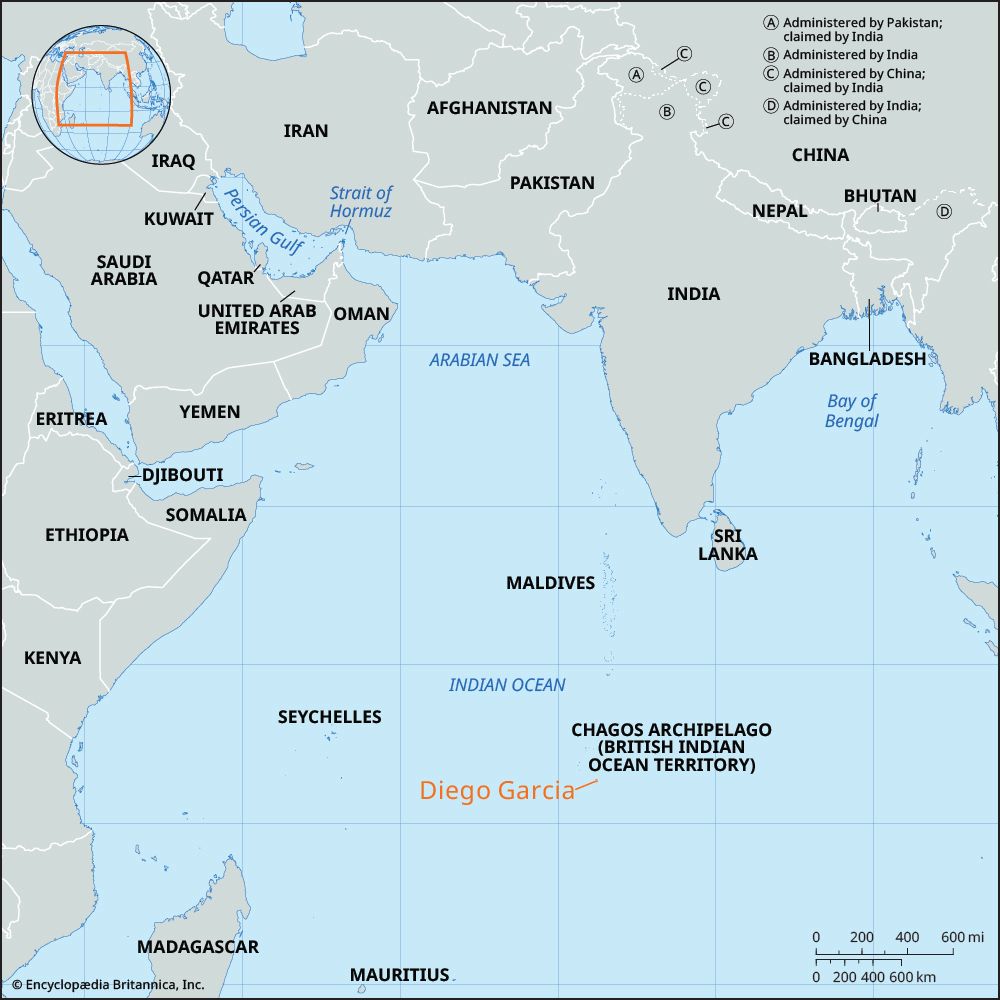
Diego Garcia is strategically significant primarily due to its central location in the Indian Ocean, which allows it to serve as a vital hub for projecting military power across the Middle East, South Asia, and East Africa.25
Developed during the Cold War to counterbalance Soviet influence, the island hosts a major military base operated by the United States and the United Kingdom.States) and the United Kingdom. The base provides essential air and naval support facilities that have been utilized in numerous major military operations, including:245
- The Persian Gulf War (1990–91)
- U.S.-led strikes on Afghanistan (2001)
- The initial phase of the Iraq War (2003)
Beyond its role in power projection, the base’s strategic importance is highlighted by its vulnerability; for instance, during the 2026 Iran War, the facility was targeted by long-range missiles, underscoring its status as a critical yet exposed asset in modern global security.25
What is the difference between an atoll and other types of islands?
An atoll is a distinct type of island characterized by a ring-shaped coral reef that encloses a central lagoon. Unlike other islands, which may be formed by continental rock or volcanic activity, an atoll represents the final stage of a process where a reef grows upward around a sinking, extinct volcanic island until that island disappears beneath the sea.78
In contrast, other islands are categorized by their geological foundations:
- Continental islands: These are extensions of continental landmasses, such as the British Isles or Greenland.9
- Oceanic islands: These rise from the ocean floor, typically as a result of volcanic action, such as Iceland or the Azores.9
- Other reef structures: Unlike atolls, fringing reefs skirt a non-reef landmass directly, while barrier reefs are separated from a landmass by a lagoon.8
Essentially, while other islands often feature a central landmass of volcanic or continental origin, an atoll is defined by the absence of such a central mass, leaving only the reef and its lagoon.78
Sources
- Chagos Archipelago: Top Questions — Encyclopædia Britannica
- Diego Garcia: Top Questions — Encyclopædia Britannica
- Chagos Archipelago — Encyclopædia Britannica
- British Indian Ocean Territory — Encyclopædia Britannica
- Diego Garcia — Encyclopædia Britannica
- Illinois — Encyclopædia Britannica
- atoll — Merriam-Webster
- atoll — Encyclopædia Britannica
- Atlantic Ocean - Islands of the Atlantic Ocean — Encyclopædia Britannica
- coral reef - Types of coral reefs — Encyclopædia Britannica
Published on · 3 min read