Chorus Frog
A chorus frog is any of several species of tree frogs belonging to the family Hylidae. These frogs are found across North America, ranging from Canada…
What is chorus frog?
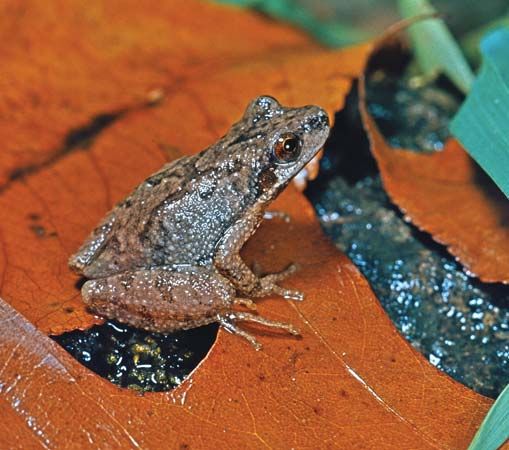
A chorus frog is any of several species of tree frogs belonging to the family Hylidae. These frogs are found across North America, ranging from Canada through the United States to northern Mexico.1
Unlike many other hylids, chorus frogs are predominantly terrestrial, preferring to live in low shrubbery and thick herbaceous vegetation rather than climbing. They are generally small, with most species measuring between 2.5 and 3 cm (1 to 1 1/5 inches) in length, though sizes vary; for instance, the little grass frog is smaller, while Strecker’s chorus frog can grow up to 4.5 cm (1 4/5 inches). Physically, they are typically characterized by a light streak on the upper lip and are known for their distinct trilling calls.1
How do male frogs use their vocal sacs to create different sounds?
Male frogs produce species-specific sounds using a vocal sac, which acts as a resonating throat pouch to amplify vibrations. Unlike many other vertebrates, frogs do not expel air to create sound; instead, they cycle air back and forth between their lungs and the buccal cavity (mouth).4
The process involves several key steps:
- Inflation: Before or during the first call, the frog inflates its sac or sacs with air from the lungs. If the frog intends to call again, it holds the air in the sac.4
- Sound Generation: Sound is initiated by a controlled rush of air moving through the larynx and across the vocal cords.4
- Resonance: The vocal sac serves as a resonator, amplifying the sound vibrations produced by the vocal cords.4
Frogs possess three primary types of vocal sacs: a single median throat sac, paired throat sacs, or paired lateral sacs located behind the jaw. All these structures open into the mouth via paired slits near the base of the tongue.4
What are the main differences between frogs and toads?
Distinguishing between frogs and toads can be challenging because both are tailless amphibians belonging to the order Anura. In fact, there is no strict taxonomic basis for these labels, and all toads are technically classified as frogs. However, they are often separated based on several superficial characteristics:6
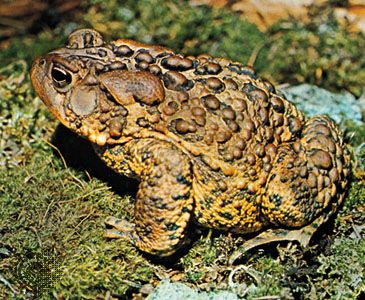
- Skin: Frogs typically have smooth, moist skin, which necessitates living near water to prevent desiccation. Toads generally have dry, rough, and bumpy skin that is better at retaining moisture, allowing them to thrive in environments further from water.6
- Legs and Locomotion: Frogs often possess long, powerful hind legs adapted for leaping and swimming. Toads usually have shorter hind legs, giving them a squat, rotund appearance; they typically move by taking small hops or even walking.67
- Habitat: Because of their skin moisture requirements, frogs are frequently found near ponds, lakes, or streams. Toads are more commonly found in drier, terrestrial environments.6
While these features are helpful for identification, there are many exceptions, such as tree frogs with adhesive toe disks or toads that exhibit unique reproductive behaviors.67
How do tadpoles transform into adult frogs during their life cycle?
The transformation of a tadpole into an adult frog, known as metamorphosis, is a complex biological process regulated by hormones, primarily thyroxine, which is produced by the thyroid gland in response to signals from the hypophysis.9
During this transition, the tadpole undergoes profound anatomical changes:
- Limb Development: Hind limb buds appear first, eventually developing into functional legs with toes and webbing. Later, forelimbs emerge through the operculum, which is the covering over the gills.108
- Resorption of Larval Features: The tail is gradually absorbed by the body, and the internal gills disappear as the frog develops lungs for air-breathing.108
- Digestive and Structural Changes: The tadpole’s long, coiled intestine—adapted for a largely vegetarian diet—shortens and thickens to suit the adult diet. Additionally, the mouthparts change as horny denticles are replaced by true jaws and teeth.108
- Skin and Sensory Development: The skin develops a keratinized layer and subcutaneous glands, and eyelids form to protect the eyes on land.98
This process typically lasts one to three months, though it can vary significantly based on the species and environment.108
Sources
- chorus frog — Encyclopædia Britannica
- frog and toad - Breeding behaviour — Encyclopædia Britannica
- frog and toad - Egg laying and hatching — Encyclopædia Britannica
- vocal sac — Encyclopædia Britannica
- sound production — Encyclopædia Britannica
- What’s the Difference Between a Frog and a Toad? — Encyclopædia Britannica
- frog and toad - Size range and diversity of structure — Encyclopædia Britannica
- frog and toad - From tadpole to adult — Encyclopædia Britannica
- tadpole — Encyclopædia Britannica
- Animal development - Metamorphosis — Encyclopædia Britannica
Published on · 3 min read