Creeping Jenny
Creeping Jenny (Lysimachia nummularia) is a prostrate perennial herb belonging to the primrose family (Primulaceae). Native to Europe, this vigorous…
What is creeping Jenny?
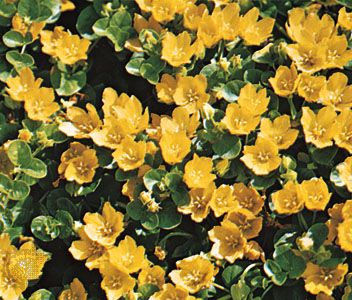
Creeping Jenny (Lysimachia nummularia) is a prostrate perennial herb belonging to the primrose family (Primulaceae). Native to Europe, this vigorous evergreen is characterized by nearly round leaves and solitary yellow flowers with five petals.1
While often cultivated as a ground cover or indoor hanging plant, it is considered an invasive species in parts of North America and other regions outside its native range. It thrives primarily in moist, shaded environments.1
It is important to note that the name “creeping Jenny” is sometimes confused with “creeping Charlie,” which refers to an unrelated plant in the mint family (Lamiaceae). Additionally, the term is occasionally used to describe other plants such as field bindweed or moneywort.12
What makes a plant considered invasive?
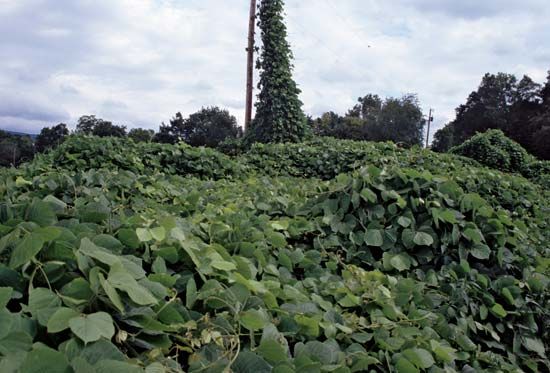
A plant is considered invasive when it is a nonnative species that significantly disrupts or modifies the ecosystems it colonizes. While many introduced species fail to survive in new environments, invasive plants possess specific competitive advantages that allow them to thrive, particularly in areas that lack natural predators or controls.3
Key factors that define an invasive plant include:
- Competitive Advantage: They often outcompete native species for essential resources such as food, water, sunlight, and living space. For example, the common buckthorn creates dense vegetation that blocks sunlight, effectively displacing native flora.34
- Rapid Spread: They tend to disperse and grow in an aggressive manner, often multiplying rapidly within their new habitat.5
- Ecological Disruption: Their presence can reduce local biodiversity, serve as vectors for diseases or parasites, and lead to the localized extinction of native species.3
- Human Introduction: Most invasive species are transported to new habitats through human activities, such as global commerce or the pet trade.3
How does the primrose family differ from other plant families?
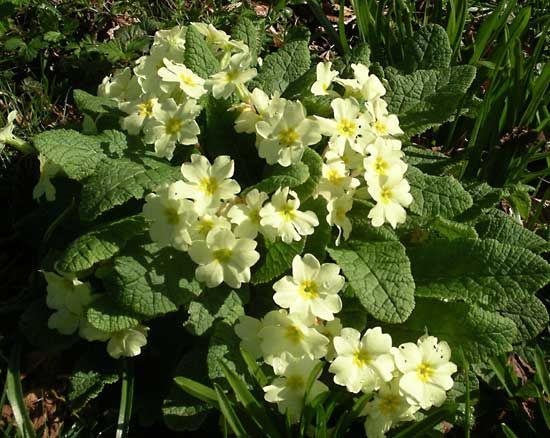
The Primulaceae family, or primrose family, is distinguished from many other plant groups by specific floral and anatomical characteristics. While many plant families are increasingly defined by molecular data, Primulaceae maintains several identifiable morphological traits.789
Key Distinguishing Features
- Stamen Arrangement: A primary diagnostic feature is the placement of the stamens. In most plants, stamens alternate with the petals; in Primulaceae, the five stamens are attached to the tube of fused petals and are oriented directly opposite them.79
- Floral Structure: Members typically feature a tube of fused petals with spreading lobes. The ovary is not divided by partitions, and the placenta—the structure upon which ovules are borne—is notably swollen.79
- Secretory Canals: The family frequently contains secretory canals filled with yellow, red, or brown tannins, a chemical characteristic shared with related families in the order Ericales, such as Sapotaceae and Ebenaceae.79
- Reproductive Adaptations: Many species exhibit heterostyly, where flowers have varying lengths of styles and stamens to promote cross-fertilization. Some, like the shooting star, have adapted to specialized pollination methods like buzz pollination.10
What is the difference between creeping Jenny and creeping Charlie?
It is a common misconception that creeping Jenny and creeping Charlie are the same plant; while the names are sometimes used interchangeably, they refer to two distinct species from entirely different families.1
- Creeping Jenny (Lysimachia nummularia) is a member of the primrose family (Primulaceae). It is a prostrate perennial herb characterized by opposite, nearly round leaves and solitary yellow flowers with five petals. It is often found in moist, shaded areas and is considered an invasive species in parts of North America.1
- Creeping Charlie (Glechoma hederacea) is an unrelated ornamental plant belonging to the mint family (Lamiaceae).1
Because they belong to different botanical families, they possess different growth habits and structural traits despite their similar common names.
Sources
- creeping Jenny — Encyclopædia Britannica
- creeping Jenny — Merriam-Webster
- invasive species — Encyclopædia Britannica
- habitat loss — Encyclopædia Britannica
- ecological disturbance - Spatial distribution — Encyclopædia Britannica
- invasive — Merriam-Webster
- Primulaceae — Encyclopædia Britannica
- Asparagales - Organization and taxonomy — Encyclopædia Britannica
- Ericales - Primulaceae group — Encyclopædia Britannica
- Ericales - Primuloideae — Encyclopædia Britannica
Published on · 3 min read