Do Jellyfish Have a Heart?
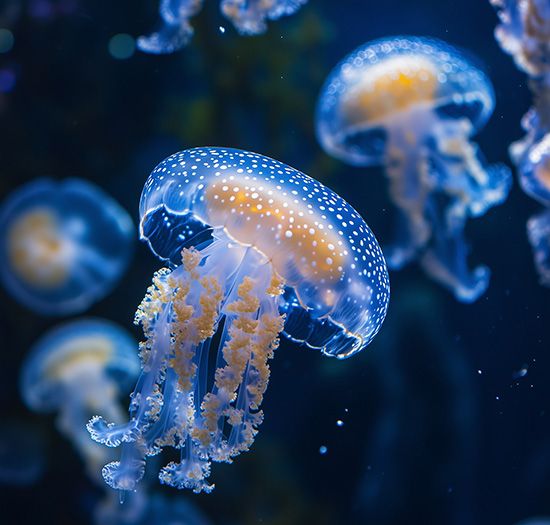
Jellyfish do not possess a heart. In fact, they lack blood, a circulatory system, and lungs entirely.
Do jellyfish have a heart?
Jellyfish do not possess a heart. In fact, they lack blood, a circulatory system, and lungs entirely.1
Instead of using a heart to circulate oxygen, jellyfish absorb oxygen directly from the water through their epidermis via a process called diffusion. Their simple body structure—consisting of an outer epidermis and an inner gastrodermis separated by a gelatinous layer known as the mesoglea—eliminates the need for complex organs. To assist in the distribution of nutrients and gases throughout their tissues, some species utilize “bell pulsing,” a rhythmic contraction of their umbrella-shaped bodies.1
How do jellyfish breathe without lungs?
Jellyfish do not have lungs because their simple, two-layered body structure allows them to bypass the need for complex respiratory organs. Instead, they absorb oxygen directly from the surrounding water through their epidermis via a process called diffusion1.
The jellyfish body consists of an outer epidermis and an inner gastrodermis, separated by a thick, gelatinous layer known as the mesoglea. The epidermis is highly efficient at taking up oxygen, which is then used immediately for metabolism. The mesoglea can even store small amounts of oxygen, helping the animal survive in environments with lower oxygen levels.1
While diffusion is the primary method of gas exchange, some jellyfish species also utilize “bell pulsing”—a rhythmic contraction of their umbrella-shaped bodies—to assist in circulating nutrients and gases throughout their tissues.1
What is a nerve net and how does it function?
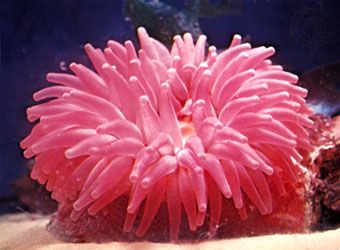
A nerve net is a primitive, diffuse nervous system found in lower invertebrates, such as cnidarians (including jellyfish, corals, and sea anemones) and ctenophores.356
Structure and Function
Unlike centralized systems that rely on a brain, a nerve net consists of a meshlike system of individual neurons and fibers distributed throughout the organism, typically beneath the outer epidermal layer. These neurons make contact but do not fuse, forming structures similar to the chemically mediated synapses found in vertebrates.356
The system functions by conducting electrochemical stimuli across the body to coordinate movements and feeding behaviors. While transmission is relatively slow compared to vertebrate nervous systems, the nerve net allows for integrated behavior and responses to environmental stimuli like light and gravity. Some species possess specialized sensory structures called rhopalia, which contain ganglionic concentrations of neurons that assist in navigation and sensory processing. Additionally, some nerve nets incorporate pacemaker systems that generate spontaneous rhythmic movements.365
How do jellyfish catch their prey?
Jellyfish capture their prey primarily using specialized stinging cells called nematocysts, which are located on their tentacles and oral arms.78
The Capture Process
- Stinging Mechanism: When a jellyfish touches its prey—such as fish, crustaceans, or worms—mechanical or chemical cues trigger the nematocysts. These capsules explosively evert a hollow, barbed thread that penetrates the victim’s tissues and injects paralyzing venom.72
- Ensnaring: In some species, the threads of the nematocysts act to ensnare small prey by wrapping around them.7
- Active Hunting vs. Passive Feeding: While many jellyfish drift and wait for prey to contact their tentacles, some species are more active. For example, box jellyfish use their sophisticated vision to navigate and actively swim toward prey. Conversely, some Rhizostomeae jellyfish are suspension feeders, using their frilly oral arms to filter minute animals and algae from the water.28
Once the prey is immobilized, the jellyfish moves it toward its mouth to be swallowed.2
Sources
- Do jellyfish have a heart? — Encyclopædia Britannica
- jellyfish — Encyclopædia Britannica
- Do jellyfish have brains? — Encyclopædia Britannica
- Respiratory system - Gills of invertebrates — Encyclopædia Britannica
- nervous system - Diffuse nervous systems — Encyclopædia Britannica
- nervous system — Encyclopædia Britannica
- How many tentacles does a jellyfish have? — Encyclopædia Britannica
- nematocyst — Encyclopædia Britannica
- box jellyfish — Encyclopædia Britannica
Published on · 3 min read