Giant Sequoia
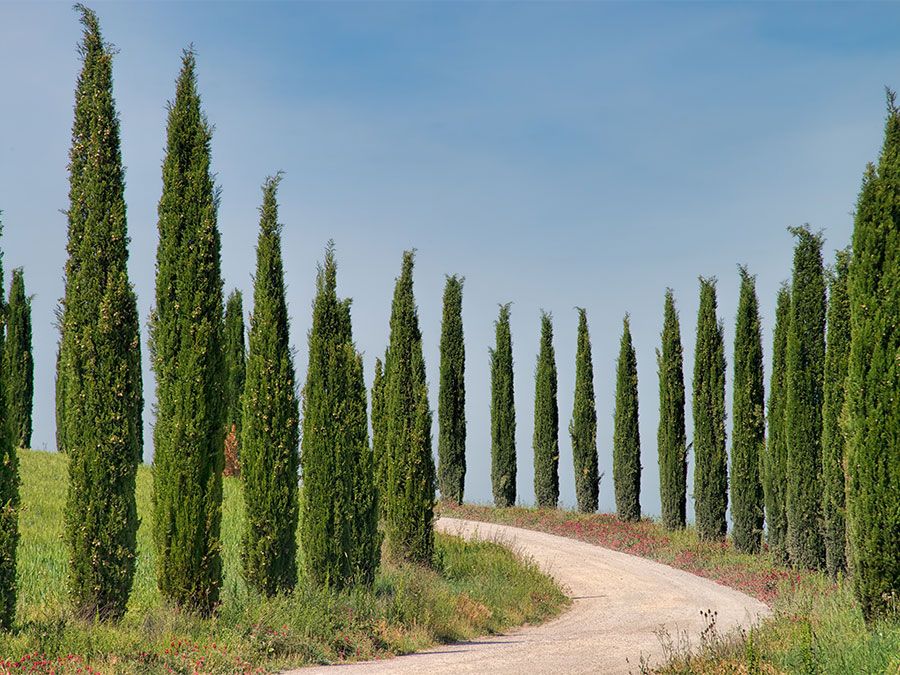
The giant sequoia (Sequoiadendron giganteum) and the coast redwood (Sequoia sempervirens) are distinct species within the cypress family, each holding unique…
How do giant sequoias compare to other large tree species like redwoods or General Sherman?
The giant sequoia (Sequoiadendron giganteum) and the coast redwood (Sequoia sempervirens) are distinct species within the cypress family, each holding unique records in the natural world.12
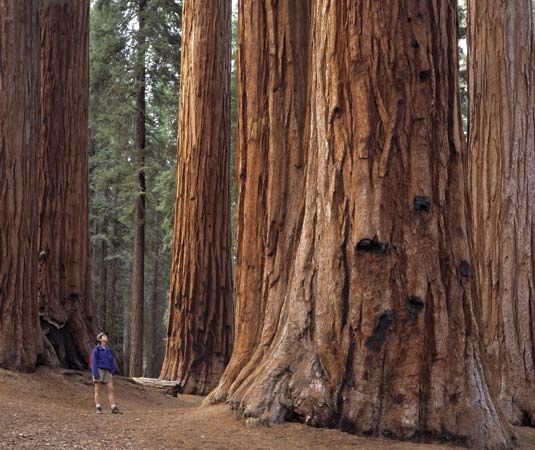
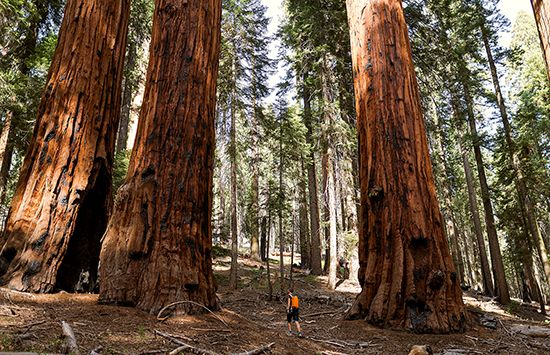
While the coast redwood is recognized as the tallest of all living trees—with some specimens reaching heights over 112 metres (367.8 feet)—the giant sequoia is the most massive non-clonal organism on Earth by volume. The General Sherman tree, a giant sequoia located in Sequoia National Park, exemplifies this bulk; it stands 83 metres (272.4 feet) tall with a base circumference of 31 metres (101.5 feet) and an estimated weight of 6,167 tons.12
Key differences include:
- Habitat: Giant sequoias grow in scattered groves on the western slopes of the Sierra Nevada, while coast redwoods are endemic to the coastal fog belt from Oregon to central California.12
- Wood Quality: Giant sequoia wood is more brittle and of lower quality than that of the coast redwood, which is a highly valued timber species.12
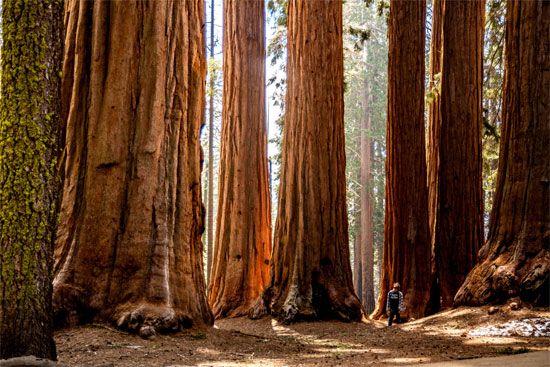
How do giant sequoias reproduce and what role does fire play in their life cycle?
The giant sequoia (Sequoiadendron giganteum) relies on a specialized reproductive cycle that is intrinsically linked to wildfire as an ecological disturbance.14
Reproduction and Fire
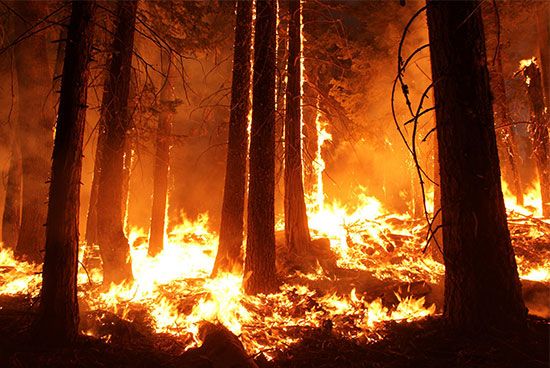
Giant sequoias produce compact cones that require two seasons to mature. These cones remain closed and protect the seeds from the environment until they are triggered to open by the heat of a fire. Once a fire occurs, the heat causes the cones to open, releasing seeds onto the forest floor.14
Fire plays a critical role in the life cycle by:
- Clearing the Understory: Fires remove competing vegetation and shade-tolerant species that would otherwise prevent the growth of young sequoias.4
- Preparing the Seed Bed: The fire clears the forest floor down to bare soil, creating an ash-fertilized environment that is ideal for germination and the establishment of new seedlings.4
Survival Adaptations
While most adult conifers are susceptible to fire, the giant sequoia is an exception due to its thick, fibrous bark, which can exceed 50 centimetres (20 inches) in thickness. This bark provides essential thermal insulation, allowing the trees to withstand the heat of a fire that would otherwise destroy their vital tissues.145
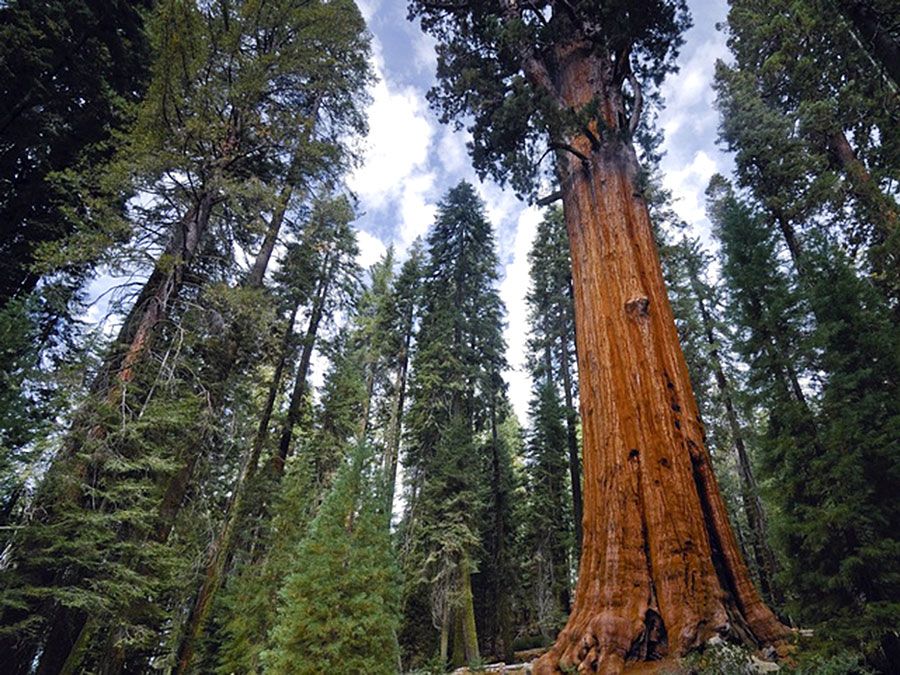
How tall and wide can giant sequoias grow, and how long can they live?
Giant sequoias (Sequoiadendron giganteum) are the most massive trees on Earth by volume, though they are not the tallest or the widest in terms of girth.1
Dimensions and Longevity
- Height: These trees typically reach heights in excess of 90 metres (300 feet). While some specimens have been recorded over 105 metres (345 feet), they generally remain shorter than the coast redwood, which holds the record for the tallest living trees.61
- Width: A giant sequoia can have a trunk diameter of approximately 7.5 metres (25 feet) measured some distance above its flaring base. For comparison, the famous General Sherman tree has a base circumference of 31 metres (101.5 feet).61
- Lifespan: While they were once thought to be the oldest living things, tree-ring studies have shown that the largest specimens are less than 4,000 years old.1
What conservation efforts are in place to protect giant sequoias, and what threats do they face?
Giant sequoias (Sequoiadendron giganteum) are currently protected primarily through their inclusion within national parks and national forests, such as Sequoia National Park and Kings Canyon National Park. These protections were largely established through the advocacy of conservationist John Muir and the Sierra Club, which helped secure the preservation of most of the 70 distinct groves. While the species is listed as an endangered species on the IUCN Red List, it is not currently protected under the U.S. Endangered Species Act.17
Despite these efforts, the species faces significant modern threats:
- Fire Suppression: Decades of suppressing natural fires have led to an accumulation of fuel in the forests, creating conditions for high-intensity fires that can overwhelm the trees’ natural defenses.1
- Climate Change: Global warming has intensified drought conditions, further stressing the trees and increasing their vulnerability to catastrophic fire events.1
Sources
- giant sequoia — Encyclopædia Britannica
- giant sequoia — Merriam-Webster
- coast redwood — Encyclopædia Britannica
- Playing with Wildfire: 5 Amazing Adaptations of Pyrophytic Plants — Encyclopædia Britannica
- conifer - Sporophyte phase — Encyclopædia Britannica
- Tree - Trees of special interest — Encyclopædia Britannica
- Saving the World’s Largest Trees — Encyclopædia Britannica
Published on · 3 min read