Spalacotherium
Spalacotherium is an extinct genus of primitive, likely predaceous mammals that lived during the late Jurassic and early Cretaceous periods, approximately…
What is Spalacotherium?
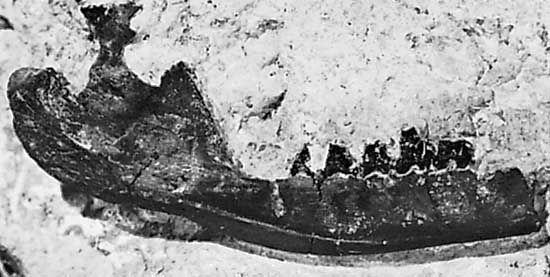
Spalacotherium is an extinct genus of primitive, likely predaceous mammals that lived during the late Jurassic and early Cretaceous periods, approximately 160 million to 100 million years ago.1
Known from fossils discovered in European deposits, these animals are classified as symmetrodonts. They are distinguished by their unique dentition, which features molar teeth with three cusps arranged in a triangular pattern. As one of the oldest known mammalian groups, they represent a significant component of the European fauna from that era.1
What are symmetrodonts?
Symmetrodonts are among the oldest known mammals, appearing in the fossil record as early as the late Jurassic Period. They were particularly common in European faunas during the Jurassic and early Cretaceous periods.2
These animals are primarily defined by their unique dentition, which features molar teeth characterized by three cusps arranged in a triangular pattern. This dental structure suggests that many symmetrodonts, such as the genus Spalacotherium, were likely predaceous, utilizing their sharp, pointed teeth to tear flesh or crush the chitinous exoskeletons of terrestrial arthropods.21
How did mammals evolve during the Jurassic Period?
During the Jurassic Period, mammals remained relatively small, typically no larger than squirrels, and occupied minor ecological niches compared to the dominant archosaurs (dinosaurs, crocodiles, and pterosaurs). Despite their modest size, the fossil record reveals that they were a diverse and widespread group, inhabiting both the Northern and Southern hemispheres.56
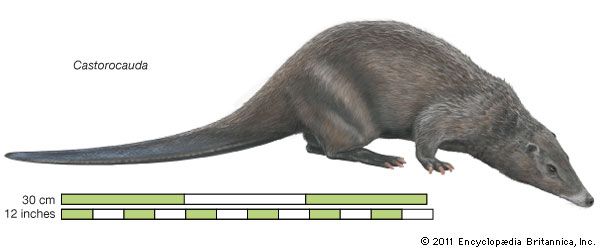
Early Jurassic mammals were primarily insectivorous or omnivorous. However, as the period progressed, they developed specialized adaptations for various lifestyles. For instance, the Middle Jurassic genus Castorocauda represents a significant evolutionary development; it was a semiaquatic, beaver-like mammal with adaptations for swimming and digging, and it reached a size comparable to a modern platypus. Other specialized forms included Fruitafossor, which was adapted for digging, and various possum-like generalists such as Haldanodon.56
These early mammals possessed key mammalian traits, including hair and specialized jaw structures, which distinguished them from their therapsid ancestors.67
What other animals lived alongside Spalacotherium?
Spalacotherium lived during the late Jurassic and early Cretaceous periods, a time when terrestrial ecosystems were dominated by dinosaurs.112
The fauna sharing the environment with these early mammals included a wide variety of organisms:
- Terrestrial Vertebrates: In addition to the diverse dinosaurs, the land was inhabited by early birds, which evolved from dinosaur ancestors during the Late Jurassic. Other land-dwelling vertebrates included early ancestors of modern frogs, toads, and salamanders, as well as the emerging placental and marsupial mammal groups.12
- Marine Life: The oceans were populated by ammonites, bivalves, sharks, and various bony fishes. Large marine reptiles, such as plesiosaurs and ichthyosaurs, were also prominent predators in the Mesozoic seas.12
- Flying Reptiles: Pterosaurs remained a significant component of the aerial environment throughout this era.12
Sources
- Spalacotherium — Encyclopædia Britannica
- tritylodont — Encyclopædia Britannica
- mammal - Teeth — Encyclopædia Britannica
- primate - Teeth — Encyclopædia Britannica
- Triassic Period - Terrestrial reptiles and the first mammals — Encyclopædia Britannica
- Castorocauda — Encyclopædia Britannica
- Morganucodon — Encyclopædia Britannica
- mammal: Top Questions — Encyclopædia Britannica
- A Journey Through Time Since the Precambrian - Jurassic Period: 201.3 million to 145 million years ago — Encyclopædia Britannica
- Jurassic Period - Vertebrates — Encyclopædia Britannica
- Jurassic Period - Protists and invertebrates — Encyclopædia Britannica
- Mesozoic Era - Mesozoic life — Encyclopædia Britannica
Published on · 2 min read