Hawkweed
Hawkweed (genus Hieracium) is a genus comprising more than 100 species of perennial, weedy herbs belonging to the aster family (Asteraceae). These plants are…
What is Hawkweed?
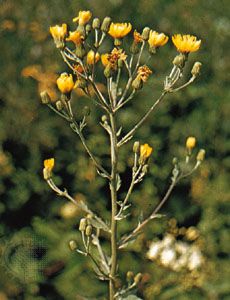
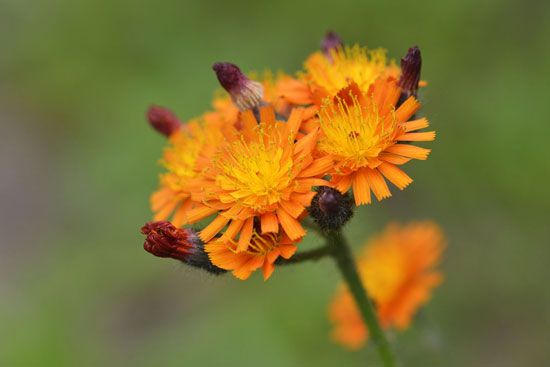
Hawkweed (genus Hieracium) is a genus comprising more than 100 species of perennial, weedy herbs belonging to the aster family (Asteraceae). These plants are native to temperate regions worldwide and are characterized by their simple, often basal leaves and heads of yellow or reddish-orange ray flowers.123
While many species are considered weeds—such as the mouse-ear hawkweed (H. pilosella), orange hawkweed (H. aurantiacum), and common hawkweed (H. vulgatum)—some are cultivated as garden ornamentals for their attractive flower clusters. Depending on the species, they are also known by various common names, including devil’s paintbrush, golden lungwort, and rattlesnake weed. Many species in this genus are noted for being apomictic, meaning they can produce seeds without fertilization.12
What are the characteristics of the Asteraceae family?
The Asteraceae family, commonly known as the aster, daisy, or composite family, is one of the largest families of angiosperms, comprising more than 1,620 genera and 25,000 species of herbaceous plants, shrubs, and trees distributed globally.45
Physical Characteristics
The most defining feature of the family is the grouping of flowers into compact inflorescences called heads, which often resemble individual flowers. These heads are typically subtended by an involucre of small bracts.6
- Floral Structure: The family is characterized by one-seeded achene fruits and a highly modified calyx known as the pappus, which may consist of scales, awns, or bristles. The ovary is basal, a key feature distinguishing Asteraceae from the related Calyceraceae.56
- Head Types: Depending on the arrangement of disk, ray, or ligulate flowers, heads are classified as discoid, radiate, disciform, or ligulate.6
- Pollination: Many members utilize a “plunger” or secondary pollination mechanism, where the style pushes pollen out of the anther tube to be collected by insects. Some species also reproduce through apomixis, producing seeds without fertilization.7
Economic Importance
Asteraceae is highly significant for its diverse garden ornamentals, such as dahlias, marigolds, and chrysanthemums. It also includes vital food crops like lettuce, artichokes, and sunflowers, as well as stevia, which is used as a sweetener. Conversely, some members are considered noxious weeds, including dandelions and ragweed.8
Why are some hawkweed species considered invasive weeds?
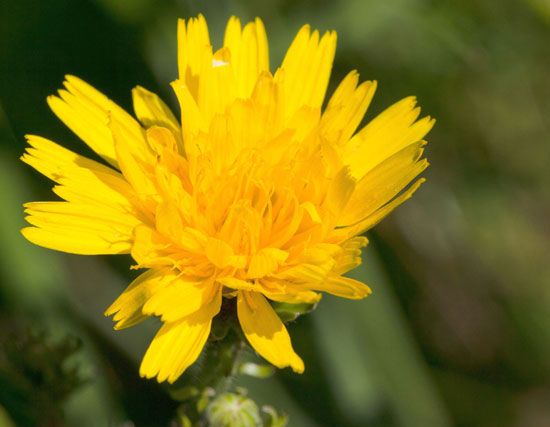
Some hawkweed species are considered invasive weeds primarily due to their aggressive growth habits and reproductive strategies. Many species within the genus Hieracium are noted for being apomictic, a process that allows them to produce seeds without fertilization, enabling them to spread rapidly and colonize new areas effectively.1
Because these plants are highly adaptable, species such as the mouse-ear hawkweed (H. pilosella), orange hawkweed (H. aurantiacum), and common hawkweed (H. vulgatum) have become widely distributed, often outcompeting native vegetation in temperate regions. Their ability to thrive as weeds often contrasts with their occasional use as garden ornamentals, leading to their classification as invasive in many non-native environments.1
What does it mean for a plant to be apomictic?
For a plant, being apomictic means it reproduces through apomixis, a process where seeds or new individuals are produced without the standard sexual cycle of fertilization. In the strictest sense, this is a form of asexual reproduction.91011
Key aspects of apomixis include:
- Asexual Seed Production: Unlike typical sexual reproduction, apomictic plants produce seeds without the fusion of gametes (sex cells). This allows the plant to bypass the need for pollination or fertilization.1110
- Mechanisms: Apomixis can occur through various pathways, such as apogamy (where the sporophyte phase develops without gametes) or apospory (where the gametophyte phase is produced without spores). In some species, an embryo may develop directly from maternal tissues, such as the nucellus, resulting in offspring that are genetically identical to the parent.1110
- Evolutionary Trade-off: While apomixis effectively perpetuates traits that are favorable for an individual plant’s immediate survival, it eliminates the long-term evolutionary advantages provided by biparental inheritance.9
This reproductive strategy is found in various plants, including hawkweed, citrus, and mango.1110
Sources
- Hawkweed — Encyclopædia Britannica
- hawkweed — Merriam-Webster
- hieracium — Merriam-Webster
- Asteraceae — Encyclopædia Britannica
- list of plants in the family Asteraceae — Encyclopædia Britannica
- Asteraceae - Flowers — Encyclopædia Britannica
- Asteraceae - Pollination — Encyclopædia Britannica
- Asteraceae - Economic importance — Encyclopædia Britannica
- Apomixis — Encyclopædia Britannica
- Plant reproductive system - Variations in reproductive cycles — Encyclopædia Britannica
- horticulture - Apomixis — Encyclopædia Britannica
Published on · 3 min read