How Long Can Whales Hold Their Breath?
The duration that whales can hold their breath varies significantly by species and activity level. While many large whales, such as humpback whales…
How long can whales hold their breath?
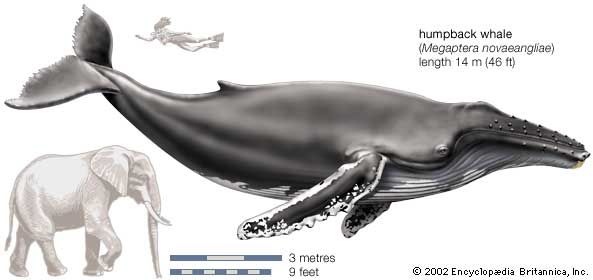
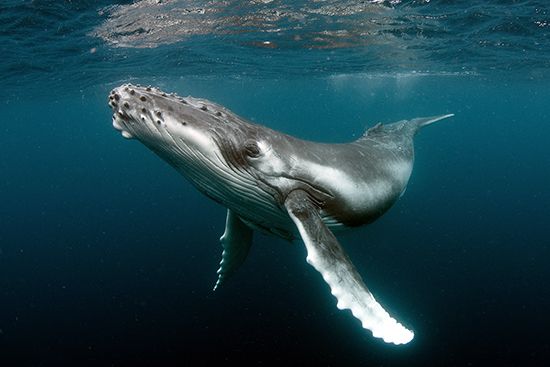
The duration that whales can hold their breath varies significantly by species and activity level. While many large whales, such as humpback whales, typically surface to breathe every 10 to 15 minutes, others are capable of much longer dives.12
Deep-diving specialists exhibit the most impressive capabilities:
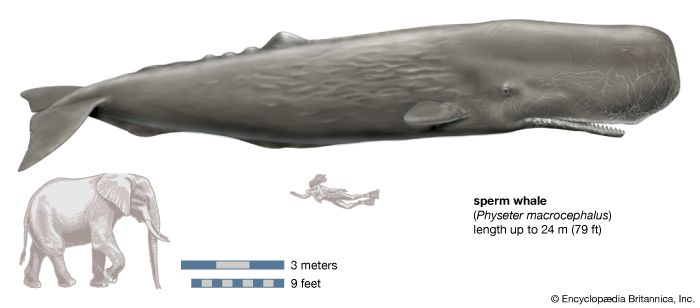
- Sperm whales: Frequently remain submerged for about an hour to hunt in the deep ocean.12
- Beaked whales: Often hold their breath for nearly an hour. The record for the longest dive belongs to a Cuvier’s beaked whale, which was documented staying underwater for 3 hours and 42 minutes in 2020.1
- Blue whales: Generally dive for 10 to 20 minutes but can remain submerged for up to 30 minutes when necessary.1
These animals manage these prolonged dives through specialized physiological adaptations, including a respiratory system that processes large volumes of air and a circulatory system featuring the rete mirabile, which helps prioritize oxygen delivery to the heart and brain.13
What is the rete mirabile and how does it help whales dive?
The rete mirabile (Latin for “wonderful net”) is a specialized anatomical structure found in cetaceans that serves as a vital reservoir for oxygenated blood.45
Function During Diving
This “marvelous network” consists of a dense collection of blood vessels that act as a bypass system during deep dives. When a whale submerges, the rete mirabile enables the animal to isolate circulation to its [skeletal muscles]. By restricting blood flow to these muscles, the whale can conserve its limited oxygen supply, prioritizing the delivery of oxygenated blood to the heart and brain—the two organs most dependent on a constant oxygen supply to function.45
Physiological Significance
This adaptation is essential for the extreme breath-holding capabilities of deep-diving species like the sperm whale, allowing them to remain underwater for an hour or more while hunting in the deep ocean. Along with other adaptations, such as more elastic chest cavities and the ability to use blood gases conservatively, the rete mirabile helps these mammals survive the intense pressure and oxygen demands of the deep sea.521
How do whales avoid getting the bends while deep diving?
Whales avoid decompression sickness—commonly known as “the bends”—through specialized physiological adaptations that allow them to manage gases in their bloodstream more conservatively than humans.5
While human divers breathing compressed air are highly susceptible to the bends because nitrogen accumulates in their tissues and forms bubbles during rapid ascent, whales do not face this same risk because they perform “breath-hold” dives. Because they do not breathe compressed air while submerged, they have a limited supply of nitrogen available to dissolve into their tissues.56
Furthermore, whales possess unique anatomical features that protect them during deep descents:
- Elastic Chest Cavities: Unlike humans, who may suffer from thoracic squeeze (compression of the chest cavity) at depth, whales have highly elastic chest walls.5
- Lung Adaptations: Their lungs are designed to collapse safely under pressure, which prevents the pleural sacs from separating from the chest wall and minimizes the amount of nitrogen that can be absorbed into the bloodstream at extreme depths.5
By relying on these structural adaptations and conservative gas management, whales can safely navigate the intense pressures of the deep ocean.5
What are the main differences between baleen and toothed whales?
The primary distinction between baleen whales (suborder Mysticeti) and toothed whales (suborder Odontoceti) lies in their feeding anatomy and hunting strategies.78
Feeding Anatomy
- Baleen Whales: These whales lack teeth. Instead, they possess rows of baleen plates—comb-like structures made of [keratin]—hanging from their upper jaws. These plates act as a filter, allowing the whale to trap small organisms while expelling water.79
- Toothed Whales: These cetaceans are equipped with simple, conical teeth. These are not used for chewing but are instead designed for grasping and holding onto individual prey.7
Diet and Hunting
- Baleen Whales: As filter feeders, they consume vast quantities of small prey such as plankton, krill, and small fish. Some species, like the humpback whale, utilize cooperative techniques like bubble netting to concentrate their food.9
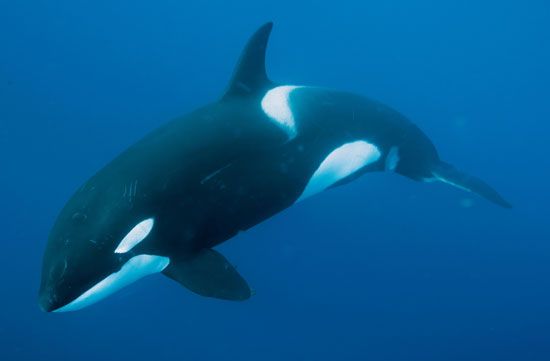
- Toothed Whales: These are active hunters that consume larger or more individual prey, including squid and fish. Some, such as killer whales, are known to hunt larger marine animals like seals.79
Sources
- How long can whales hold their breath? — Encyclopædia Britannica
- cetacean - Circulation and thermoregulation — Encyclopædia Britannica
- cetacean - Breathing and diving — Encyclopædia Britannica
- rete mirabile — Merriam-Webster
- thoracic squeeze — Encyclopædia Britannica
- decompression sickness — Encyclopædia Britannica
- Do whales have teeth? — Encyclopædia Britannica
- list of dolphins, whales, and porpoises — Encyclopædia Britannica
- What do whales eat? — Encyclopædia Britannica
Published on · 3 min read