Do Whales Have Teeth?
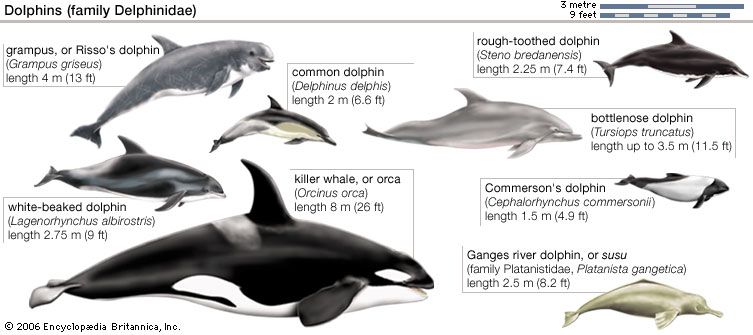
Whether a whale has teeth depends on its suborder. Toothed whales, or odontocetes—such as dolphins, porpoises, and sperm whales—possess simple, conical…
Do whales have teeth?
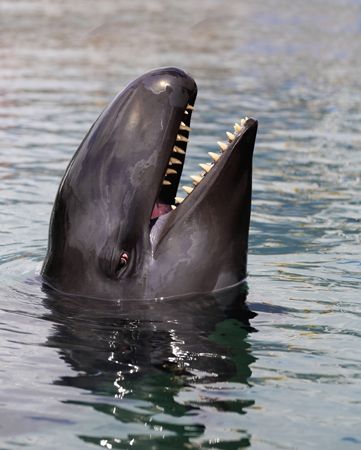
Whether a whale has teeth depends on its suborder. Toothed whales, or odontocetes—such as dolphins, porpoises, and sperm whales—possess simple, conical teeth. These are not used for chewing, but rather for grasping prey, which is then swallowed whole. The number of teeth varies significantly among species, ranging from as few as one in the narwhal to over 240 in the La Plata river dolphin.123
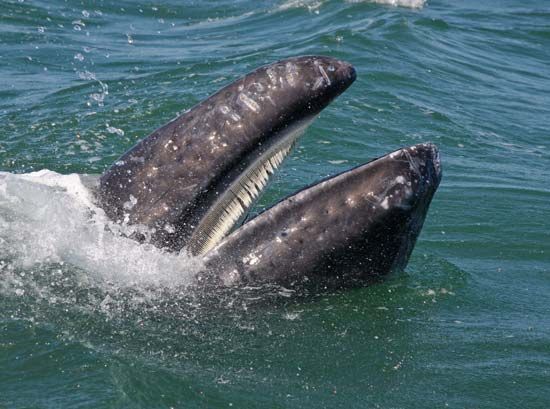
In contrast, baleen whales, or mysticetes, do not have teeth. Instead, they possess baleen plates made of keratin that hang from their upper jaws. These plates act as a filter, allowing the whales to strain small organisms like plankton and krill from the water.13
How does baleen function to filter food from seawater?
Baleen whales function as filter feeders by utilizing specialized structures called baleen plates, which are composed of keratin—the same protein found in human hair and nails.14
These plates hang in two transverse rows from the roof of the mouth, with each row containing up to 400 elongated, triangular plates. While the outer edges of these plates are smooth, the inner edges are frayed into bristles.4
The feeding process occurs in several steps:
- Engulfment: The whale locates concentrations of small prey, such as plankton, krill, or small fish, and opens its mouth to take in an enormous quantity of water containing these organisms.145
- Filtration: Once the mouth is closed, the whale uses its tongue and jaw muscles to squeeze the water out through the sides of its mouth.14
- Capture: The baleen’s bristly inner edges act as a sieve, trapping the tiny prey inside the mouth while allowing the water to flow back out.15
What is the purpose of the narwhal’s unique tusk?
It is a common misconception that the narwhal’s protrusion is a horn; it is actually an overgrown tooth, similar to the tusks of an elephant or walrus. Unlike true horns, which grow from the head and are used for defense or combat, the narwhal tusk serves more complex purposes.7
Recent scientific observations indicate that the tusk functions primarily as a sensory and hunting tool:
- Hunting: Narwhals use their tusks to deliver a quick, firm tap to prey such as fish, shrimp, or squid. This action momentarily stuns the target, allowing the whale to swallow it whole.78
- Sensory Perception: The exterior of the tusk contains up to 10 million nerve endings, making it highly sensitive. This allows the narwhal to detect salt levels in Arctic waters, which helps the animal navigate by identifying areas of varying salinity and temperature.7
While historical theories, supported by figures like Charles Darwin, suggested the tusk was used for aggression between males, this is now considered less significant than its sensory roles, though it may still function as a display for social hierarchy or mate attraction.78
Why did ancient whales evolve from having different types of teeth to simple cones?
Before cetaceans fully adapted to life in the water, their ancestors possessed heterodont dentition—a varied set of teeth including incisors, canines, premolars, and molars, similar to many land mammals.3
As these animals became more specialized for aquatic locomotion, they lost the ability to manipulate food with their forelimbs. Consequently, their feeding strategy shifted toward grabbing prey and swallowing it whole. In toothed whales (suborder Odontoceti), this evolutionary pressure led to the decline of complex, differentiated teeth in favor of homodont dentition, where every tooth is a simple cone. These conical teeth are specialized exclusively for grasping and holding prey, rather than chewing or grinding.321
While toothed whales evolved these simple structures to secure their catch, baleen whales took a different evolutionary path, eventually losing their teeth entirely in favor of baleen plates to filter-feed on vast quantities of small organisms.31
Sources
- Do whales have teeth? — Encyclopædia Britannica
- toothed whale — Encyclopædia Britannica
- cetacean - Feeding adaptations — Encyclopædia Britannica
- Filter feeding — Encyclopædia Britannica
- baleen whale — Encyclopædia Britannica
- What do whales eat? — Encyclopædia Britannica
- What does a narwhal use its horn for? — Encyclopædia Britannica
- narwhal — Encyclopædia Britannica
- cetacean - Paleontology — Encyclopædia Britannica
Published on · 3 min read