How Long Was the Ice Age?
The duration of an ice age depends on which period is being referenced, as Earth has experienced multiple such events throughout its history.
How long was the Ice Age?
The duration of an ice age depends on which period is being referenced, as Earth has experienced multiple such events throughout its history.
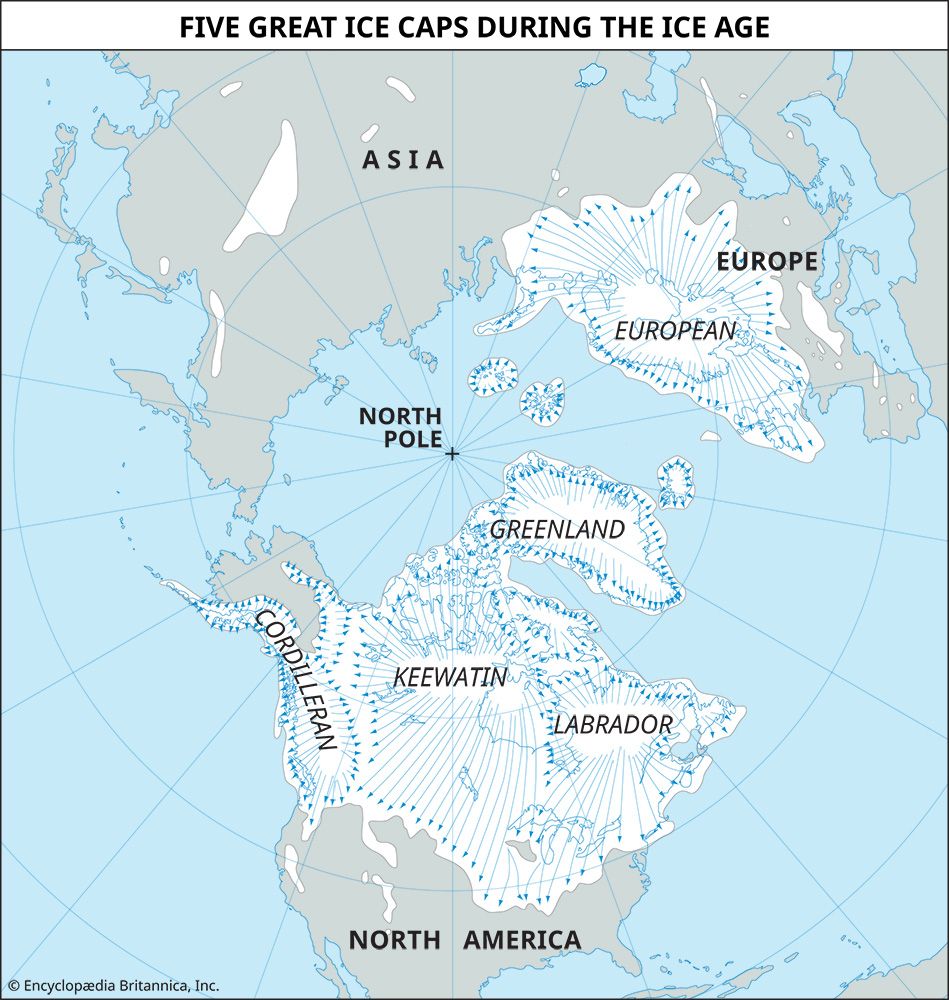
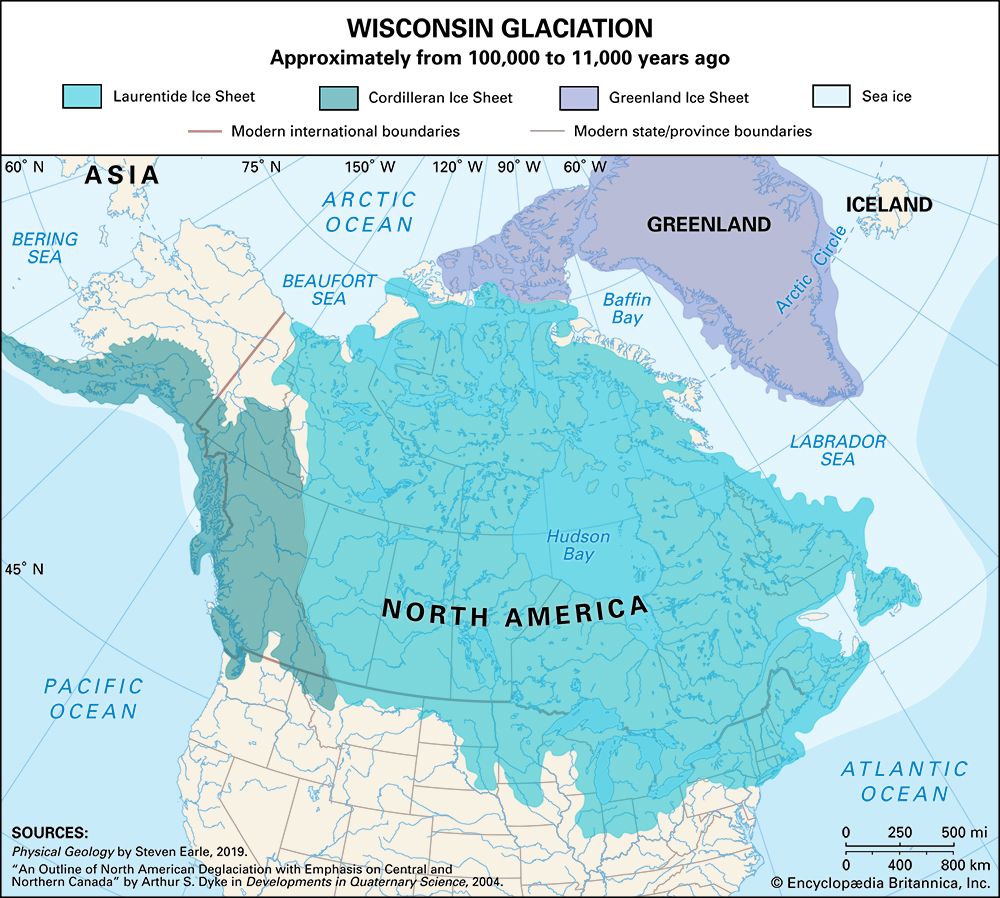
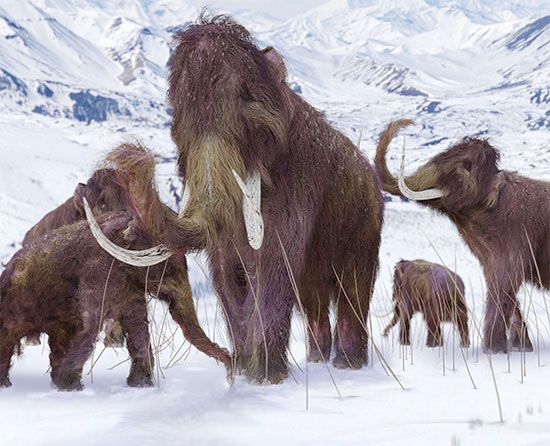
The most recent major event, often called the Great Ice Age or the Pleistocene Epoch, spanned approximately 2.6 million to 11,700 years ago. This epoch was characterized by cyclical patterns of glacial and interglacial stages, during which ice sheets advanced and retreated across the continents.123
In contrast, the Little Ice Age was a much shorter, more recent cooling event that occurred between 1300 and 1850 CE, with its maximum development reached around 1750. On a much larger geological scale, the earliest known ice ages date back to the Precambrian, more than 570 million years ago. Because these periods of large-scale glaciation can last for several million years, they are fundamental in shaping the Earth’s surface features.12
What are Milankovitch cycles and how do they influence Earth’s climate?
Milankovitch cycles refer to the collective effects of changes in Earth’s movements on its climate over thousands of years. Named after the Serbian geophysicist Milutin Milankovitch, these cycles describe how predictable variations in Earth’s orbital geometry alter the amount and distribution of solar radiation reaching the planet’s surface.56
There are three primary orbital parameters that drive these cycles:
- Eccentricity: The shape of Earth’s orbit around the Sun fluctuates between nearly circular and mildly elliptical over periods of 100,000 and 413,000 years.56
- Obliquity (Axial Tilt): The angle of Earth’s axis relative to its orbital plane varies between 22.1° and 24.5° on a 41,000-year cycle. A greater tilt increases the intensity of seasonal contrasts.56
- Precession: A 26,000-year cycle caused by the “wobble” of Earth’s axis and the rotation of its orbital ellipse, which changes the timing of the seasons relative to Earth’s position in its orbit.56
These cycles interact to pace long-term climate patterns, most notably the advance and retreat of glaciers during glacial and interglacial periods.56
How did the Little Ice Age affect human societies?
The Little Ice Age (roughly 1300–1850) significantly impacted human societies, particularly in Europe and the North Atlantic, by disrupting agriculture and altering living conditions.8910
Agricultural and Economic Impact
Because much of the population lived at subsistence levels, the cooling climate—characterized by shorter growing seasons and increased precipitation—had devastating consequences.11
- Crop Failures and Famine: Frequent cold winters and wet summers led to widespread harvest failures, particularly for cereal crops. In 17th-century France, for example, catastrophic harvests caused bread prices to quadruple, leading to mass starvation.81011
- Fisheries: As ocean temperatures dropped, North Atlantic cod fisheries declined, impacting food security and trade.810
Societal and Demographic Shifts
- Abandonment and Migration: In the Alps, advancing glaciers destroyed farms and villages. In Spain, disastrous frosts triggered mass emigration. Norse colonies in Greenland were cut off by increased pack ice; the western colony collapsed from starvation, and the eastern colony was abandoned.81011
- Social Unrest: Economic hardship and food shortages fueled political instability, including revolts in Sicily and constitutional crises in Sweden.11
- Cultural Adaptation: In North America, some Native American cultures in the Mississippi Valley shifted from agriculture to hunting as conditions became drier. Similarly, Arctic populations adjusted their economies to survive more extreme conditions.812
What evidence do scientists use to study past climates?
To study past climates, scientists rely on a combination of direct instrumental records and “proxy” evidence—natural archives that record environmental conditions over time.1314
Instrumental and Historical Records
For the most recent history, researchers use high-quality instrumental data, which are widely available from the 20th century onward but become sparse in the 19th century. To extend this timeline, scientists analyze historical documents such as ship logs, diaries, church records, and tax rolls, which can provide localized information on events like droughts, floods, and frost dates.1314
Natural Archives (Proxy Evidence)
Because instrumental records are limited, paleoclimatologists rely on natural archives to reconstruct Earth’s climate history:1314
- Ice Cores: Drilled from ice sheets in places like Antarctica and Greenland, these cores contain trapped air bubbles that reveal past atmospheric composition and isotopic signatures that indicate temperature variations.1315
- Tree Rings (Dendrochronology): By measuring annual growth rings, scientists can infer past precipitation and temperature trends, with some records extending back thousands of years.1614
- Palynology: The study of fossilized pollen and spores preserved in sediments helps researchers track changes in vegetation, which reflect shifts in regional climate.1718
- Sediments and Corals: Cores taken from oceans, lakes, and bogs, as well as samples from corals and cave stalagmites, provide geochemical indicators of former environmental conditions.1314
Sources
- How long was the Ice Age? — Encyclopædia Britannica
- ice age — Encyclopædia Britannica
- Pleistocene Epoch - Cause of the climatic changes and glaciations — Encyclopædia Britannica
- glacial stage — Encyclopædia Britannica
- Climate change - Orbital ( Milankovich ) variations — Encyclopædia Britannica
- Milutin Milankovitch — Encyclopædia Britannica
- Climate change - The Earth system — Encyclopædia Britannica
- Little Ice Age — Encyclopædia Britannica
- Holocene Epoch - “ Medieval ” Cool Period — Encyclopædia Britannica
- What Was the Little Ice Age? — Encyclopædia Britannica
- Climate change - Centennial-scale variation — Encyclopædia Britannica
- history of Europe - Climate — Encyclopædia Britannica
- Climate change - Evidence for climate change — Encyclopædia Britannica
- Pleistocene Epoch - Ice-core records — Encyclopædia Britannica
- dendrochronology — Encyclopædia Britannica
- Global warming - Climate research — Encyclopædia Britannica
- geology - Palynology — Encyclopædia Britannica
- palynology — Encyclopædia Britannica
Published on · 4 min read