Lake Turkana
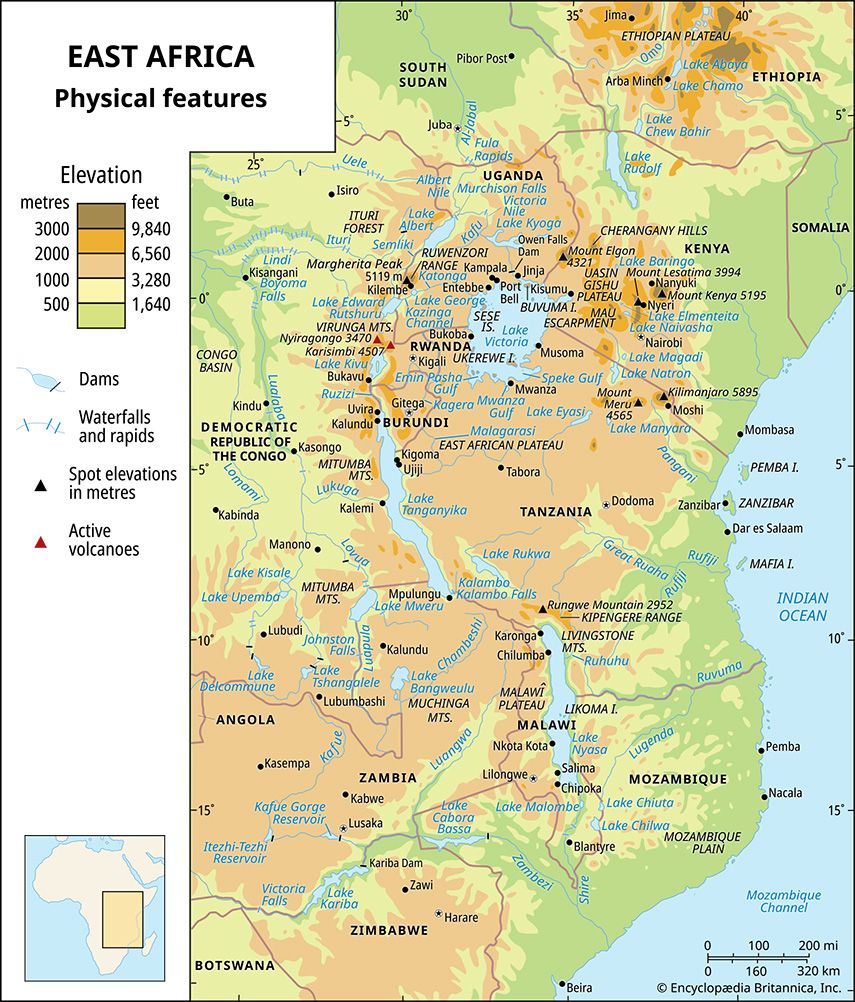
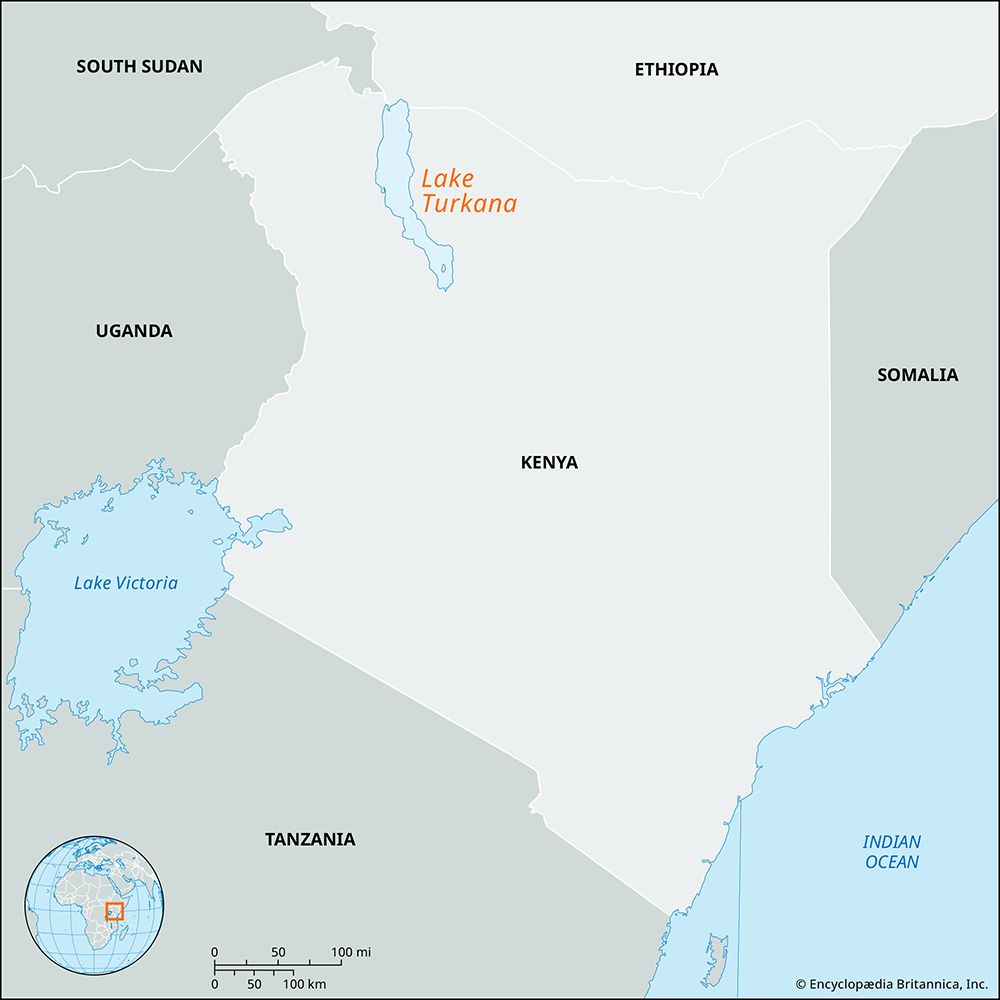
Lake Rudolf, now officially known as Lake Turkana, is the fourth largest of the eastern African lakes. It covers an area of 2,473 square miles (6,405 square…
What is the size and depth of Lake Rudolf compared to other lakes in Africa?
Lake Rudolf, now officially known as Lake Turkana, is the fourth largest of the eastern African lakes. It covers an area of 2,473 square miles (6,405 square km).12
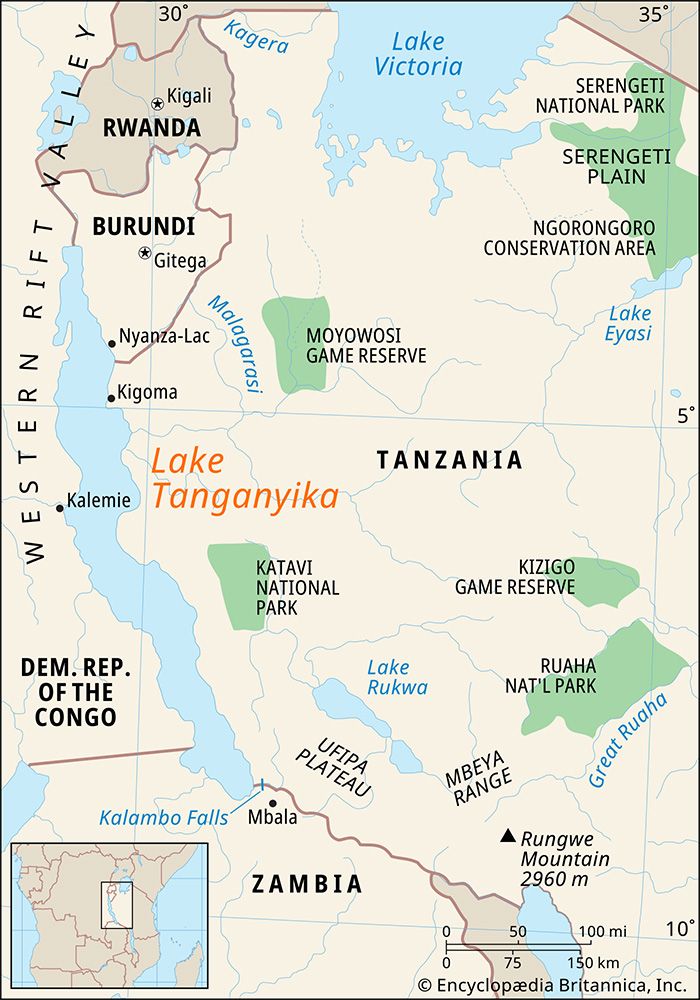
Compared to other major lakes in the region, Lake Turkana is significantly smaller than Lake Victoria (26,828 square miles), Lake Tanganyika (about 12,700 square miles), and Lake Nyasa (11,430 square miles).2
In terms of depth, Lake Turkana is relatively shallow, with a greatest recorded depth of 240 feet (73 meters), though it reaches approximately 400 feet (120 meters) in a small depression at its southern end. This contrasts sharply with the deep rift lakes of the Western Rift Valley; for instance, Lake Tanganyika reaches a maximum depth of 4,710 feet (1,435 meters), and Lake Nyasa reaches 2,310 feet (704 meters).134
How did Lake Rudolf get its name, and what is its current official name?
The lake is currently officially known as Lake Turkana.
It was previously named Lake Rudolf after Count Samuel Teleki and Lieutenant Ludwig von Höhnel visited the site in 1888 and named it in honor of Crown Prince Rudolf of Austria. In the 1970s, the Kenyan government under President Jomo Kenyatta renamed the lake after the Turkana people, who are the nomadic pastoralists inhabiting the surrounding desert region. The lake has also historically been referred to as the “Jade Sea” due to the distinct color of its water.1
What are the unique geological features of Lake Rudolf and its surrounding area?
Lake Turkana is situated within the eastern arm of the East African Rift System, a region defined by significant tectonic activity. Its unique geological character is shaped by several key features:1
Tectonic and Volcanic Origins
- Rift Formation: The lake lies in a basin created by earth movements during the Pleistocene Epoch, which transformed a once-larger water body connected to the Nile River into an isolated, inland drainage system.1
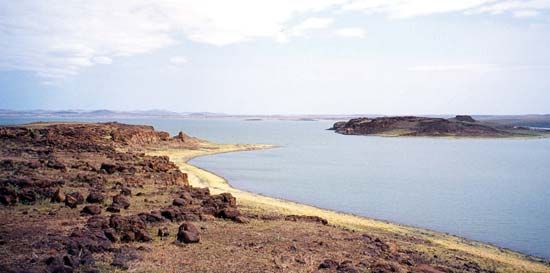
- Volcanic Activity: The landscape is heavily influenced by volcanism. The lake’s three primary islands—North, Central, and South—are volcanic in origin. Furthermore, the eastern and southern shores are characterized by rocky terrain formed by volcanic outcrops.1
Shoreline and Basin Characteristics
- Diverse Topography: While the east and south are rocky, the western and northern shores consist of sand dunes, sandspits, and mudflats.1
- Hydrology: The lake is endorheic, meaning it has no outlet, which results in brackish water. Its levels fluctuate based on the inflow from its only perennial tributary, the Omo River.1
Archaeological Significance
The surrounding area is a critical site for human evolution research. Sites like Koobi Fora have preserved a vast collection of hominin fossils and ancient tools, providing evidence of early human life dating back millions of years.18
What archaeological discoveries have been made in the Lake Rudolf region?
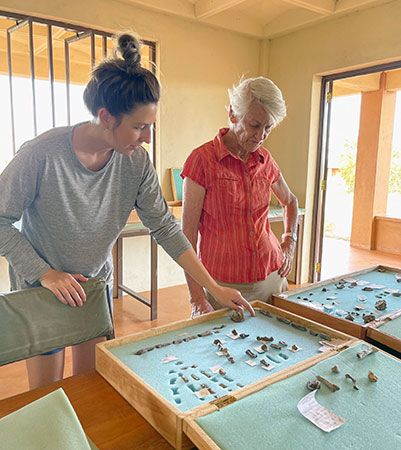
The Lake Turkana region is one of the world’s most significant sites for paleoanthropology, yielding a vast array of hominin fossils and ancient artifacts.8
Major Hominin Discoveries
Excavations, particularly at the Koobi Fora site, have uncovered remains representing approximately 230 individuals. Key findings include:8
- Species of Homo: Fossils of H. habilis, H. rudolfensis, and H. erectus (also known as H. ergaster).89
- Australopiths: Remains of Australopithecus anamensis, Paranthropus boisei, P. aethiopicus (the “Black Skull”), and Kenyanthropus platyops.89
- Turkana Boy: A remarkably complete skeleton of an 11- to 13-year-old male H. erectus dated to approximately 1.8 million years ago.89
Archaeological Artifacts and Evidence
- Stone Tools: Primitive hammers, anvils, and cutting tools found at Lomekwi 3 date back 3.3 million years. Additionally, Oldowan and Acheulean tools have been recovered from various sediments.89
- Nataruk Site: Skeletons of H. sapiens dated to 10,500–9,500 years ago provide potential evidence of early intergroup warfare, as some remains show signs of violent death and binding.8
Sources
- Lake Turkana — Encyclopædia Britannica
- Africa - Relief — Encyclopædia Britannica
- East African lakes - Physiography — Encyclopædia Britannica
- East African lakes — Encyclopædia Britannica
- Rudolf, Lake — Merriam-Webster
- History of Austria - Accession of the Habsburgs — Encyclopædia Britannica
- Austria - Accession of the Habsburgs — Encyclopædia Britannica
- Lake Turkana remains — Encyclopædia Britannica
- Leakey family — Encyclopædia Britannica
- Koobi Fora — Encyclopædia Britannica
Published on · 3 min read