Luminous Moss
Luminous moss (Schistostega pennata) is a light-reflecting plant native to the Northern Hemisphere that typically grows in caves, rock cavities, or holes in…
What is Luminous moss?
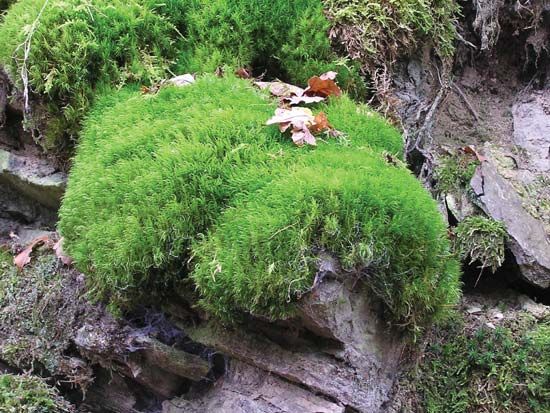
Luminous moss (Schistostega pennata) is a light-reflecting plant native to the Northern Hemisphere that typically grows in caves, rock cavities, or holes in wood and earth.12
Standing about one centimeter tall, the plant features a bare lower stem and two rows of leaves, giving it the appearance of a tiny fern frond. Despite its name, the moss does not produce its own light; rather, it appears to glow with a golden-green hue because its lens-shaped protonema cells reflect ambient light off of their chlorophyll grains. This unique optical adaptation allows the moss to thrive in low-light environments where it can capture and utilize minimal light sources for photosynthesis.12
How does chlorophyll help plants create energy?
Chlorophyll is a class of pigments essential to photosynthesis, the process by which plants convert light energy into chemical energy. Located within chloroplasts in structures called thylakoids, chlorophyll molecules act as “antennae” that absorb specific wavelengths of light.345
This energy conversion occurs in two stages:
- Light Reactions: Absorbed light energy is transferred to specialized chlorophyll molecules (P700 and P680). This triggers an electron flow that generates chemical energy in the form of ATP and NADPH. During this stage, water molecules are split, releasing oxygen as a byproduct.5
- Dark Reactions: Also known as the Calvin-Benson cycle, this stage uses the ATP and NADPH produced in the light reactions to convert carbon dioxide into carbohydrates like glucose.5
Essentially, chlorophyll captures the energy required to fuel the chemical reactions that transform inorganic carbon dioxide into the organic compounds that sustain the plant.34
What are some other plants that grow in dark caves?
While true “dark” caves generally lack the light necessary for photosynthesis, certain bryophytes are adapted to grow in the low-light conditions found at the mouths or within the shaded recesses of caverns.
In addition to the luminous moss (Schistostega pennata), other bryophytes known to inhabit these somewhat shaded cavern environments include:
- Mittenia: A genus of moss that, like Schistostega, is found in cavernous habitats.1
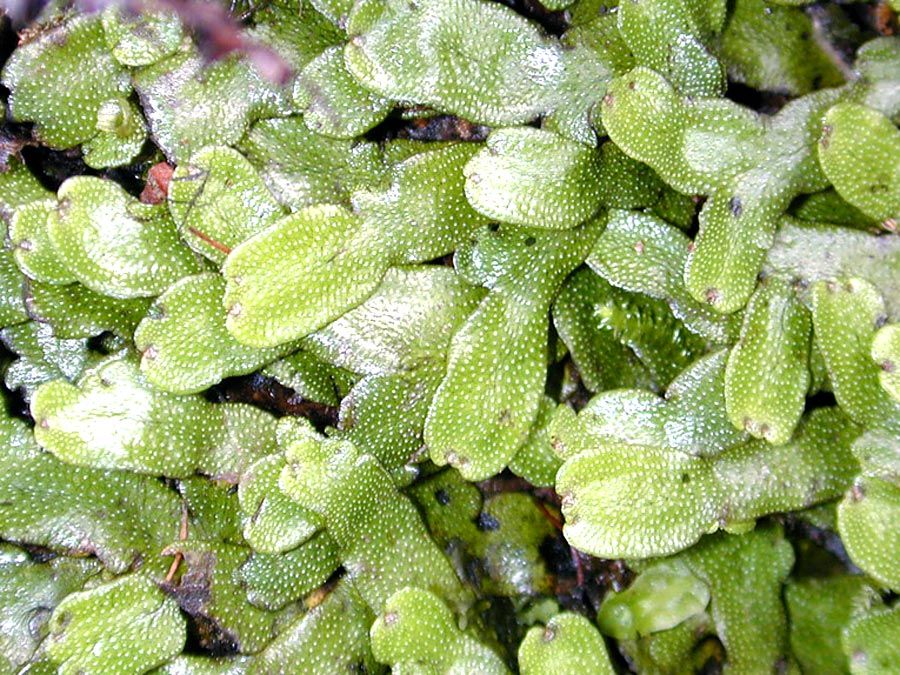
- Cyathodium: A type of liverwort that also thrives in the dim light of cavern mouths.1
These plants are specialized to survive in environments where light is limited, often relying on high humidity and stable substrates to persist in these unique ecological niches.1
What is the difference between a moss and a fern?
The primary difference between mosses and ferns lies in their internal structure and their dominant life cycle phase.
Vascular Tissue
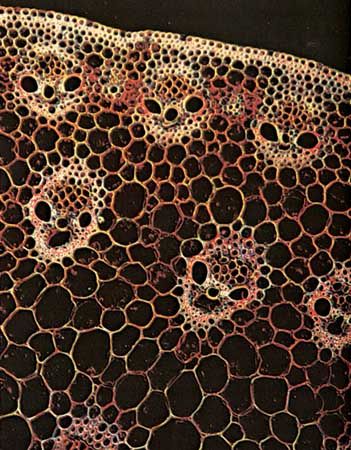
- Mosses: These are nonvascular bryophytes, meaning they lack specialized xylem and phloem for conducting water and nutrients. Consequently, they do not possess true roots, stems, or leaves, though some species have simple structures that perform similar functions.78
- Ferns: These are vascular plants (tracheophytes) that possess complex vascular tissue. This allows them to transport water and nutrients efficiently, supporting the growth of true roots, stems, and leaves.9
Life Cycle
Both groups exhibit an alternation of generations, but the dominant phase differs:
- Mosses: The gametophyte (the sexual, haploid phase) is the long-lived, conspicuous, and independent photosynthetic generation. The sporophyte is dependent on the gametophyte for nutrients.78
- Ferns: The sporophyte is the dominant, larger, and more conspicuous phase of the life cycle. The gametophyte is typically small and ephemeral.910
Both groups rely on water for fertilization because they produce motile, flagellated sperm that must swim to reach the egg.98
Sources
- luminous moss — Encyclopædia Britannica
- luminous moss — Merriam-Webster
- Chlorophyll: Top Questions — Encyclopædia Britannica
- Plant - Basic mechanisms — Encyclopædia Britannica
- Chlorophyll — Encyclopædia Britannica
- bryophyte - Ecology and habitats — Encyclopædia Britannica
- bryophyte — Encyclopædia Britannica
- Plant - Definition of the category — Encyclopædia Britannica
- Plant reproductive system - Variations in reproductive cycles — Encyclopædia Britannica
- Plant - Definition of the category — Encyclopædia Britannica
- Fern - Ecology — Encyclopædia Britannica
- moss — Encyclopædia Britannica
- Plant reproductive system - Mosses — Encyclopædia Britannica
Published on · 3 min read