Madhumati River
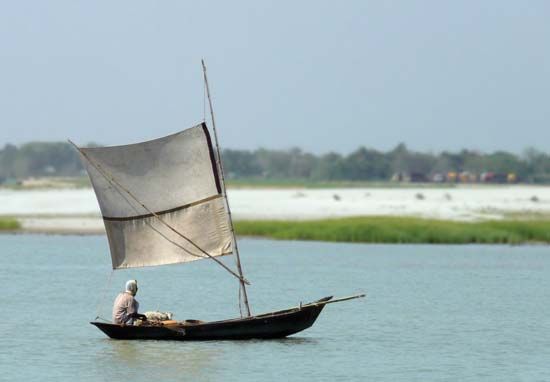
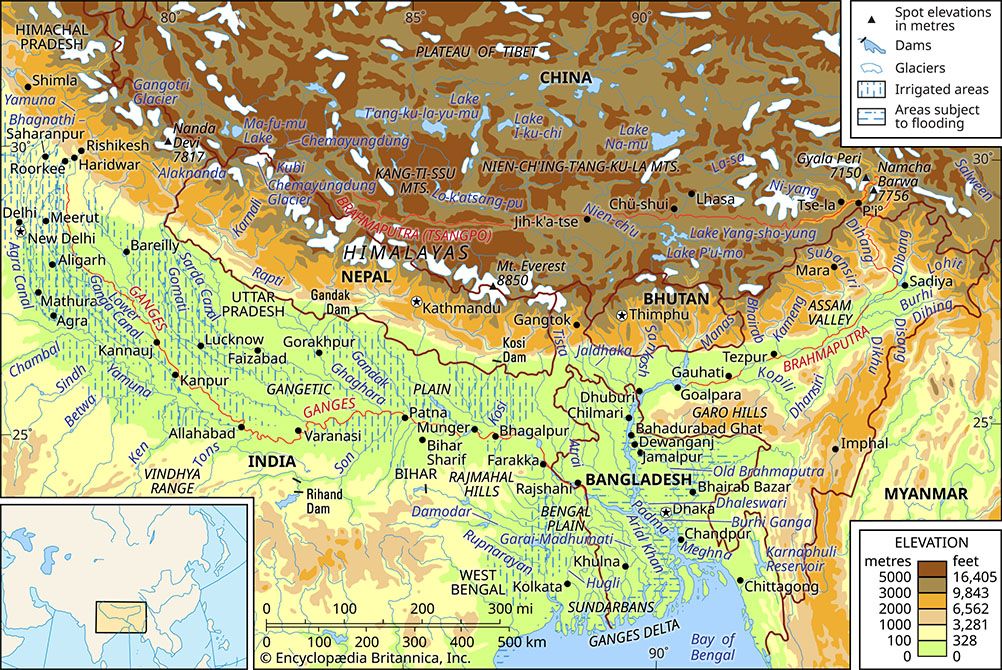
The Madhumati River is a significant distributary of the upper Padma River, which is part of the Ganges (Ganga) River system in Bangladesh.
What is Madhumati River?
The Madhumati River is a significant distributary of the upper Padma River, which is part of the Ganges (Ganga) River system in Bangladesh.12
Originating just north of Kushtia, the river flows 190 miles (306 km) southeast before turning south through the Sundarbans to reach the Bay of Bengalarbans) to reach the Bay of Bengal. Its name changes along its course: it is known as the Garai in its upper reaches and the Baleswar in its lower section, eventually reaching the sea through an estuary called the Haringhata. As one of the largest distributaries in the southern Gangetic Plain, it provides the most favorable navigation conditions for any river at the head of the Bay of Bengal.1
What are the unique features of the Sundarbans region?
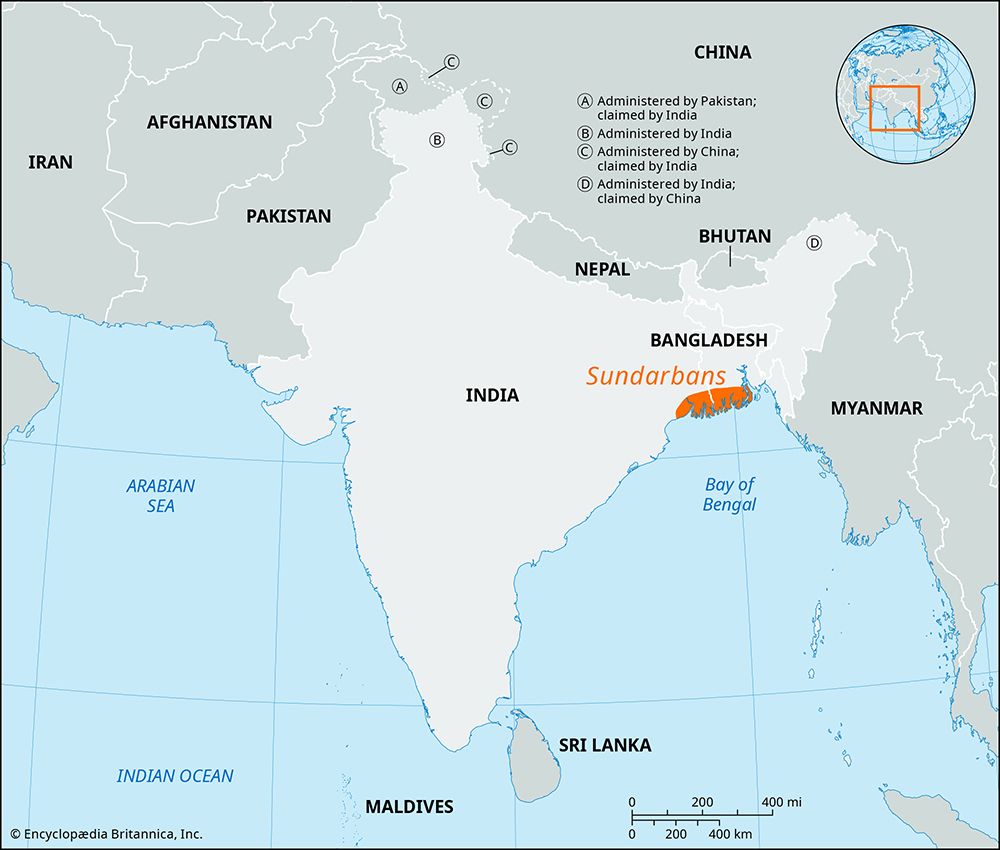
The Sundarbans is a vast, unique ecosystem located in the Ganges-Brahmaputra River delta across India and Bangladesh. Its most defining features include:
- World’s Largest Mangrove Forest: The region contains the largest mangrove forest globally, named after the sundari (Heritiera fomes) tree.34
- Dynamic Landscape: It is a complex network of tidal creeks, estuaries, and marshy islands that are constantly reshaped by sea erosion, wind, and heavy silt deposits.34
- Semiaquatic Wildlife: The region is famous for its Bengal tigers, the only tiger population in the world that has adapted to a semiaquatic life, hunting both terrestrial and aquatic prey.4
- High Biodiversity: It serves as a critical refuge for endangered species, including Ganges river dolphins, estuarine crocodiles, and over 250 bird species.34
- Environmental Vulnerability: The ecosystem faces significant threats from climate change, including rising sea levels, increased salinity, and more intense tropical cyclones, alongside human pressures like illegal logging and pollution.54
How do distributaries differ from tributaries?
The primary difference between a tributary and a distributary lies in the direction of water flow relative to the main river channel:
- Tributaries: These are streams or rivers that flow into a larger body of water, such as a main river or lake. They contribute their water to the main stream, effectively increasing its volume as it moves downstream.678
- Distributaries: These are river branches that flow away from the main stream. They typically occur in delta regions where a river divides into multiple channels before reaching the sea or a larger body of water, effectively distributing the river’s water and sediment across a wider area.981011
In essence, while tributaries act as feeders that build up a river system, distributaries act as outlets that branch off from the main channel.69
What is the significance of the Ganges River system?
The Ganges River system is of profound significance, serving as a vital lifeline for hundreds of millions of people across the northern Indian subcontinent. Its importance spans cultural, historical, and economic dimensions:
- Cultural and Religious Significance: Revered as the holiest river in Hinduism, the Ganges is considered a deity. It is a central site for pilgrimage, with millions gathering at sacred cities like Varanasi and Haridwar for ritual bathing and funeral rites, as many believe immersion in its waters or the scattering of ashes provides a direct passage to heaven.13
- Historical Heartland: The Indo-Gangetic Plain has been the cradle of successive civilizations, including the Mauryan empire and the Mughal Empire, which established major power centers along its banks.1413
- Economic Vitality: The river basin is one of the most fertile and densely populated regions on Earth. Its waters have supported irrigation for thousands of years, enabling the production of essential cash crops like sugarcane and cotton.15
- Environmental Challenges: Despite its importance, the river faces severe pollution from untreated sewage, industrial waste, and agricultural runoff. Ongoing initiatives like the Namami Gange program are currently working to restore water quality and protect the river’s ecosystem.716
Sources
- Madhumati River — Encyclopædia Britannica
- Padma River — Encyclopædia Britannica
- Sundarbans — Encyclopædia Britannica
- Sundarbans National Park: Top Questions — Encyclopædia Britannica
- Sundarbans National Park — Encyclopædia Britannica
- tributary — Merriam-Webster
- Ganges River - Physiography — Encyclopædia Britannica
- Did you know? — Merriam-Webster
- river - Morphology of deltas — Encyclopædia Britannica
- distributary — Merriam-Webster
- river - Braided channels — Encyclopædia Britannica
- tributaries — Merriam-Webster
- Ganges River — Encyclopædia Britannica
- Ganges River - Irrigation — Encyclopædia Britannica
- Ganges River - People — Encyclopædia Britannica
- Ganges River - Environmental issues — Encyclopædia Britannica
- Ganges River: Top Questions — Encyclopædia Britannica
Published on · 3 min read