Man Orchid
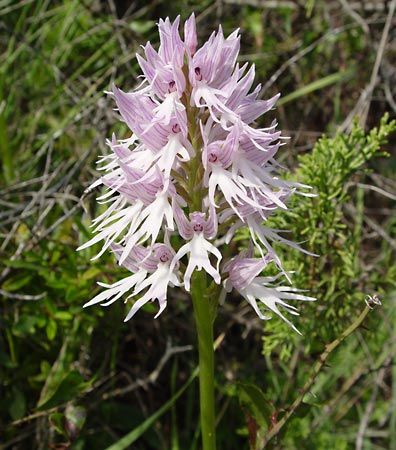
The term "man orchid" refers to two related species of orchids in the family Orchidaceae that are named for the humanlike appearance of their flowers.
What is Man orchid?
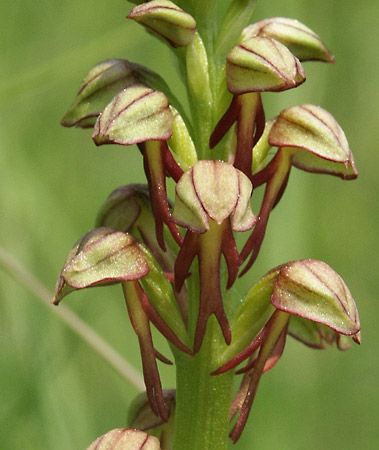
The term “man orchid” refers to two related species of orchids in the family Orchidaceae that are named for the humanlike appearance of their flowers.1
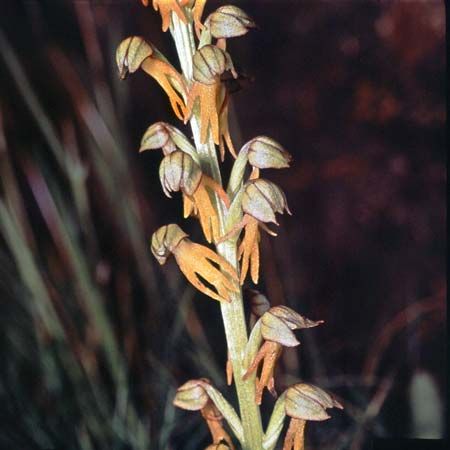
- Common man orchid (Orchis anthropophora): Native to Great Britain, Eurasia, and northern Africa, this plant produces a spike of up to 90 greenish or yellowish flowers. These flowers resemble a helmeted man, with the torso and limbs created by a lobed central labellum.1
- Naked man orchid (Orchis italica): Also known as the Italian orchid, this species is native to the Mediterranean region. Its flowers, which appear in shades of pink, purple, or white, are densely clustered and resemble a hatted, naked man.1
Both plants feature specialized structures, such as the labellum, which contribute to their distinct, anthropomorphic shapes.1
How do orchids attract pollinators?
Orchids have evolved a sophisticated array of strategies to attract pollinators, ranging from offering rewards to complex forms of deception.
Reward-Based Attraction
Many orchids attract pollinators by providing nectar as a food source. These flowers typically feature bright colors, agreeable odors, and a landing platform—the labellum—that guides the insect toward the nectary. As the insect enters the flower, the column deposits pollen masses, known as pollinia, onto the visitor to be transported to the next blossom.234
Deceptive Strategies
A significant number of orchids are nectarless and rely on deception to ensure pollination:
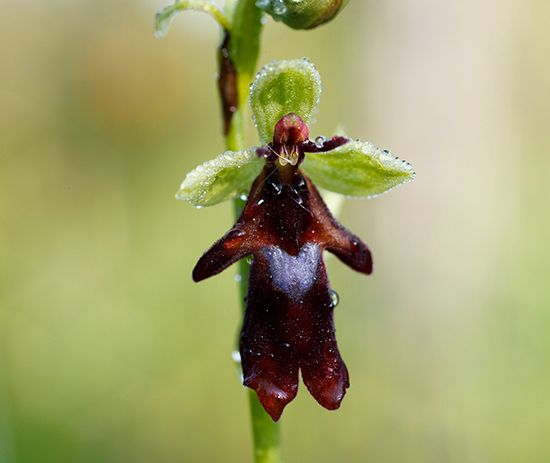
- Sexual Deception: Some orchids, such as those in the genus Ophrys, mimic the appearance and pheromones of female insects. Male bees or wasps are lured to the flower, attempting to copulate with the labellum. During this pseudocopulation, the insect inadvertently picks up or deposits pollinia.25
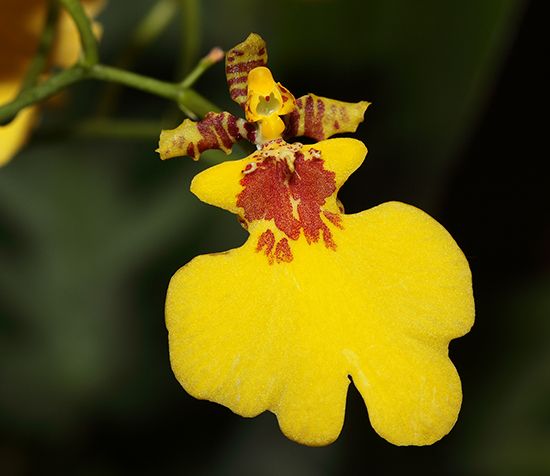
- Pseudoantagonism: Certain orchids, like those in the genus Oncidium, simulate an enemy insect. Male bees, attempting to drive the “intruder” from their territory, strike the flower and collect the pollinia.3
- Traps and Manipulation: The Coryanthes (bucket orchid) uses a complex trap. Male euglossine bees, attracted by the flower’s scent, may fall into a water-filled bucket. The only escape route forces the bee to pass through a tunnel where the pollinarium is deposited on its thorax.3
- Pseudopollen: Some species produce a powdery, starch-filled substance that mimics the appearance of protein-rich pollen, tricking insects into visiting the flower.4
What are some other unusual flower shapes in nature?
Nature features a wide variety of unusual flower shapes and structures, often evolved to manipulate pollinators or ensure survival. Beyond the anthropomorphic orchids, many plants utilize specialized forms:
- Traps and Pitchers: Pitcher plants possess juglike leaves that often bear flowerlike markings to lure insects. These structures use slippery surfaces or downward-pointing hairs to trap prey, which are then digested by enzymes. Similarly, the cuckoopint (Arum maculatum) features a spadix surrounded by a petal-like spathe; it traps insects in a chamber to ensure they are thoroughly dusted with pollen before release.678
- Carrion Mimicry: Flowers like the titan arum and various carrion flowers mimic the appearance of rotting flesh, often featuring mottled red and brown colors and oozing textures to attract flies and beetles.78
- Puff Pollination: The flowers of the genus Axinaea have unique, fruitlike organs attached to their stamens. When a bird attempts to eat these “food bodies,” the flower acts like a bellows, blasting the bird with a puff of pollen.7
- Extreme Elongation: The Madagascar orchid Angraecum sesquipedale features a nectar receptacle that can reach 35 cm (14 inches) in length, requiring a pollinator with an equally long proboscis.9
Why do some plants have underground tubers?
Plants develop underground tubers primarily as specialized storage organs that enable survival and reproduction. These modified, fleshy stems grow below the soil and are largely composed of starch-storing parenchyma tissue.121314
The primary functions of tubers include:
- Energy Storage: By storing food in the form of starch, tubers provide the plant with the necessary energy to survive periods of dormancy, such as extended winters or drought.121413
- Vegetative Reproduction: Tubers serve as a means of asexual reproduction. They bear buds, often called “eyes,” which have the potential to develop into new individual plants under favorable conditions.121513
- Overwintering: These structures act as a resting stage, allowing various species to persist through harsh environmental conditions that might otherwise kill the plant.1214
It is important to distinguish true tubers, which are modified stems, from tuberous roots (such as those of dahlias or sweet potatoes), which are modified roots that also function in food storage but differ in their botanical origin.121413
Sources
- man orchid — Encyclopædia Britannica
- mimicry - Orchids — Encyclopædia Britannica
- orchid - Bee pollination — Encyclopædia Britannica
- orchid - Pollination — Encyclopædia Britannica
- orchid - Sexual deception — Encyclopædia Britannica
- Pollination - Evolution of insect pollination — Encyclopædia Britannica
- Botanical Sex: 9 Alluring Adaptations — Encyclopædia Britannica
- Major types of pollinators - Birds — Encyclopædia Britannica
- Pollination - Birds — Encyclopædia Britannica
- mimicry - Insect-luring plants — Encyclopædia Britannica
- mimicry - Carrion flowers , stinkhorn mushrooms, and mosses — Encyclopædia Britannica
- Tuber — Encyclopædia Britannica
- Vegetative reproduction — Encyclopædia Britannica
- Root vegetable — Encyclopædia Britannica
- Angiosperm - Shoot system modifications — Encyclopædia Britannica
- Angiosperm - Root systems — Encyclopædia Britannica
Published on · 4 min read