New Georgia Islands
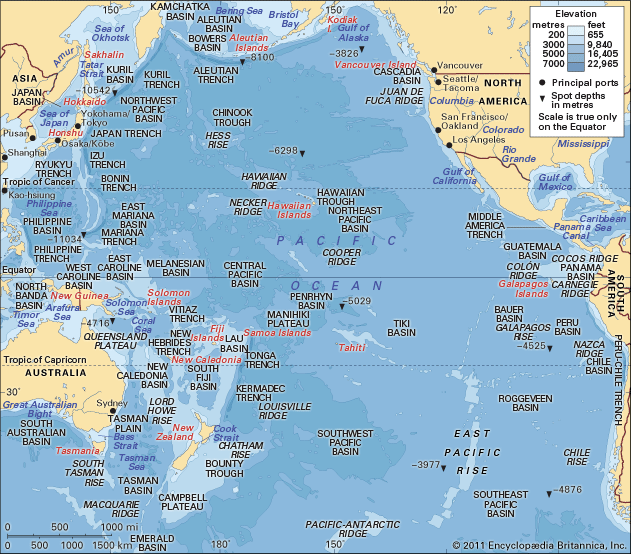
The New Georgia Islands are a volcanic island group located in the southwestern Pacific Ocean within the country of the Solomon Islands.
Where are the New Georgia Islands located within the Solomon Islands?
The New Georgia Islands are a volcanic island group located in the southwestern Pacific Ocean within the country of the Solomon Islands.1
Geographically, they are situated in the central part of the archipelago and form part of the nation’s southern chain of islands, which runs in a northwest-southeast direction. The group is positioned approximately 90 miles (145 km) northwest of Guadalcanal. The islands are characterized by rugged, forested terrain and are surrounded by extensive reefs and lagoons.231
What is the geography and climate like in the New Georgia Islands?
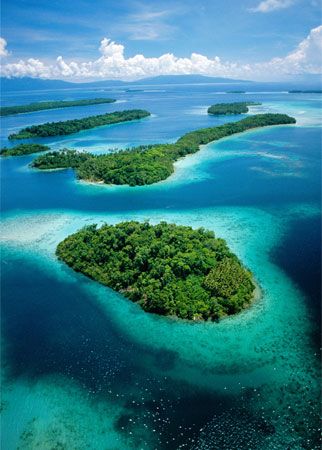
The New Georgia Islands are a volcanic island group characterized by rugged, mountainous, and heavily forested terrain. The group consists of four main islands—Vella Lavella, Kolombangara, New Georgia, and Vangunu—along with the smaller island of Ghizo. The landscape is picturesque, featuring extensive reefs, lagoons, and an abundance of rivers. Notable geological features include the cone-shaped solfataric volcano on Kolombangara, which rises to 5,800 feet (1,768 metres), and the peaks of New Georgia, Mount Vina Roni and Mount Mangela. Additionally, the area is near the submarine volcano Kavachi.13
The climate of the region is tropical oceanic, meaning it is hot and humid, though tempered by cool winds and consistent, year-round rainfall. Temperatures in the Solomon Islands generally remain below 90 °F (32 °C), with annual rainfall typically averaging between 120 and 140 inches (3,000–3,500 mm).3
How does the biodiversity of the New Georgia Islands compare to other parts of the Solomon Islands?
The New Georgia Islands are characterized by a notable scarcity of terrestrial animal life, which stands in contrast to the broader Solomon Islands archipelago. While the New Georgia group is described as having a “virtual absence” of animal life, the Solomon Islands as a whole support a more diverse array of fauna.16
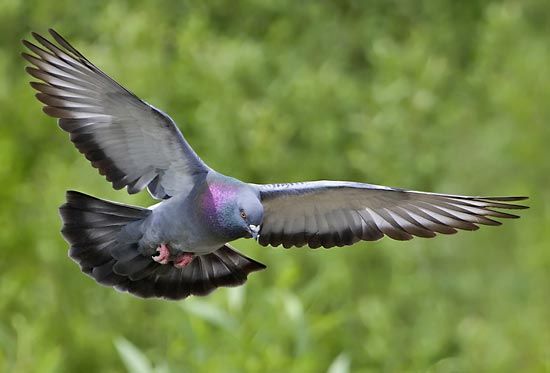
Across the wider Solomon Islands, the animal population—though limited compared to continental regions—includes a variety of pigeons, rats, bats, snails, lizards, frogs, turtles, and the estuarine crocodile. The Solomon Islands are also part of the Australian region, a biogeographic realm known for endemic bird families such as birds-of-paradise.67
The limited biodiversity in the New Georgia Islands is likely influenced by their volcanic nature and isolation, a common trait among many Pacific island groups where terrestrial species diversity is often restricted.13
How did the New Georgia Islands play a role in World War II?
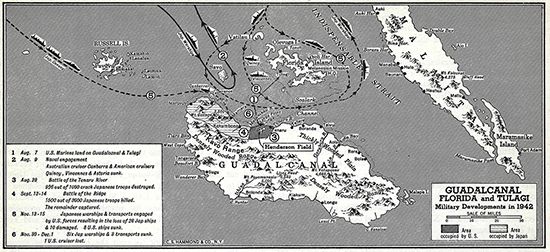
During World War II, the New Georgia Islands served as a critical strategic location, as the Japanese military established several airfields across the group to bolster their regional defenses.1
The Allied campaign to secure the islands began on the night of June 29–30, 1943, with simultaneous landings on New Georgia and nearby Rendova Island. This offensive triggered intense fighting, including notable naval engagements such as the Battle of Kula Gulf and the Battle of Kolombangara, where both sides suffered significant losses in ships and personnel.910
The struggle for control was pivotal; by August 5, 1943, the fall of the Japanese air base at Munda on New Georgia signaled that the defeat of Japanese forces in the Solomons was effectively assured. The Allies continued to expand their operations, including landings on Vella Lavella, which concluded with a Japanese evacuation on October 7, 1943. The effort to defend the islands proved costly for the Japanese, resulting in approximately 10,000 casualties.1019
Sources
- New Georgia Islands — Encyclopædia Britannica
- New Georgia — Merriam-Webster
- Solomon Islands - Land — Encyclopædia Britannica
- Solomon Sea — Encyclopædia Britannica
- New Zealand - Climate — Encyclopædia Britannica
- French Polynesia - Plant and animal life — Encyclopædia Britannica
- Sea Islands — Encyclopædia Britannica
- biogeographic region - Australian region — Encyclopædia Britannica
- World War II - The Southwest and South Pacific, June–October 1943 — Encyclopædia Britannica
- history of Solomon Islands - The Solomons during World War II — Encyclopædia Britannica
- Solomon Islands - World War II — Encyclopædia Britannica
- Pacific War - Japanese strategy after Guadalcanal — Encyclopædia Britannica
Published on · 3 min read