Tench
The tench (Tinca tinca) is a stout, small-scaled fish belonging to the carp family (Cyprinidae). Native to Eurasia, it has been introduced to other regions…
What is tench?
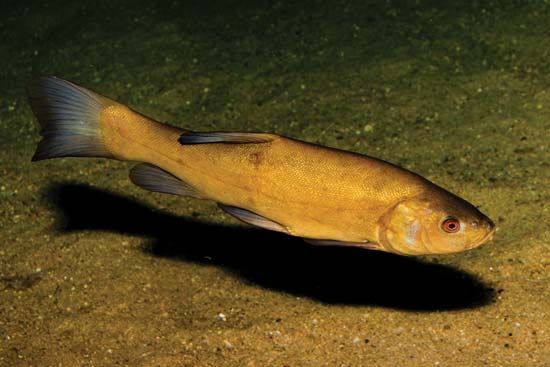
The tench (Tinca tinca) is a stout, small-scaled fish belonging to the carp family (Cyprinidae). Native to Eurasia, it has been introduced to other regions, including the United States.12
This fish is well-known for its remarkable ability to survive in quiet, mud-bottomed waters with low oxygen levels. Physically, it is characterized by:12
Typically reaching lengths of 18–35 cm (7–14 inches) and weighing around 2 kg (4 1/2 pounds), the tench feeds primarily on small animals and plants. Historically, its slime was believed to have medicinal properties capable of curing injured fish or treating human wounds. A popular ornamental variety, the golden tench, is frequently kept in ponds.1
What other fish belong to the carp family?
The carp family (Cyprinidae) is a diverse group of freshwater fishes that includes approximately 2,420 species across 220 genera. Beyond the well-known common carp and the tench, the family encompasses a wide variety of species, including:3
- Minnows: In North America, this term refers to various small cyprinids, such as the golden shiner, the bluntnose minnow, and the fathead minnow. In Europe and northern Asia, the common minnow (Phoxinus phoxinus) is a representative member of the family.4
- Goldfish: A popular aquarium fish that is closely related to other members of the family.3
- Asian Carp: This group includes several species introduced to North America, such as the grass carp, bighead carp, black carp, and silver carp.5
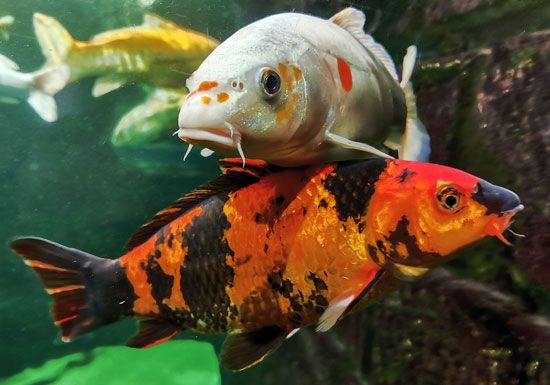
- Other Varieties: The family also includes bitterlings, barbs, and koi, the latter of which are thought to descend from the common carp or the closely related Amur carp.53
These fishes are characterized by having pharyngeal teeth in one to three rows and, in some species, one or two pairs of small barbels.3
How do fish survive in low-oxygen water?
Fish have evolved several remarkable adaptations to survive in environments where oxygen levels are low or depleted. While most fish rely on gills to extract dissolved oxygen from water, those living in oxygen-poor habitats often utilize alternative methods to meet their respiratory needs.781
Aerial Respiration
Many fish supplement or replace aquatic breathing by gulping air at the surface. This allows them to thrive in stagnant or muddy waters where oxygen is scarce:19
- Accessory Organs: Some species have developed specialized structures for air breathing. For example, lungfishes possess primitive lungs derived from the swim bladder, while labyrinth fish use a labyrinth organ to extract oxygen directly from the air.19
- Vascularized Surfaces: The electric eel relies on its highly vascularized mouth to absorb oxygen from the air, while other species may use their stomach or pharyngeal epithelium for gas exchange.19
- Skin Respiration: Some fish, such as eels, can absorb a significant portion of their oxygen through their skin, a process that becomes more vital when they are out of water.9
Behavioral and Metabolic Adaptations
Beyond physical structures, fish employ behavioral strategies to manage low-oxygen conditions:
- Surface Activity: Many fish stay near the water’s surface, where oxygen pressure is highest due to diffusion from the air.9
- Estivation: During extreme conditions like drought, some species, such as the African and South American lungfish, enter a state of estivation. By drastically lowering their metabolism, heart rate, and respiration, they can survive for months or even years without food or water.9
- Specialized Species: Certain fish, like the tench, are naturally noted for their ability to survive in quiet, mud-bottomed waters with very low oxygen levels.10
What are some other popular game fish in Eurasia?
Eurasia is home to several highly regarded freshwater game fish. Beyond the common carp, popular species include:
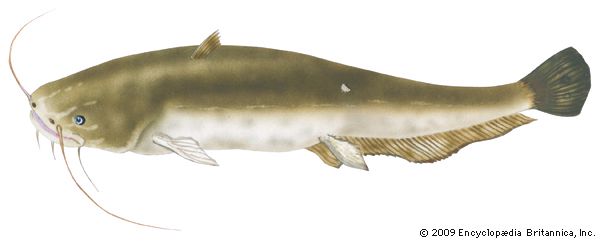
- Wels Catfish: A massive, voracious predator native to rivers and lakes from central Europe to western Asia. It is one of the largest freshwater fish in Europe, capable of reaching lengths of 4.5 meters (15 feet) and weights of 300 kg (660 pounds), making it a prized sport fish.1112
- European Perch: Widely known as a popular sport and food fish, the common perch (Perca fluviatilis) inhabits quiet ponds, lakes, and rivers across Eurasia. It is easily recognized by its greenish body, dark vertical bars, and reddish-orange lower fins.13
- Pike Perch (Zander): Found in lakes and rivers throughout eastern, central, and western Europe, the zander is a slender, carnivorous game fish. It is a member of the Percidae family and is highly valued by anglers for its fighting qualities and quality as a food fish.1413
- Salmon: These anadromous fish are highly sought after by anglers and are the subject of active commercial and recreational fisheries across various Eurasian waters.15
Sources
- tench — Encyclopædia Britannica
- tench — Merriam-Webster
- minnow — Encyclopædia Britannica
- carp — Encyclopædia Britannica
- Cyprinodontidae — Merriam-Webster
- ostariophysan - Annotated classification — Encyclopædia Britannica
- 14 Questions About Aquatic Animals Answered - How do fish breathe underwater? — Encyclopædia Britannica
- How do gills work? — Encyclopædia Britannica
- How do fish breathe? — Encyclopædia Britannica
- Respiratory system - Fishes — Encyclopædia Britannica
- pike perch — Encyclopædia Britannica
- wels — Encyclopædia Britannica
- perch — Encyclopædia Britannica
- trolling: Top Questions — Encyclopædia Britannica
- trolling — Encyclopædia Britannica
- commercial fishing - General characteristics — Encyclopædia Britannica
- East Asia - Animal life — Encyclopædia Britannica
- catfish — Encyclopædia Britannica
Published on · 4 min read