Principle of Competitive Exclusion
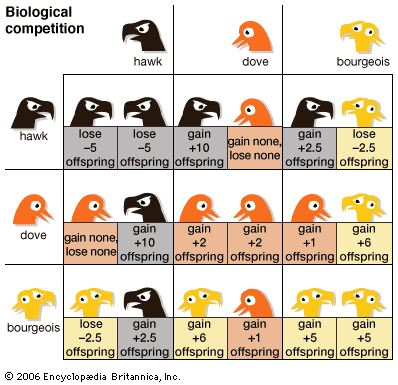
The principle of competitive exclusion, also known as Gause's law, states that two species competing for the exact same ecological niche cannot coexist…
What is principle of competitive exclusion?
The principle of competitive exclusion, also known as Gause’s law, states that two species competing for the exact same ecological niche cannot coexist indefinitely.12
Under a given set of environmental conditions, the species that is more efficient at utilizing limited resources will eventually drive the other to extinction or force it to migrate to a different area. This principle highlights that for two species with similar requirements to persist in the same community, they must typically differentiate their behaviors—such as varying their feeding patterns, activity periods, or nesting habits—to occupy distinct niches. When resources are insufficient to meet the needs of all organisms, competition becomes a primary driver of species distribution and survival.1234
What is an ecological niche?
An ecological niche refers to the specific role or “job” a species performs within its community. It encompasses all the ways a species interacts with other members of its environment, including competition, predation, parasitism, and mutualism.45
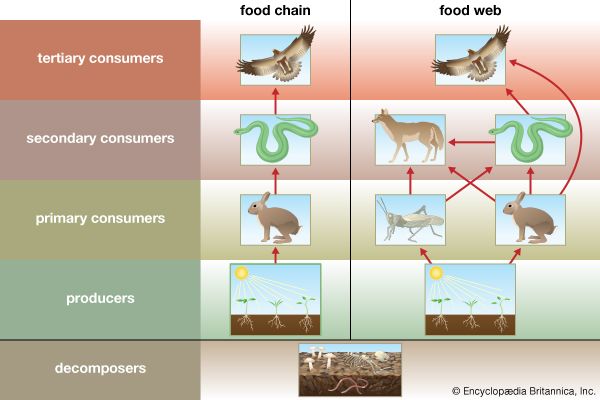
Beyond biological interactions, a niche is also defined by abiotic factors, such as climate and soil type. Every species within a community occupies its own unique ecological niche, which helps determine its position within food chains and trophic levels.45
The concept is central to the principle of competitive exclusion, which posits that two species competing for the exact same niche cannot coexist indefinitely; eventually, one will outcompete the other, forcing the species to occupy distinct niches to survive.21
How do species avoid competition by changing their behavior?
Species often avoid direct competition by diversifying their behaviors and resource use, a process that allows them to occupy distinct ecological niches within a community. When resources are limited, species that share similar requirements may coexist by differentiating their feeding patterns, nesting habits, or activity periods.36
Over evolutionary time, this pressure can lead to character displacement, where natural selection favors individuals that compete less with other species. For example, some species have evolved physical differences, such as variations in body or bill size, to minimize overlap in resource consumption. By “carving out” a specialized niche, species reduce the intensity of direct competition, which otherwise might lead to local extinction or migration. These behavioral and physical adaptations are essential for maintaining biodiversity, as they enable multiple species to utilize the same environment without exhausting the available resources.763
What are some real-world examples of competitive exclusion?
The principle of competitive exclusion states that two species competing for the same ecological niche cannot coexist indefinitely; one will eventually outcompete the other, leading to the decline or local extinction of the less successful species.12
Real-world examples of this principle are frequently observed when invasive species are introduced into new environments:
- Purple Loosestrife: This plant, native to Europe, was introduced to North America in the 1800s. It has since overrun vast areas of wetlands, effectively replacing native vegetation like grasses and sedges by outcompeting them for space and resources.10
- Invasive Predators: When nonnative predators are introduced to isolated ecosystems, they often possess a competitive advantage over indigenous species. For instance, domestic cats introduced to Marion Island decimated local seabird populations, demonstrating how an invasive species can drive native populations toward extinction by monopolizing resources or directly consuming prey that cannot adapt to the new threat.1011
These cases highlight the ethical importance of protecting biodiversity, as the introduction of nonnative species can cause irreversible damage to established ecosystems.11
Sources
- principle of competitive exclusion — Encyclopædia Britannica
- competitive exclusion — Merriam-Webster
- competition — Encyclopædia Britannica
- niche — Encyclopædia Britannica
- community — Encyclopædia Britannica
- Animal social behavior - Social interactions involving sex — Encyclopædia Britannica
- community ecology - Ecological niches — Encyclopædia Britannica
- community ecology - Mutualism — Encyclopædia Britannica
- community ecology - The effects of competition — Encyclopædia Britannica
- conservation - Removing invasive species — Encyclopædia Britannica
- invasive species — Encyclopædia Britannica
Published on · 3 min read