Proterozoic Eon
The Proterozoic Eon, which spanned from 2.5 billion to 541 million years ago, is not subdivided into smaller periods. Because of the scarcity of fossils from…
How is the Proterozoic Eon divided into different periods, and what are their names?
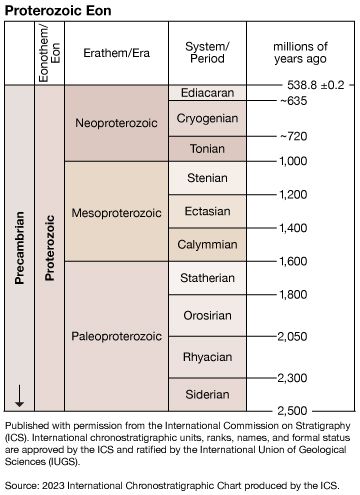
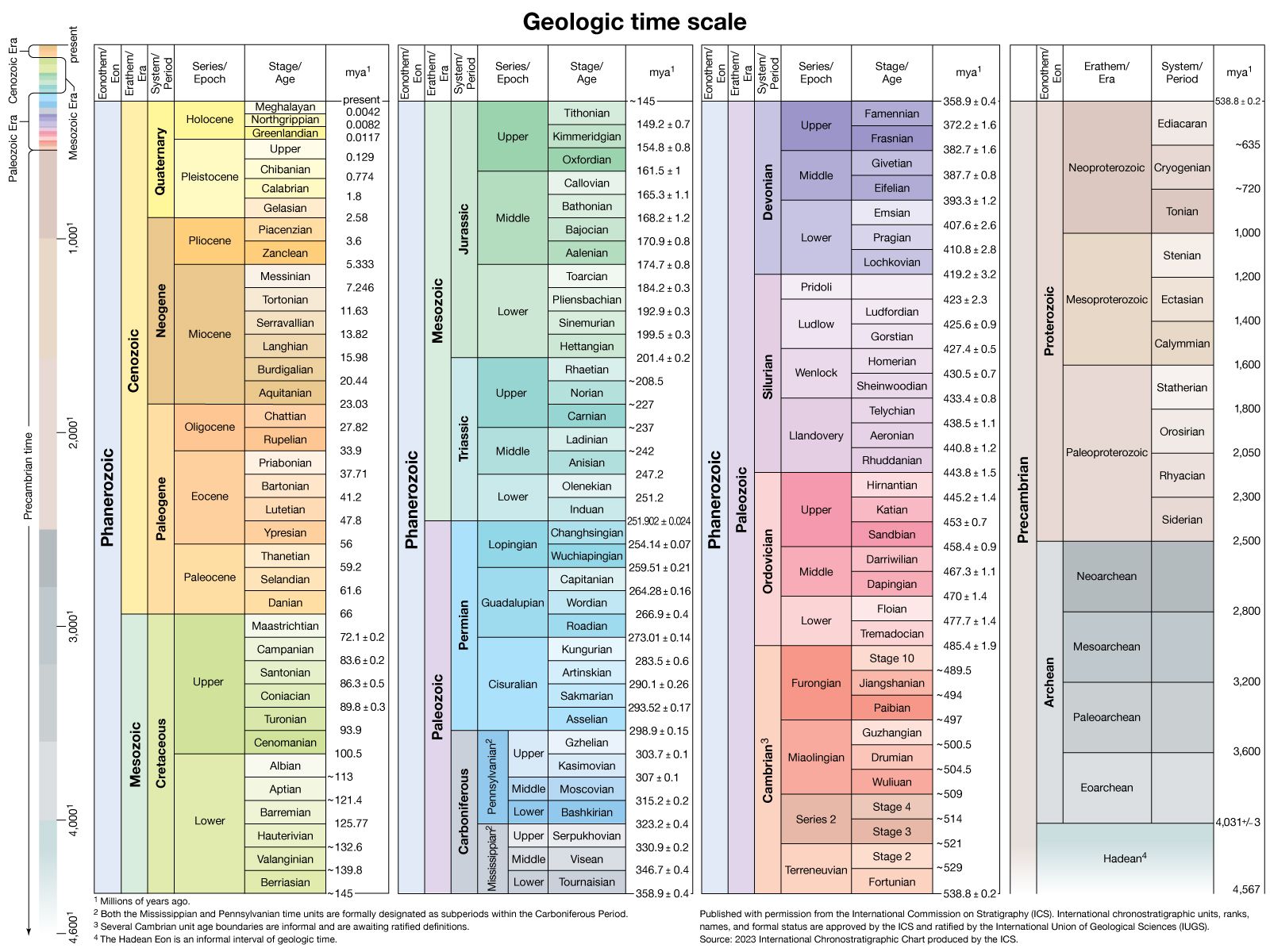
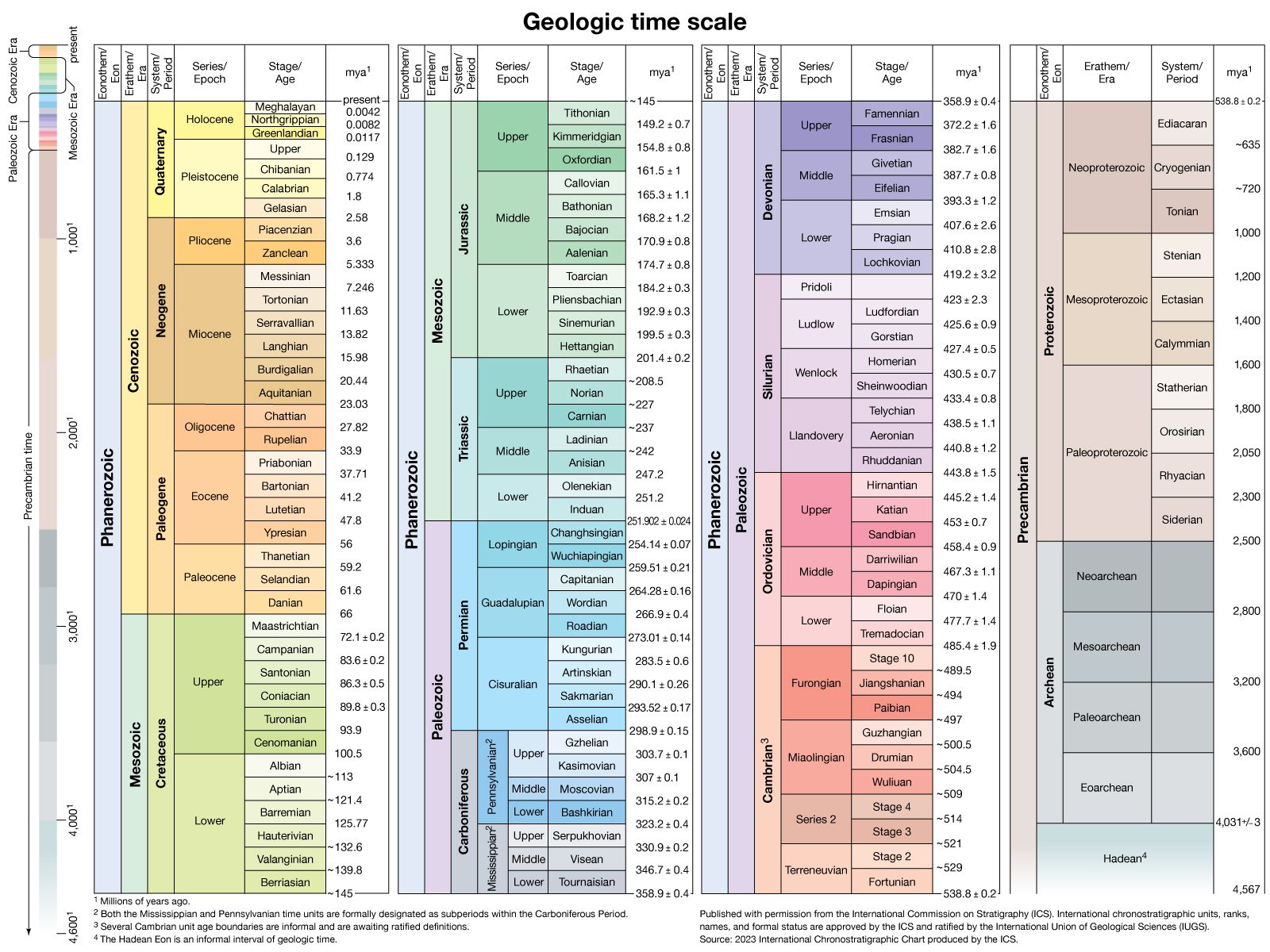
The Proterozoic Eon, which spanned from 2.5 billion to 541 million years ago, is not subdivided into smaller periods. Because of the scarcity of fossils from this era, geologists are unable to establish the fine-scale subdivisions—such as epochs and ages—that are common in later geologic time.1
Instead, the Proterozoic Eon is divided into three distinct eras based on isotopic age determinations:12
- Paleoproterozoic Era: 2.5 billion to 1.6 billion years ago.12
- Mesoproterozoic Era: 1.6 billion to 1 billion years ago.12
- Neoproterozoic Era: 1 billion to 541 million years ago.12
These eras are defined by major shifts in Earth’s history, including significant changes in atmospheric oxygen levels, the evolution of early life forms, and the assembly and breakup of supercontinents like Columbia and Rodinia.2
How did the formation and breakup of supercontinents influence the Proterozoic environment?
The formation and breakup of supercontinents during the Proterozoic Eon were fundamental drivers of environmental change, influencing global climate, sea levels, and atmospheric chemistry.
Tectonic Cycles and Climate
The assembly of supercontinents like Rodinia and its predecessor, Columbia, involved massive mountain-building events (orogenies) that altered global geography. The subsequent breakup of these landmasses was driven by mantle plumes, which produced vast outpourings of basalt. This intense volcanism and the resulting increase in rock weathering consumed atmospheric carbon dioxide, weakening the greenhouse effect and contributing to severe global glaciations, such as the Sturtian and Marinoan events during the Cryogenian Period.435
Sea Level and Ocean Chemistry
The rifting of supercontinents modified ocean basins and forced the expansion of oceanic ridges, which raised the seafloor and caused widespread flooding of continental interiors. This tectonic activity also released large amounts of phosphorus into the oceans, fueling photosynthesis by marine organisms. The resulting increase in biological productivity significantly boosted atmospheric oxygen levels, creating the conditions necessary for the rise of complex, oxygen-dependent metazoans.67548
What is the Proterozoic Eon, and when did it occur in Earth’s history?
The Proterozoic Eon is the younger of the two divisions of Precambrian time, following the Archean Eon. It spanned from 2.5 billion to 541 million years ago.1112
This eon is characterized by significant changes in Earth’s atmosphere and oceans, most notably the rise of free oxygen produced by biological activity, such as photosynthesis. The Proterozoic also marks the appearance of eukaryotic organisms and the first oxygen-dependent animals, such as the Ediacara fauna. Geologically, the eon was dominated by the assembly and breakup of supercontinents, including Columbia and Rodinia.113
Due to the scarcity of fossils, the Proterozoic is not divided into smaller periods like epochs or ages. Instead, it is categorized into three eras based on isotopic age determinations:12
- Paleoproterozoic Era: 2.5 billion to 1.6 billion years ago1112
- Mesoproterozoic Era: 1.6 billion to 1 billion years ago1112
- Neoproterozoic Era: 1 billion to 541 million years ago1112
What were the major geological and atmospheric changes during the Proterozoic Eon?
During the Proterozoic Eon (2.5 billion to 541 million years ago), Earth underwent profound geological and atmospheric transformations that set the stage for modern life.
Geological Changes
The Proterozoic was defined by the maturation of tectonic processes. For the first time, long, linear orogenic belts formed through modern tectonic mechanisms, including seafloor spreading, subduction, and continental collisions. These processes facilitated the assembly of massive supercontinents, most notably Columbia and Rodinia.1314
The breakup of these supercontinents, driven by mantle plumes, triggered intense volcanism and the formation of vast flood basalts. These tectonic shifts also altered global geography, creating extensive continental shelves where thick sequences of quartzite, carbonate, and shale were deposited.81413
Atmospheric and Environmental Changes
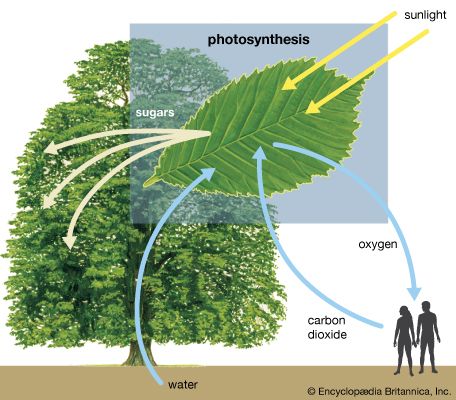
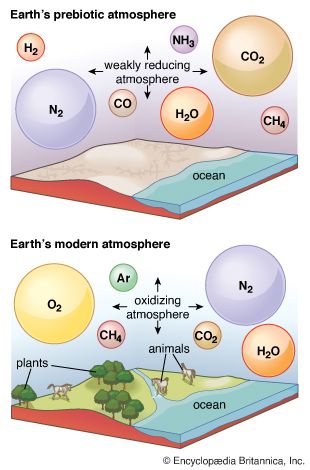
The most significant atmospheric shift was the rise of free oxygen, a byproduct of photosynthesis by cyanobacteria. Early in the eon, this oxygen was largely consumed by the oxidation of volcanic-derived ferrous iron in the oceans, leading to the deposition of banded iron formations.61516
As these iron sinks were exhausted by roughly 1.7 to 2 billion years ago, atmospheric oxygen levels began to rise significantly. This transition enabled the development of eukaryotic organisms and, eventually, complex metazoans by the late Proterozoic. Additionally, increased rock weathering during tectonic cycles removed carbon dioxide from the atmosphere, weakening the greenhouse effect and contributing to severe global glaciations during the Cryogenian Period.161568
Sources
- Precambrian - Major subdivisions of the Precambrian System — Encyclopædia Britannica
- era — Encyclopædia Britannica
- Proterozoic Eon — Encyclopædia Britannica
- Cambrian Period — Encyclopædia Britannica
- Cryogenian Period — Encyclopædia Britannica
- Rodinia — Encyclopædia Britannica
- Pangea: Top Questions — Encyclopædia Britannica
- Precambrian - Oxygenation of the atmosphere — Encyclopædia Britannica
- Ordovician Period - Sea level — Encyclopædia Britannica
- geologic history of Earth - Formation of the secondary atmosphere — Encyclopædia Britannica
- A Journey Through Time Since the Precambrian — Encyclopædia Britannica
- Proterozoic — Merriam-Webster
- Precambrian - Proterozoic plate movements — Encyclopædia Britannica
- Cryogenian Period: Top Questions — Encyclopædia Britannica
- Phanerozoic Eon — Encyclopædia Britannica
- geologic history of Earth - Development of the oceans — Encyclopædia Britannica
- Tonian Period: Top Questions — Encyclopædia Britannica
- Precambrian - Development of the ocean — Encyclopædia Britannica
- Climate - The evolution of life and the atmosphere — Encyclopædia Britannica
Published on · 4 min read