Sap Beetle
A sap beetle is any of at least 2,000 species of insects belonging to the family Nitidulidae. These beetles are typically small, measuring 12 mm (0.5 inch)…
What is sap beetle?
A sap beetle is any of at least 2,000 species of insects belonging to the family Nitidulidae. These beetles are typically small, measuring 12 mm (0.5 inch) or less in length, and possess an oval or elongated body shape. Their elytra—the hardened wing covers—may either fully cover the abdomen or leave the tip exposed.12
Sap beetles are commonly found in environments with souring or fermenting plant fluids, such as decaying fruit, fungi, or moldy logs. While many species develop in decaying vegetation, some are known to attack healthy plants. For instance, the corn sap beetle (Carpophilus dimidiatus) is recognized as a destructive pest of sweet corn. Another notable member of the family is the picnic beetle (Glischrochilus fasciatus), a common North American species characterized by its shiny black appearance and two yellow-orange bands across its wing covers.123
What is the role of the picnic beetle in gardens?
The picnic beetle (Glischrochilus fasciatus) is a member of the sap beetle family, which are insects typically associated with fermenting or decaying plant materials.
In a garden setting, these beetles are primarily attracted to the odors of souring or fermenting plant fluids, such as overripe or damaged fruit, vegetables, and fungi. Because they are drawn to these substances, they are often found feeding on produce that has already begun to decay or has been damaged by other pests or environmental factors. While they are not typically considered primary pests of healthy, intact crops, their presence can be a nuisance in gardens and outdoor spaces, particularly during picnics or gatherings where food is present, as they are highly attracted to sweet, fermenting scents.
How do beetles use their elytra for protection?
In the order Coleoptera, the elytra serve as the primary protective mechanism for the beetle’s body. These hardened, thickened, or leathery forewings act as protective covers that shield the more delicate hindwings and the soft tissues of the abdomen when the insect is at rest.89
Beyond providing a physical barrier, the elytra contribute to survival in several ways:
- Structural Shielding: The elytra cover the mesothorax, metathorax, and the majority of the abdomen, protecting vital internal organs and respiratory openings (spiracles) located on the abdominal segments.8
- Camouflage: The texture and appearance of the elytra can be modified to help the beetle blend into its environment, such as resembling bark or other natural surfaces, which helps the insect avoid detection by predators.10
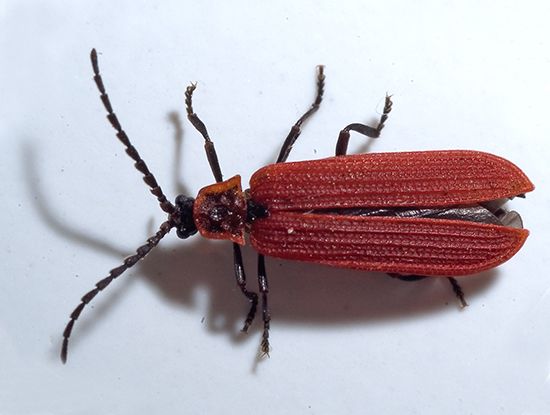
- Warning Signals: In some species, such as the net-winged beetle, the elytra display bright, contrasting colors that serve as a warning to predators, signaling that the insect may be distasteful or toxic.11
What are some other common types of beetles found in North America?
North America is home to a diverse array of beetles, ranging from beneficial predators to significant agricultural and timber pests. Here are some common types found across the continent:
- Ground Beetles (Family Carabidae): These are among the largest families in the order Coleoptera. Many are considered beneficial because they prey on insects harmful to humans. Notable examples include the bombardier beetle, known for its chemical defense mechanism, and the caterpillar hunter (Calosoma scrutator), which helps control moth populations.13
- Ladybugs (Family Coccinellidae): Widely recognized for their hemispheric shape and bright colors, these beetles are highly valued in agriculture. Both adults and larvae are voracious predators of aphids, scale, and mites. While most are beneficial, some species, such as the Mexican bean beetle, can be destructive to plants.14
- Long-horned Beetles (Family Cerambycidae): Named for their exceptionally long antennae, these beetles are often wood-borers. While some are native, others like the Asian longhorned beetle are invasive pests that threaten hardwood trees.1516
- Colorado Potato Beetle (Leptinotarsa decemlineata): Originally a native insect of semidesert regions, this beetle became a major agricultural pest after adapting to feed on cultivated potatoes in the United States.17
Sources
- sap beetle — Encyclopædia Britannica
- Coleoptera - As plant feeders — Encyclopædia Britannica
- Japanese beetle — Encyclopædia Britannica
- Nitidulidae — Merriam-Webster
- nitidulid — Merriam-Webster
- Coleoptera - Pupae — Encyclopædia Britannica
- corn sap beetle — Merriam-Webster
- Coleoptera - Adult features — Encyclopædia Britannica
- Coleoptera - Protection — Encyclopædia Britannica
- heteropteran - Wings — Encyclopædia Britannica
- Coleoptera - Distinguishing taxonomic features — Encyclopædia Britannica
- net-winged beetle — Encyclopædia Britannica
- ground beetle — Encyclopædia Britannica
- insect - Ecological factors — Encyclopædia Britannica
- ladybug — Encyclopædia Britannica
- long-horned beetle — Encyclopædia Britannica
- Asian longhorned beetle — Encyclopædia Britannica
Published on · 3 min read