Tethys Sea
During the Mesozoic Era—the age of the dinosaurs—the Tethys Sea acted as a significant tropical marine barrier that separated the northern supercontinent of…
How did the presence of the Tethys Sea affect the distribution of land animals during the time of the dinosaurs?
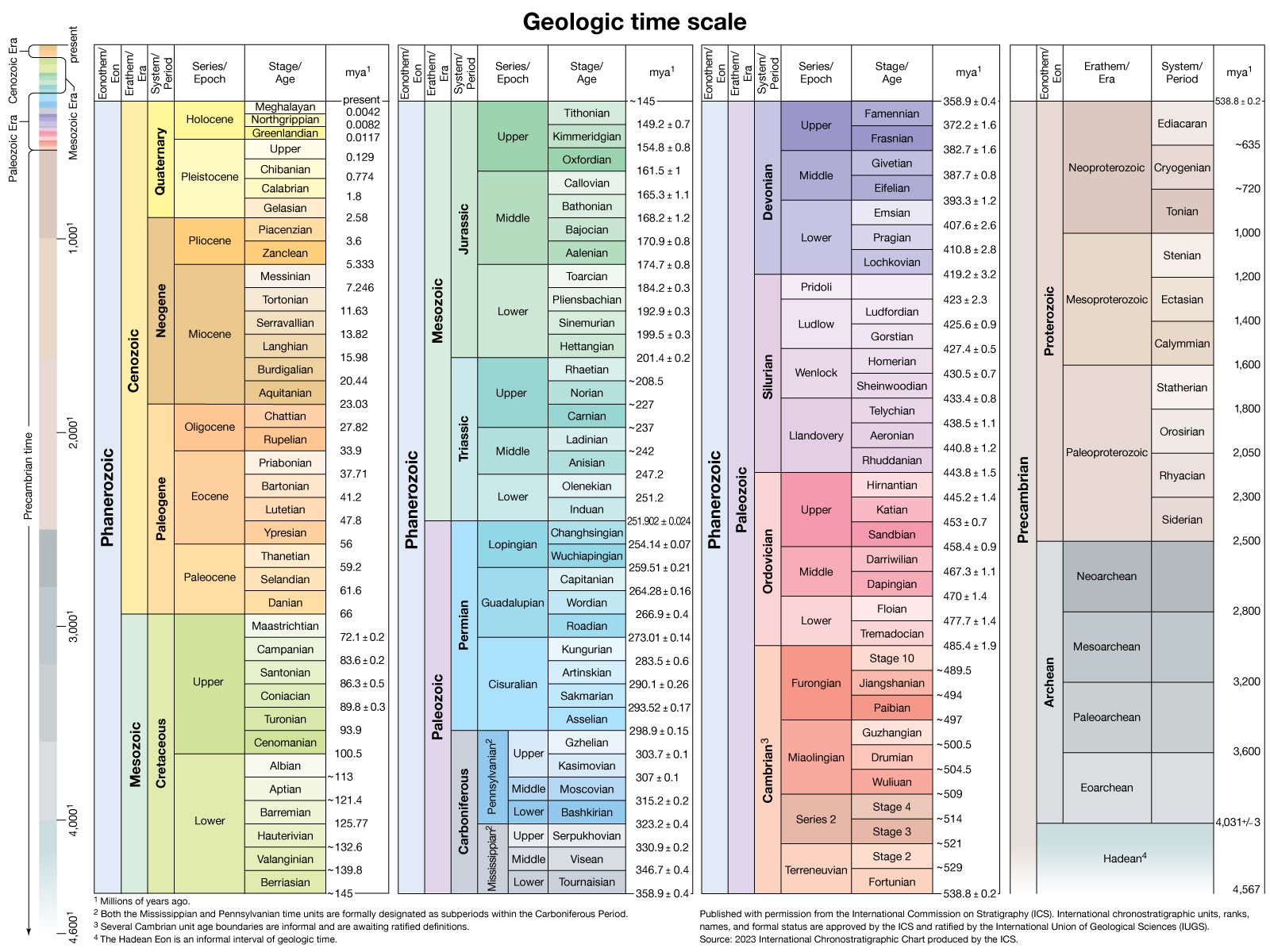
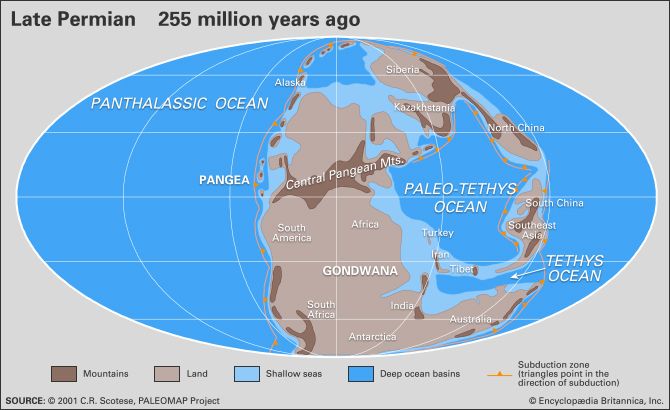
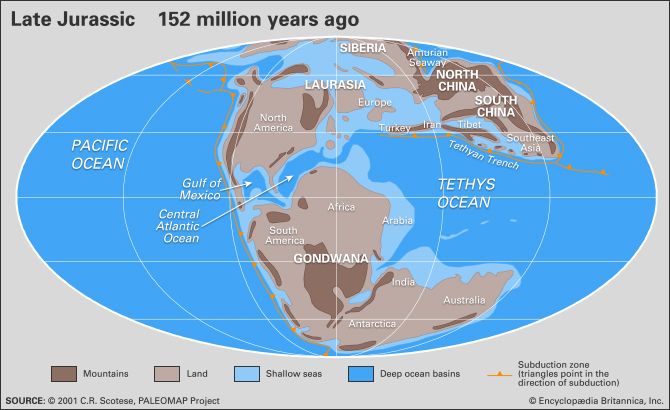
During the Mesozoic Era—the age of the dinosaurs—the Tethys Sea acted as a significant tropical marine barrier that separated the northern supercontinent of Laurasia from the southern supercontinent of Gondwana Gondwana.1
While the Tethys Sea was a dominant feature for marine life, its role in terrestrial animal distribution was primarily that of a geographic divider. By maintaining a vast, warm seaway between these two major landmasses, it restricted the free movement of land-dwelling vertebrates between the northern and southern hemispheres. This separation contributed to distinct evolutionary paths for terrestrial faunas on either side of the sea.213
The sea’s influence on climate also indirectly affected land animals. By facilitating the transport of heat and connecting major oceans, the Tethys played a key role in global climate control, which influenced the habitats available to dinosaurs and other terrestrial life. As the sea gradually closed due to tectonic plate movements, it eventually allowed for new land connections that altered migration patterns.23
How has the study of the ancient Tethys Sea contributed to our understanding of plate tectonics and continental drift?
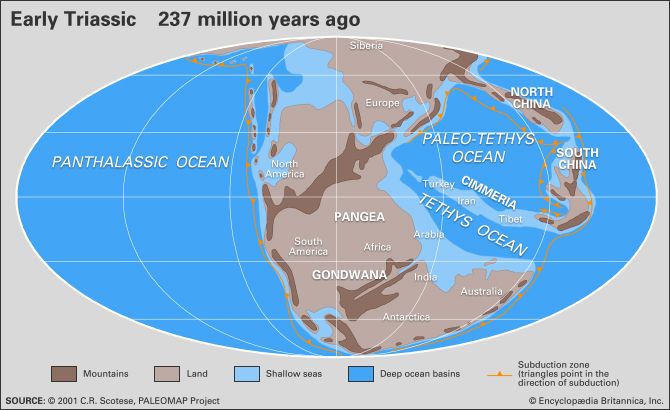
The study of the ancient Tethys Sea has been fundamental to validating and refining our understanding of plate tectonics and continental drift. By analyzing the geological history of this vanished ocean, scientists have gained critical insights into how continents move, collide, and deform over millions of years.15
Key contributions include:
- Evidence of Plate Convergence and Subduction: The destruction of the Tethys through the subduction of oceanic crust beneath continental plates provides a clear record of tectonic activity. The presence of ophiolites—sections of ancient ocean floor thrust onto continental crust—serves as direct physical evidence of these compressional forces.15
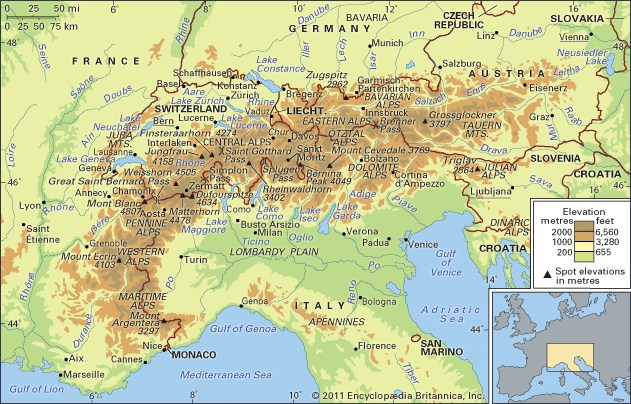
- Formation of Mountain Ranges: The collision of continental fragments (such as India, Arabia, and Apulia) with Eurasia effectively “closed” the Tethys, resulting in the creation of the Alpine-Himalayan mountain system. This process illustrates how continental collisions drive large-scale crustal deformation, including faulting and folding.15
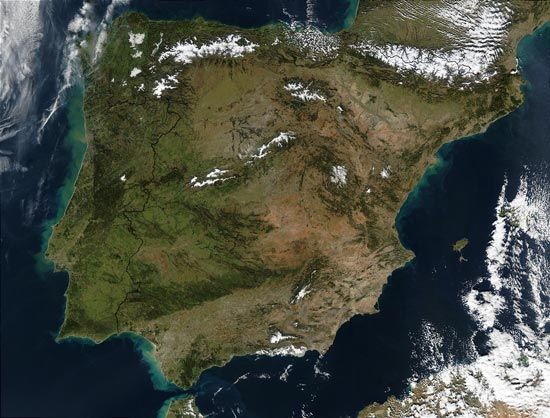
- Microplate Dynamics: The complex history of the Tethys reveals the movement of smaller continental blocks or “microplates.” Their rotation and migration, such as the movement of the Cimmerian continent or the rotation of the Iberian Peninsula, demonstrate the intricate, interdependent nature of tectonic movements.15
- Geological Mapping: The study of Tethyan sedimentary deposits, such as limestones and turbidites, allows geologists to reconstruct past environments and track the shifting positions of landmasses throughout the Mesozoic and Cenozoic eras.1
What were some of the major marine life forms that inhabited the Tethys Sea during the Mesozoic Era?
The Tethys Sea was a vast, tropical marine environment during the Mesozoic Era that supported a highly diverse array of life. Its warm, expansive waters were particularly noted for the development of extensive reefs and rich tropical faunas.1
Major marine life forms included:
- Invertebrates: The Tethys was famous for its rudist bivalves, which were large, unusual mollusks that acted as the primary reef-builders, often dominating over corals. Other characteristic invertebrates included actaeonellid and nerineid snails, colonial corals, calcareous algae, and various ammonites and echinoids.6
- Marine Reptiles: The sea was home to several groups of large marine reptiles, including the fish-shaped ichthyosaurs, the long-necked plesiosaurs, and the predatory mosasaurs. and the predatory mosasaurs.67
- Microorganisms: The Tethys hosted abundant planktonic life, including foraminiferans, diatoms, radiolarians, and dinoflagellates, which contributed significantly to the formation of marine sediments like chalk.6
- Fish: Various teleost (ray-finned) fishes, as well as sharks and rays, served as significant marine predators within the ecosystem.6
How did the formation of the Tethys Sea relate to the breakup of Pangaea?
The formation of the Tethys Sea is intrinsically linked to the complex tectonic evolution of the supercontinent Pangea.
The relationship between the two can be understood through two distinct phases:
- The Paleo-Tethys: During the late Paleozoic Era, as landmasses converged to form Pangea, the Paleo-Tethys existed as an eastward-opening oceanic embayment. This sea was eventually eliminated in the early Jurassic Period when the Cimmerian continent detached from Gondwana and collided with Laurasia.1
- The Neo-Tethys: The breakup of Pangea into the northern landmass of Laurasia and the southern landmass of Gondwana during the Jurassic triggered the opening of the Neo-Tethys. This sea became a dominant marine seaway, facilitating the flow of warm water between continents and playing a critical role in global climate regulation.1
Ultimately, the Tethys served as the widening gap between the fragmenting pieces of Pangea until the subsequent northward migration of Gondwanan fragments—such as India and Arabia—led to the sea’s closure and the formation of the Alpine-Himalayan mountain ranges.1
Sources
- Tethys Sea — Encyclopædia Britannica
- Tertiary Period - Paleogeography — Encyclopædia Britannica
- Jurassic Period - Paleogeography — Encyclopædia Britannica
- Triassic Period - Paleoclimate — Encyclopædia Britannica
- Europe - Mesozoic and Cenozoic eras — Encyclopædia Britannica
- Cretaceous Period - Marine life — Encyclopædia Britannica
- reptile - Fossil distribution — Encyclopædia Britannica
- Tertiary Period - Marine extinctions and recovery — Encyclopædia Britannica
- Devonian Period - Invertebrates — Encyclopædia Britannica
Published on · 4 min read