Siskin
A siskin is any of approximately 20 species of small, brown-streaked birds characterized by yellow markings, belonging to the genus Carduelis (or Spinus)…
What is Siskin?
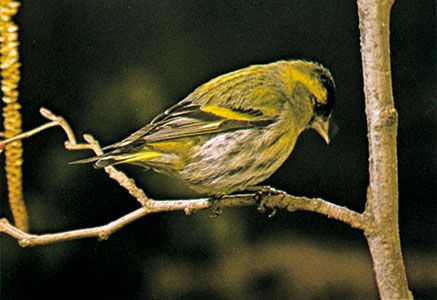
A siskin is any of approximately 20 species of small, brown-streaked birds characterized by yellow markings, belonging to the genus Carduelis (or Spinus) within the family Fringillidae family Fringillidae. These birds are found globally, ranging from cold northern regions to the Cape of Good Hope and Cape Horn.1
Physically, siskins are identified by their conical bills and short, forked tails. They are known for their habit of flocking in fields to feed on weeds and for producing distinctive wheezy vocalizations, particularly while in flight. Notable species include:1
- The pine siskin (C. pinus): A 11-cm (4.5-inch) bird native to North America featuring yellow bars on its wings and tail.1
- The common siskin (C. spinus): A European species distinguished by a black cap and a yellow-tinged breast.1
What other birds belong to the Fringillidae family?
The family Fringillidae, often referred to as true finches, comprises approximately 230 species of songbirds within the order Passeriformes. While the term “finch” is sometimes applied broadly to other families, the Fringillidae family specifically includes several distinct groups of birds.
Notable members of the Fringillidae family include:
- Grosbeaks: Known for their heavy, powerful bills.
- Euphonias: Small, often brightly colored birds.
- Chaffinches: Common songbirds found across various regions.
- Cardueline finches: A diverse group that includes:
- Goldfinches
- Siskins
- Rosefinches
- Crossbills
- Bullfinches
- Canaries
- Redpolls
It is important to note that many other birds commonly called “finches”—such as sparrows, buntings, and weavers—are actually classified in different families, including Emberizidae, Thraupidae, and Estrildidae.345
How do conical bills help birds eat?
Conical bills are specialized structures primarily adapted for seed-eating. Their shape and strength allow birds to effectively handle and process various types of seeds.78
The functionality of these bills varies based on their specific construction:
- Cracking and Processing: Many birds, such as finches, use their heavy, conical bills to crack the hard outer shells of seeds from grasses and weeds. Some species, like the hawfinch, possess exceptionally stout and blunt bills capable of cracking remarkably hard objects, including cherry pits.87
- Specialized Extraction: Certain conical bills are adapted for specific feeding techniques. For example, crossbills have specialized bills designed for extracting seeds from pine cones.7
- Dietary Flexibility: While primarily granivorous, birds with conical bills are often opportunistic feeders. They may supplement their diets with insects, particularly when feeding nestlings, which are unable to crack seeds themselves.78
Although bill shape is a strong indicator of a bird’s primary food source, most birds are not restricted to a single type of food and will consume whatever is readily available and manageable with their bill.7
What are the differences between the pine siskin and the common siskin?
The pine siskin (Carduelis pinus) and the common siskin (Carduelis spinus) are both small, brown-streaked members of the Fringillidae family, sharing characteristic conical bills and short, forked tails. However, they are distinguished by their geographic ranges and specific plumage markings:
- Pine Siskin: Native to North America, this species is approximately 11 cm (4.5 inches) long and is identified by yellow bars on its wings and tail.
- Common Siskin: Found in Europe, this species is distinguished by a black cap and a breast tinged with yellow.
Both birds exhibit similar behaviors, such as flocking in fields to feed on weeds and producing characteristic wheezy vocalizations, often while in flight.1
Sources
- Siskin — Encyclopædia Britannica
- pine siskin — Merriam-Webster
- Fringillidae — Encyclopædia Britannica
- Finch — Encyclopædia Britannica
- Carduelidae — Encyclopædia Britannica
- Fringillidae — Merriam-Webster
- Passeriform - Bill — Encyclopædia Britannica
- Charadriiform - Adaptations for feeding — Encyclopædia Britannica
- Beak — Encyclopædia Britannica
Published on · 3 min read