Spectacled Caiman
The spectacled caiman (Caiman crocodilus) is an alligator-like reptile belonging to the family Alligatoridae. It is native to wetlands and waterways across…
What is a spectacled caiman?
The spectacled caiman (Caiman crocodilus) is an alligator-like reptile belonging to the family Alligatoridae. It is native to wetlands and waterways across Central America and northern South America, possessing the largest geographic range of any living caiman.12
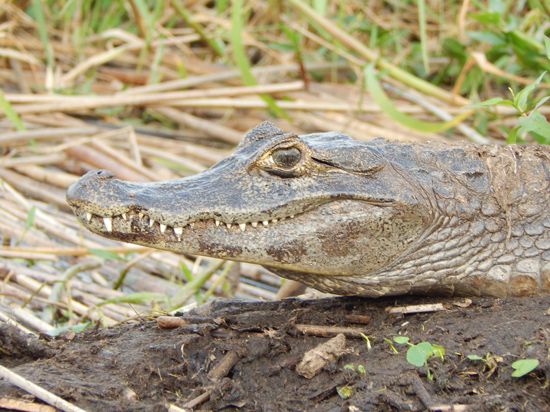
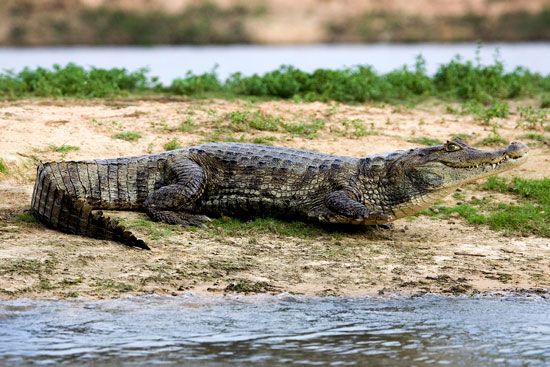
The species derives its common name from a prominent bony ridge between its eyes that resembles the nosepiece of a pair of eyeglasses. These reptiles are small to medium-sized, typically reaching lengths of 1.2 to 2.5 meters, though some males can exceed 3 meters. As generalist apex predators, they consume a diverse diet ranging from invertebrates and fish to mammals.12
Currently classified as a species of least concern by the IUCN, they are highly adaptable and have become an invasive species in areas like Florida and Puerto Rico where they have been introduced.2
Where do spectacled caimans live?
Spectacled caimans (Caiman crocodilus) possess the largest native geographic range of any living caiman, inhabiting tropical lowland regions across Central America and northern South America.23
Their natural range extends from southern Mexico southward through Peru and northern Brazil. They are found from Ecuador’s Pacific coast across the Amazon basin to the Atlantic Ocean. These reptiles are highly adaptable and thrive in various wetlands, including swamps and quiet, mud-bottomed waterways.32
Additionally, spectacled caimans have been introduced to Florida and Puerto Rico in the United States, as well as the Isla de la Juventud in Cuba, where they are considered an invasive species.23
What do spectacled caimans look like?
The spectacled caiman (Caiman crocodilus) is an alligator-like reptile named for a distinctive bony ridge between its eyes that resembles the nosepiece of a pair of eyeglasses.12
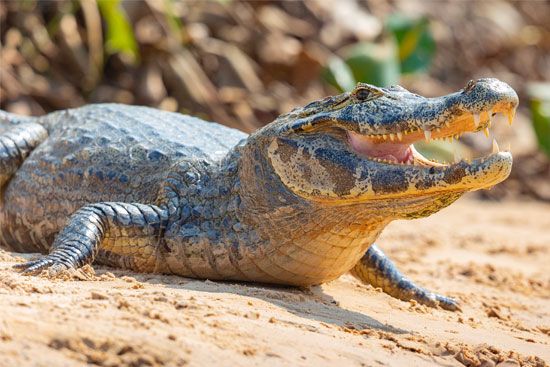
In terms of physical appearance, these animals exhibit the following characteristics:
- Size: They are small to medium-sized crocodilians. Males typically reach 2–2.5 meters (about 6.3–8.2 feet) in length, while females average about 1.4 meters (4.5 feet). Large males can exceed 3 meters (9.8 feet).2
- Weight: Adults generally weigh about 40 kg (88 pounds), with the largest recorded specimens reaching 58 kg (128 pounds).2
- Coloration: The top and sides range from drab green to black, while the underside is cream-colored. The tail features several black bands.2
- Seasonal Changes: Their skin contains a dark pigment that expands in cooler conditions, causing the animal to appear darker.2
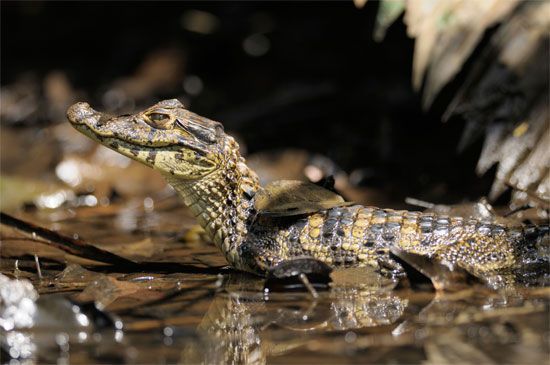
- Juveniles: Young caimans are yellowish with black spots and more pronounced black banding.2
What do spectacled caimans eat?
Spectacled caimans are generalist apex predators that consume a diverse range of prey depending on their life stage.3
- Adult Diet: Adults feed on a wide variety of animals, including insects, shrimp, and other invertebrates. Their diet also includes fish, other reptiles, and mammals as large as tapirs.3
- Juvenile Diet: Younger caimans primarily hunt smaller prey, such as insects and various small invertebrates.3
- Cannibalism: Spectacled caimans may occasionally prey upon one another.3
While they are primarily hunters, they are also known to be amphibious carnivores that inhabit wetlands and waterways. Although females may occasionally provide food for their young, juveniles generally hunt for themselves.32
Sources
- spectacled caiman — Merriam-Webster
- caiman — Encyclopædia Britannica
- spectacled caiman — Encyclopædia Britannica
Published on · 3 min read