Spoonbill
Spoonbills are distinguished from other wading birds primarily by their unique bill structure and specialized feeding method. While they belong to the same…
How do spoonbills differ from other wading birds like herons or ibises?
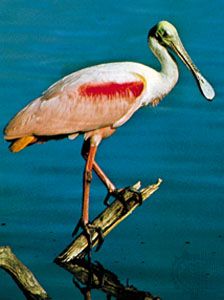
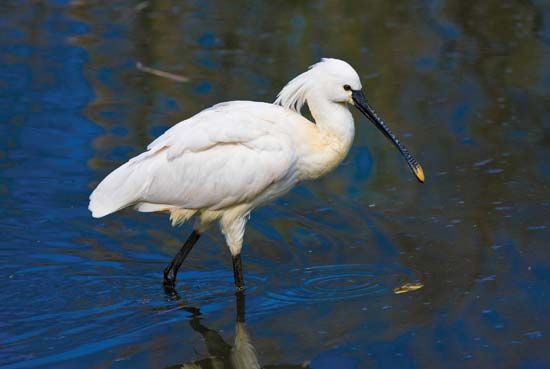
Spoonbills are distinguished from other wading birds primarily by their unique bill structure and specialized feeding method. While they belong to the same family, Threskiornithidae, as ibises, they differ significantly in appearance: an ibis possesses a long, slender, downward-curved bill, whereas a spoonbill’s bill is long, straight, and flattened at the tip into a broad, thin spatula.123
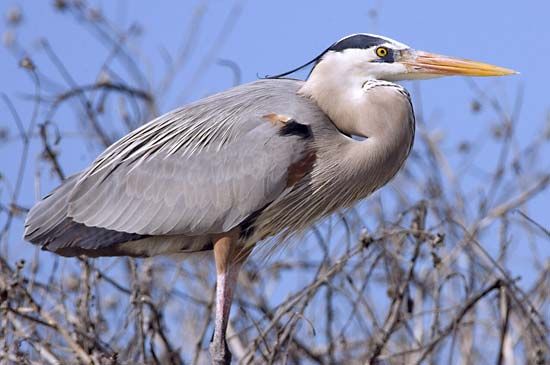
In contrast to herons, which typically have long, straight, and pointed bills used for grasping or spearing prey, spoonbills feed by sweeping their spatulate bills from side to side through shallow water or mud with the mandibles slightly open. This tactile method allows them to catch small fish and crustaceans, whereas herons often stand motionless, relying on their long necks to strike at prey, or actively pursue food by wading.341
While both groups are long-legged waders that may nest in similar colonial environments, the spoonbill’s specialized “scooping” anatomy sets it apart from the more traditional probing or striking mechanisms seen in other wading species.124
Where are spoonbill birds typically found in the wild?
Spoonbills are widely distributed across the globe, typically inhabiting environments such as estuaries, saltwater bayous, and lakes where they can forage in shallow water or mud. Their specific range depends on the species:1
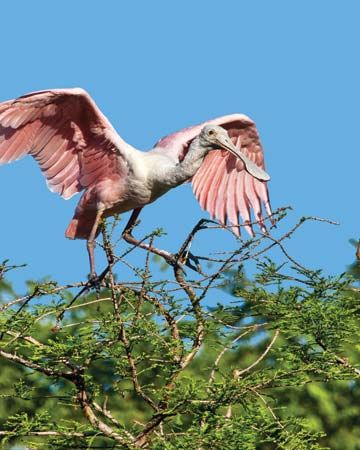
- Roseate Spoonbill: Found in the Americas, ranging from the Gulf Coast of Texas and the West Indies down to Argentina and Chile.1
- European Spoonbill: Breeds across marshes in central and southern Europe and Asia, extending south to Egypt, India, and Taiwan.1
- Other Species: The African spoonbill is found in Africa, the lesser spoonbill resides in eastern Asia, and two species—the royal and yellow-billed spoonbills—are native to Australia.1
These birds are social creatures that typically breed in colonies, often sharing nesting sites with other wading birds like herons and ibises.1
What is the unique feeding behavior of spoonbill birds?
Spoonbills utilize a highly specialized feeding behavior that distinguishes them from other wading birds. They forage in shallow water or mud by sweeping their long, straight bills from side to side with the mandibles slightly open.16
This unique motion allows them to act as tactile feeders, using the flattened, spatula-shaped tip of their bill to detect and capture small fish and crustaceans as they move through the water. Unlike other waders that may rely on sight to strike at prey or use long, slender bills to probe deep into the substrate, the spoonbill’s broad, thin bill tip is specifically adapted for this sweeping, scooping action.16
What are the distinctive physical features of spoonbill birds?
Spoonbills are long-legged wading birds characterized by several distinctive physical features that aid in their survival and specialized feeding habits:
- Bill Structure: The most defining feature of a spoonbill is its long, straight bill, which is flattened and broadened at the tip to form a thin, spatula-like shape.16
- Size and Stature: These birds range in length from approximately 60 to 80 cm (24 to 32 inches). They possess long legs and a long neck, which they extend while in flight.1
- Head and Plumage: In most species, the head is partly or entirely bare. While many species exhibit white plumage—sometimes with a rosy tinge—the roseate spoonbill is notable for its deep pink coloration with a white neck and upper back. Other species, such as the European spoonbill, may feature crests and cinnamon-buff coloring on the foreneck.1
- Feet: As members of the family Threskiornithidae, they have long legs with front toes that are slightly webbed at the base and a small, elevated hind toe.2
Sources
- Spoonbill — Encyclopædia Britannica
- Ciconiiform - Annotated classification — Encyclopædia Britannica
- Ciconiiform - Plumage and coloration — Encyclopædia Britannica
- Ciconiiform - Bill shape — Encyclopædia Britannica
- Ciconiiform - Feeding habits — Encyclopædia Britannica
- Charadriiform - Adaptations for feeding — Encyclopædia Britannica
Published on · 3 min read